
Luxury on Paper, Compromise at Sea My Regent Reality Check on Seven Seas Voyager
If you follow me on Social Media, you’ll already know how excited I was about my first cruise with Regent Seven Seas Cruises aboard Seven Seas Voyager. From the carefully curated itinerary and attractive cabin category to the decidedly serious budget involved, everything about this voyage felt special long before embarkation. Add glossy videos, flawless imagery, glowing testimonials, and Regent’s polished promise of “unparalleled luxury,” and my expectations had plenty of time to sail well ahead of reality after booking in spring.
So far ahead, in fact, that once the journey ended, I knew immediate judgment would be unfair—to the ship, the brand, and perhaps to my own anticipation. A full week ashore was needed for emotions to settle and memories to sharpen before offering a more measured reflection.
Regent inspires fierce loyalty. Some guests embrace the brand unquestioningly; others, like me, approach with cautious optimism—happy to pay luxury prices, but expecting transparency, consistency, and genuine value. Caught between promise and performance, I began searching for a compass to navigate the space between luxury as marketed and luxury as experienced.

To bring some structure—and a welcome dose of objectivity—into this review, I chose the Net Promoter Score as my compass. Rather than relying on emotion, brand reputation, or glossy marketing promises, I applied this well-known loyalty metric to the moments that truly define a cruise experience. For those unfamiliar, NPS is built around a single, disarmingly simple question: How likely are you to recommend a company or service to a friend or colleague? Scored from 0 to 10, responses fall into Promoters, Passives, or Detractors, producing a final score that offers a clear snapshot of real-world perception.
Throughout the voyage, I asked myself that very question at each key touchpoint: based solely on this experience, would I recommend Regent? This method cuts through hype and habit, allowing a more honest assessment of what genuinely delivered value aboard Seven Seas Voyager.

Included Pre-Cruise Stay: Grand Hyatt Barcelona
One of Regent Seven Seas Cruises’ most frequently highlighted inclusions—at least for Concierge Suites and above—is the complimentary one-night pre-cruise hotel stay, complete with breakfast, transfers, and porterage. In theory, this is meant to be the opening scene of Regent’s “unrivalled all-inclusive luxury.” For my Barcelona–Lisbon sailing, that honour fell to the Grand Hyatt Barcelona.
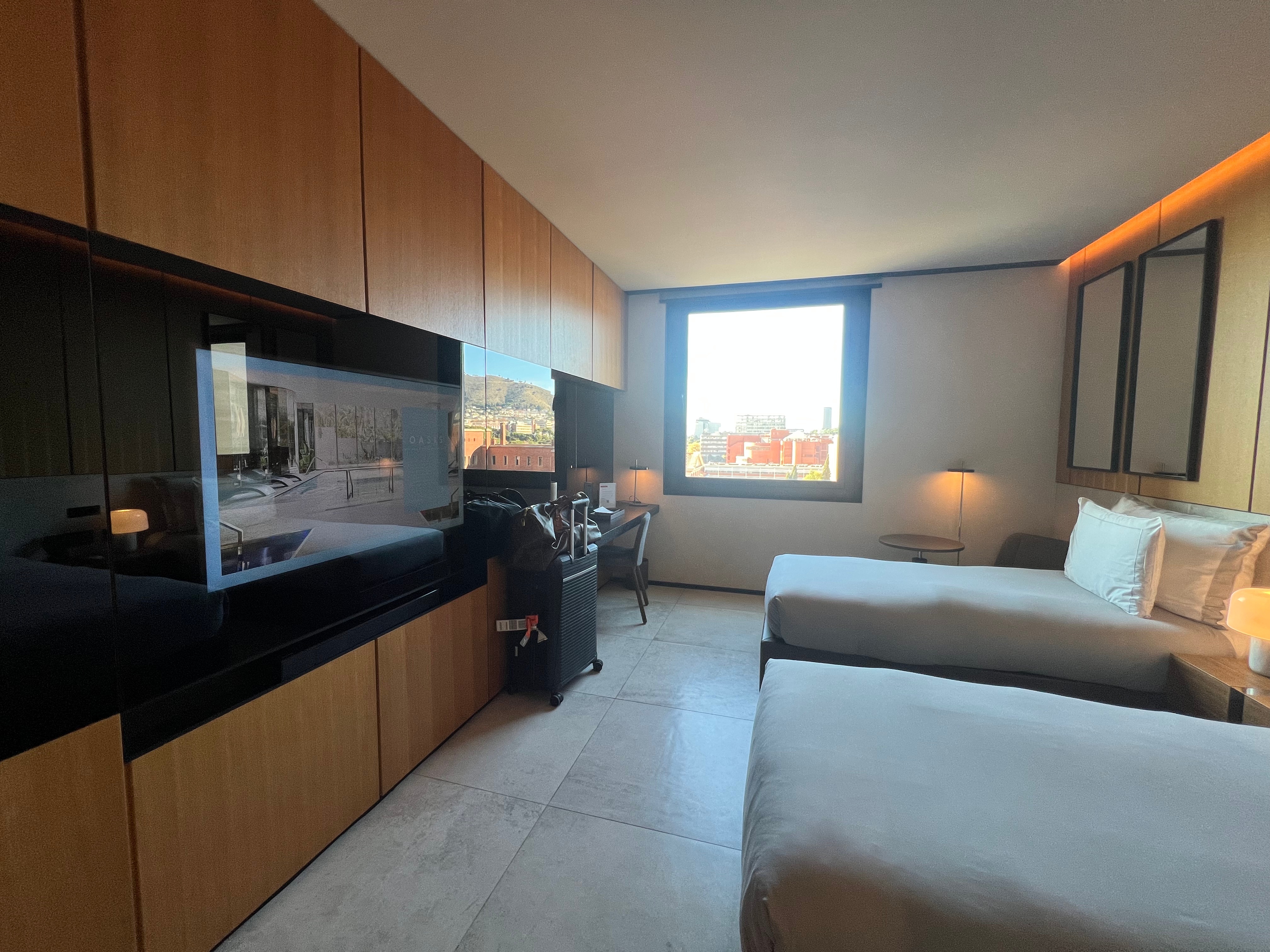
Formerly Hotel Sofia and freshly rebadged as a Grand Hyatt in early 2024, the property is polished, modern, and unmistakably business-forward. The location favours conference badges over camera-wielding tourists, though public transport does at least soften the blow. Rooms are clearly stratified: lower floors feel resolutely corporate—grey, white, efficient—while higher floors inject some personality with Art Deco touches, richer colours, and hints of teal and turquoise. Guess where my room was.
This is where the first cracks appeared between Regent’s marketing poetry and real-world prose. We’re promised “luxurious accommodations” meticulously vetted for ambiance, service, and amenities. In reality, my room was perfectly pleasant: comfortable, modern, and entirely unmemorable. Nice, in other words—but hardly the kind of place that makes you feel you’ve arrived at the gateway to ultra-luxury cruising.



The broader experience did little to elevate matters. The hotel was simultaneously hosting Regent, Viking, and a sizeable corporate event, and it showed. Check-in stretched beyond 30 minutes, porterage moved at a glacial pace, and breakfast came with a 45-minute wait for a table. Even the local hospitality hosts appeared unsure of the choreography, suggesting a process held together by habit rather than design.
Communication around departure was equally underwhelming—contradictory, copy-and-paste instructions that felt more administrative than attentive. Breakfast itself was fine: solid, corporate-hotel fare that filled the stomach without leaving a memory. In the end, I entrusted Regent with my luggage but opted for an Uber myself—faster, clearer, and oddly more reassuring.
Click the link to see my Pre-cruise stay at Grand Hyatt Barcelona https://youtu.be/_dFs1sPrYT4?si=edXbLrF5Y_L9hrrI
Returning to my Net Promoter Score compass, the verdict is straightforward. Asked whether I’d recommend Regent based solely on this pre-cruise stay, my answer lands squarely in “Passive” territory. On the NPS scale, a generous 6. Everything worked, technically—but nothing inspired. As a first chapter to an ultra-luxury journey, it was less a flourish and more a footnote: acceptable, functional, and ultimately forgettable.
Embarkation
Having skipped the included transfer, I opted for an Uber—about €20—and arrived at Barcelona’s Terminal A well ahead of the official hotel departure time. Seven Seas Voyager was already docked, the terminal was almost eerily quiet, and within moments it was clear this would be one of those rare embarkations that actually live up to the brochure.
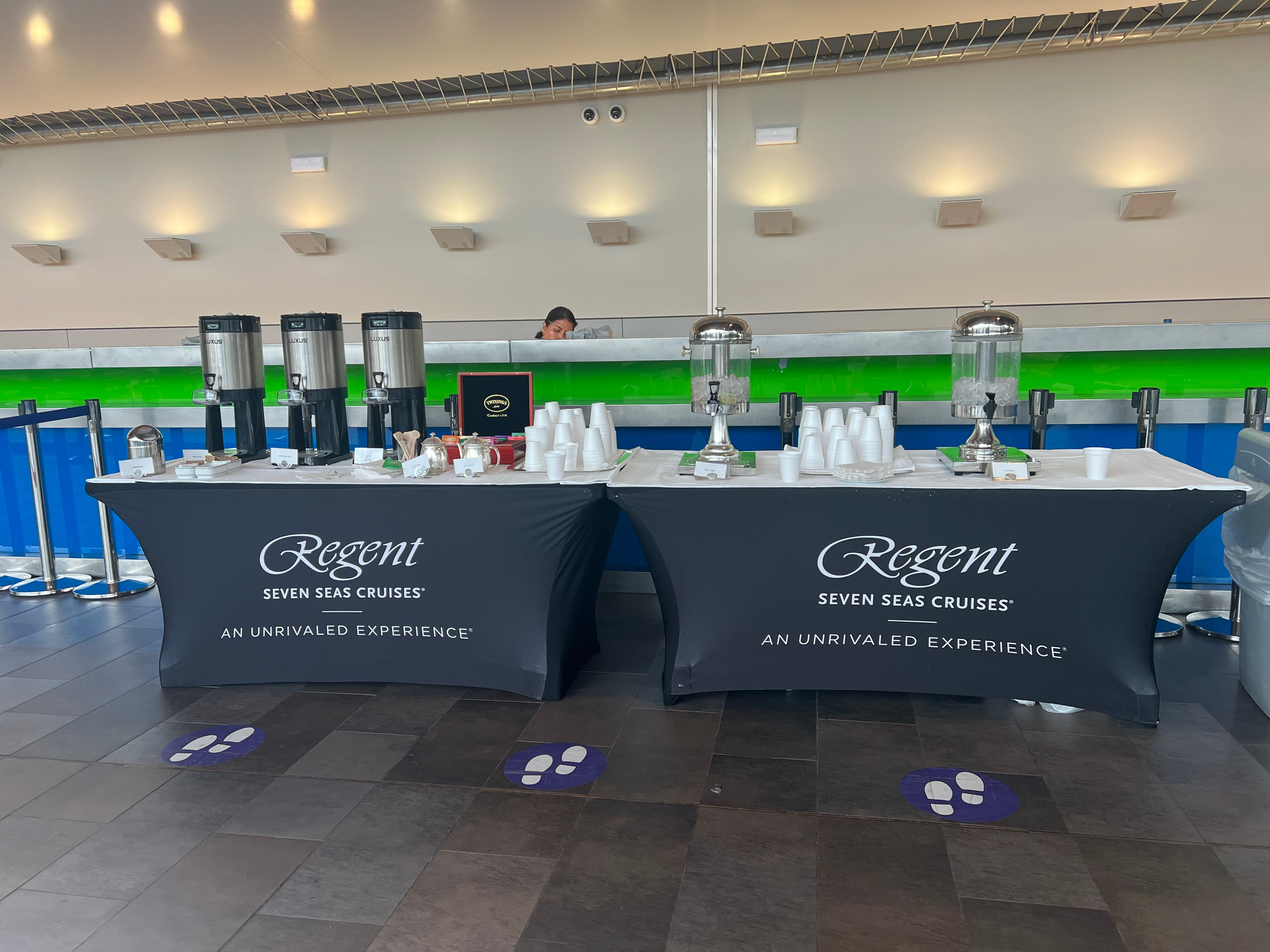
Regent assigns embarkation slots to avoid congestion, and in this case, the system worked beautifully. While guests in top-category suites are invited to check in from 1:00 p.m., there’s no dedicated early-arrival lounge for suite guests—just a modest refreshment area shared by everyone, offering tea, coffee, and a bar. Not exactly indulgent, but hardly a deal-breaker.



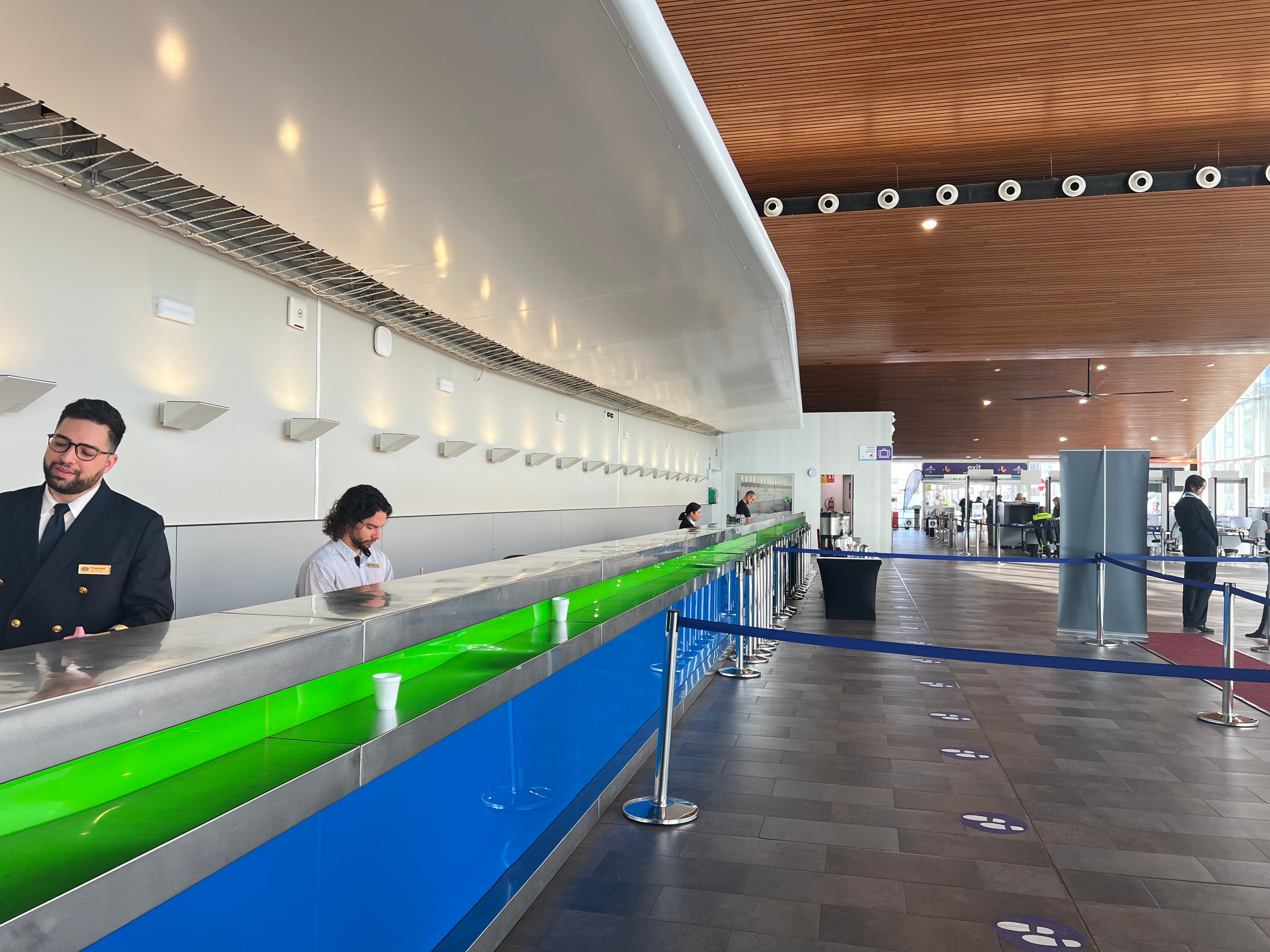




The real surprise came at check-in itself. Rather than terminal staff, members of the onboard entertainment team were handling the process. Slightly unconventional for a luxury brand, though undeniably memorable. I was checked in by a cheerful young man who, later that evening, would be executing backflips on stage—proof that Regent’s versatility extends beyond guest relations.
From there, embarkation was delightfully uneventful. No queues, no staged photo moments, just a short walk onboard where two bar waiters quietly offered champagne or orange juice. Five minutes later, I was unlocking the door to Seven Seas Suite 674 on Deck 6.
Efficient, calm, and refreshingly drama-free, this was embarkation done right. No excess, no fuss—just smooth execution. On my Net Promoter Score compass, embarkation earns a solid 8: not extravagant, but polished, professional, and exactly what the first moments onboard should feel like
Click the link to see the embarkation experience in Barcelona: https://youtu.be/4Qb5_B-WHFE?si=vuQMAnPNOYKVy-zt
Click the link to see the embarkation lunch and the first dinner in Compass Rose: https://youtu.be/fU6_-vASkrM?si=jJqwimx6KnKmotgQ
Accommodation: When an Upgrade Delivers… Mostly
I booked my Seven Seas Voyager cruise back in June through Six Star Cruises, paying £7,000 per person for a Penthouse C Suite (cabin 678). On paper, it felt like a solid choice. Both the travel agent and Regent Seven Seas Cruises confidently sold the idea of “unparalleled luxury,” and at this price point, expectations naturally soar.
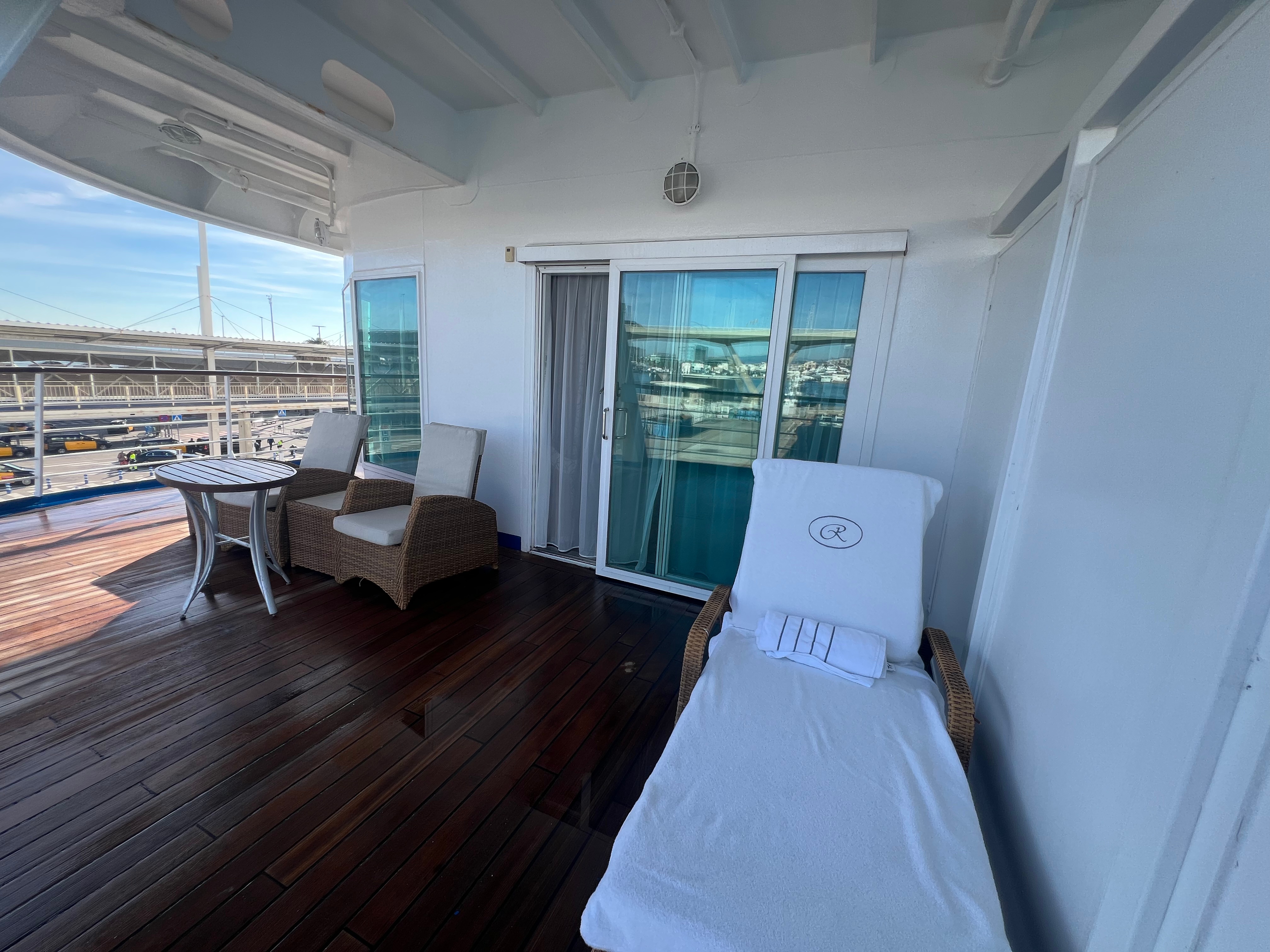
As the summer progressed—and after falling deep into the cruise-review rabbit hole of photos, videos, and firsthand accounts—I found myself increasingly intrigued by the Seven Seas Suite, particularly for one reason: that famously oversized balcony. Regent operates a bidding system for upgrades, so with nothing to lose, I placed the minimum bid, fully expecting it to be declined. To my surprise, two weeks before sailing, the upgrade cleared. For an additional £1,600, I was reassigned to Suite 674, an aft-facing Seven Seas Suite on Deck 6.
One thing Regent does exceptionally well is consistency. All 350 suites onboard feature private balconies, Champagne on arrival, fresh fruit, European Suite Slumber king-sized beds, high-thread-count linens, and separate sitting areas. These are excellent foundations—although, at this level, they should be non-negotiable rather than headline features.
Seven Seas Suites come in two layouts: forward and aft. Mine was the aft version, offering 441 square feet of interior space and a truly impressive balcony ranging between 166 and 293 square feet. This is where the upgrade finally earns its keep. A sweeping curved wall of floor-to-ceiling windows floods the suite with natural light, while sliding glass doors lead directly onto the expansive balcony. The sense of space and openness is immediate and genuinely special.
Inside, the décor is tasteful but conservative, dominated by muted blues and greys, velvet accents, beige walls, and dark wood finishes. Furnishings are largely identical to those found in Penthouse Suites, with only minor additions like a coffee table and an extra armchair. Forward Seven Seas Suites benefit from an additional half-bath near the entrance—a feature missing in the aft layout—but for me, this wasn’t a deal-breaker. That balcony more than compensated.
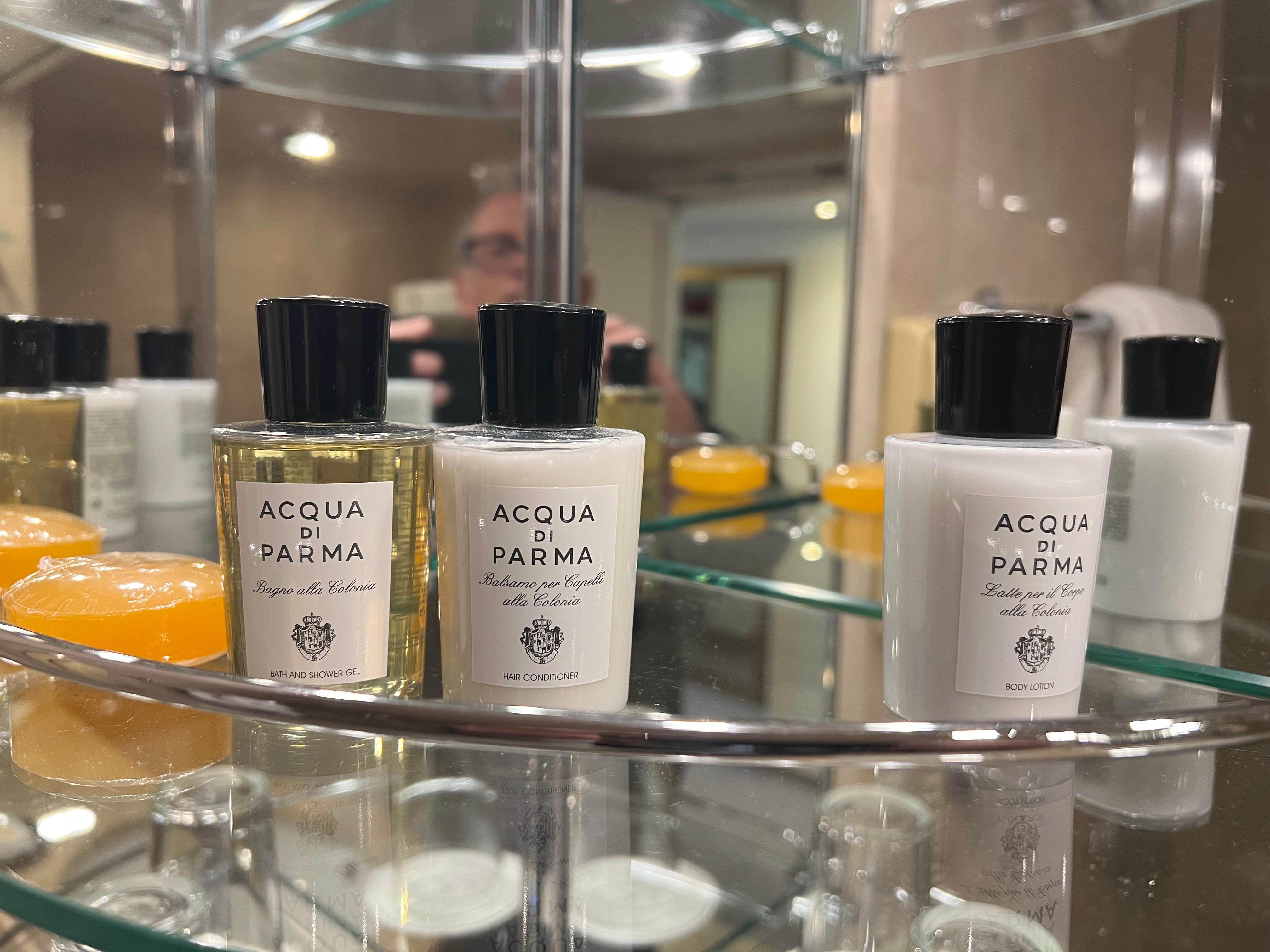
Additional perks include priority embarkation, upgraded fruit deliveries, floral arrangements, and a hosted dinner with a senior officer. Bathroom amenities sound impressive—Aqua di Parma, Guerlain, and L’Occitane—but execution fell short. While Guerlain and L’Occitane were consistently replenished, Aqua di Parma vanished after the first day. A small detail, perhaps, but in ultra-luxury cruising, such inconsistencies feel unnecessary.
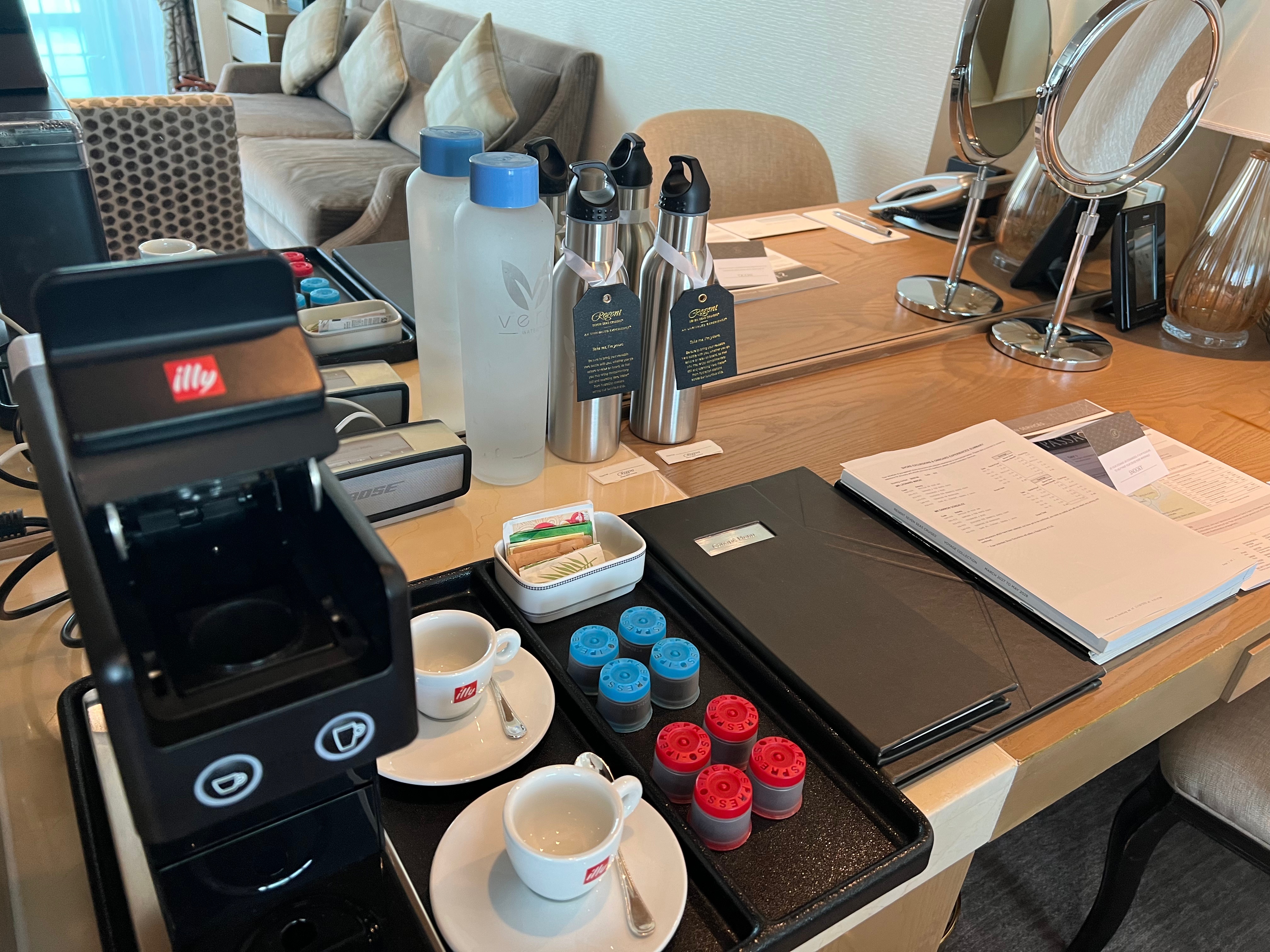
Storage was excellent, thanks to a generous walk-in closet. The interactive TV system provided ship information and on-demand movies, though the film selection felt dated, and live TV never worked during the entire cruise. Not a disaster—but again, not what one expects at this price. Music channels were better curated, and the Bose mini speaker was a genuinely nice touch.
Where Regent truly excelled was service. Butler service is included with the Seven Seas Suite, and our butler, Kelsley, was outstanding—professional, warm, proactive, and genuinely attentive. His presence elevated the entire suite experience and served as a powerful reminder that, despite the occasional corner-cutting, human service remains Regent’s greatest luxury.
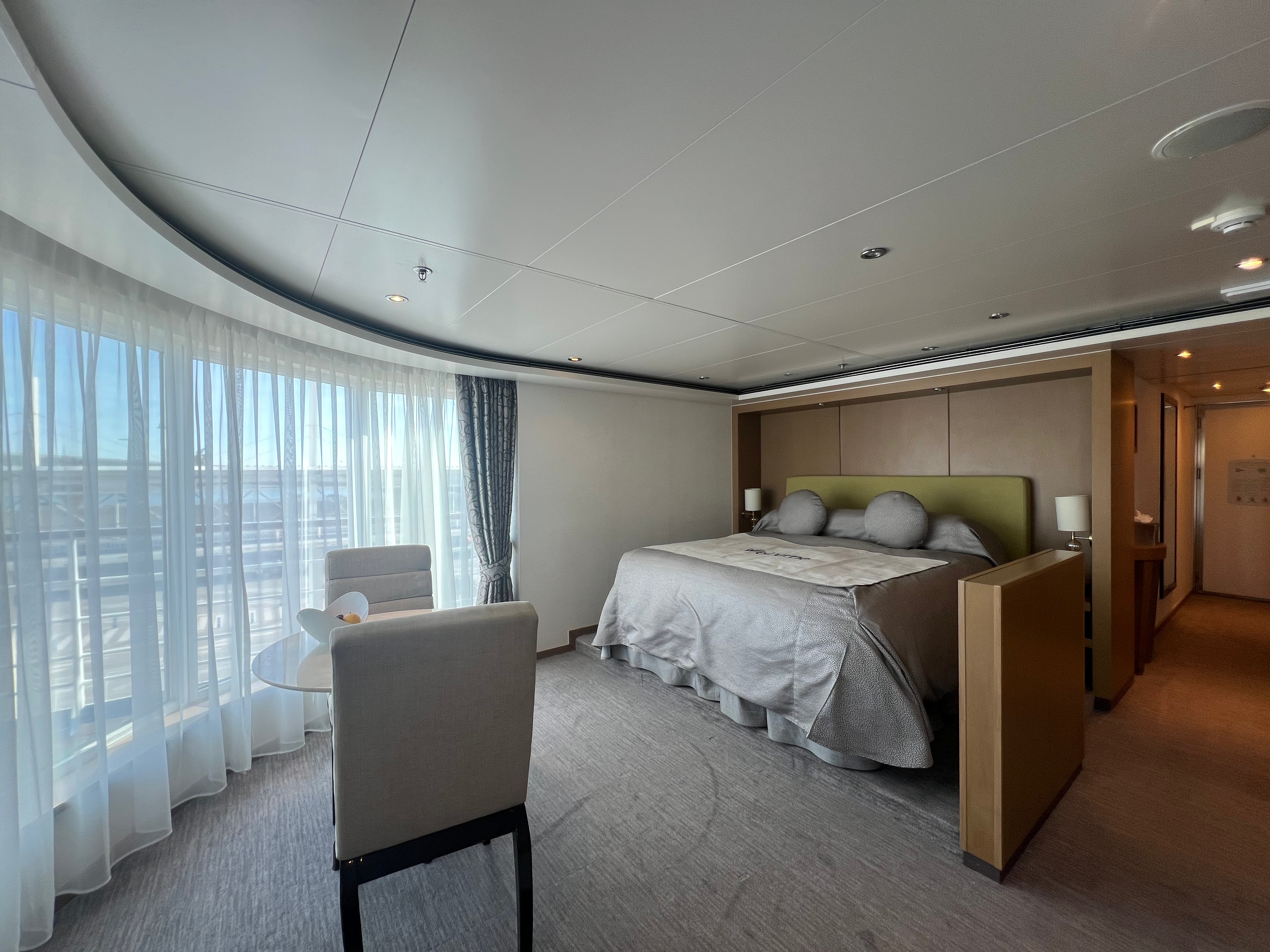


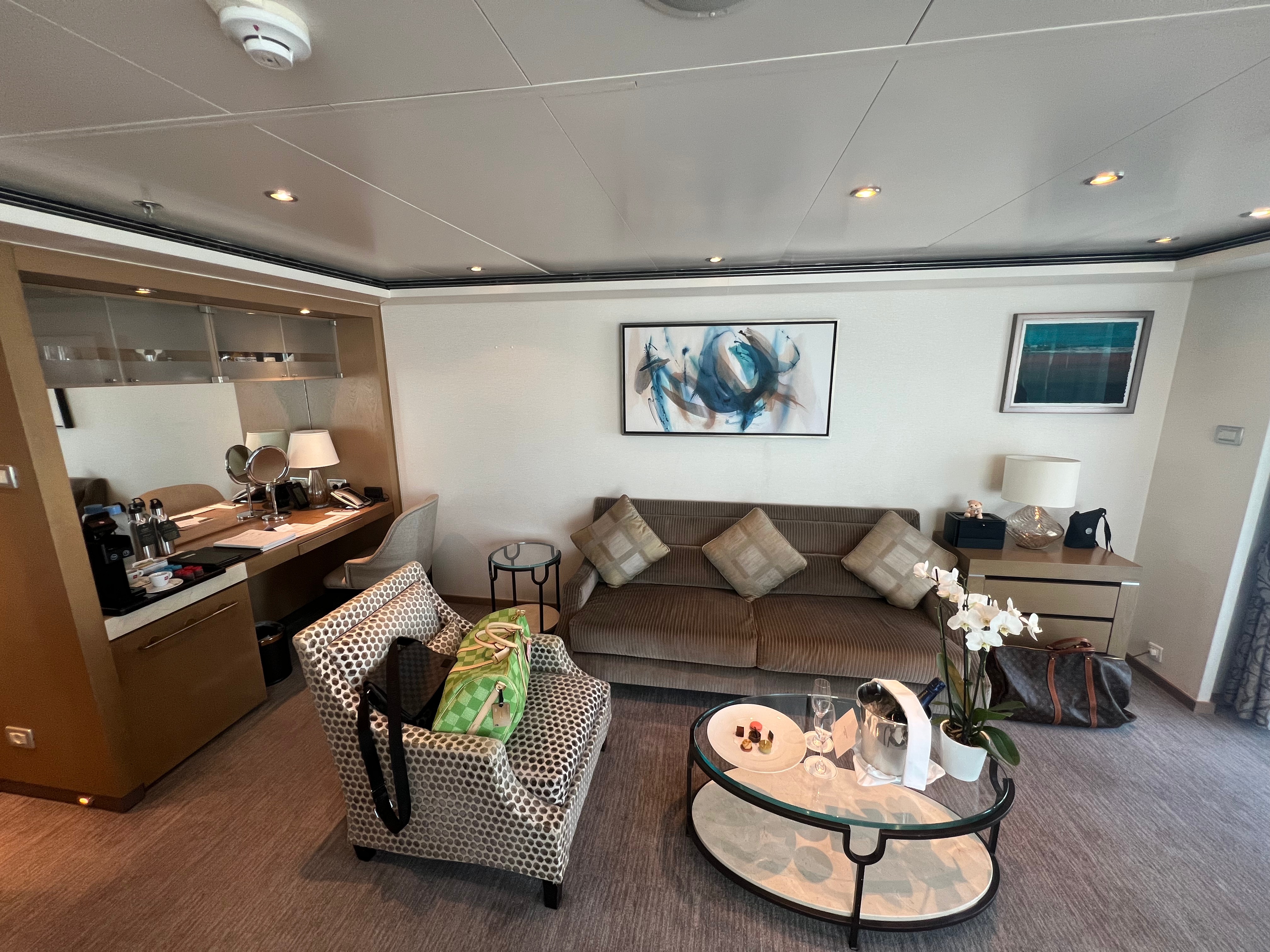
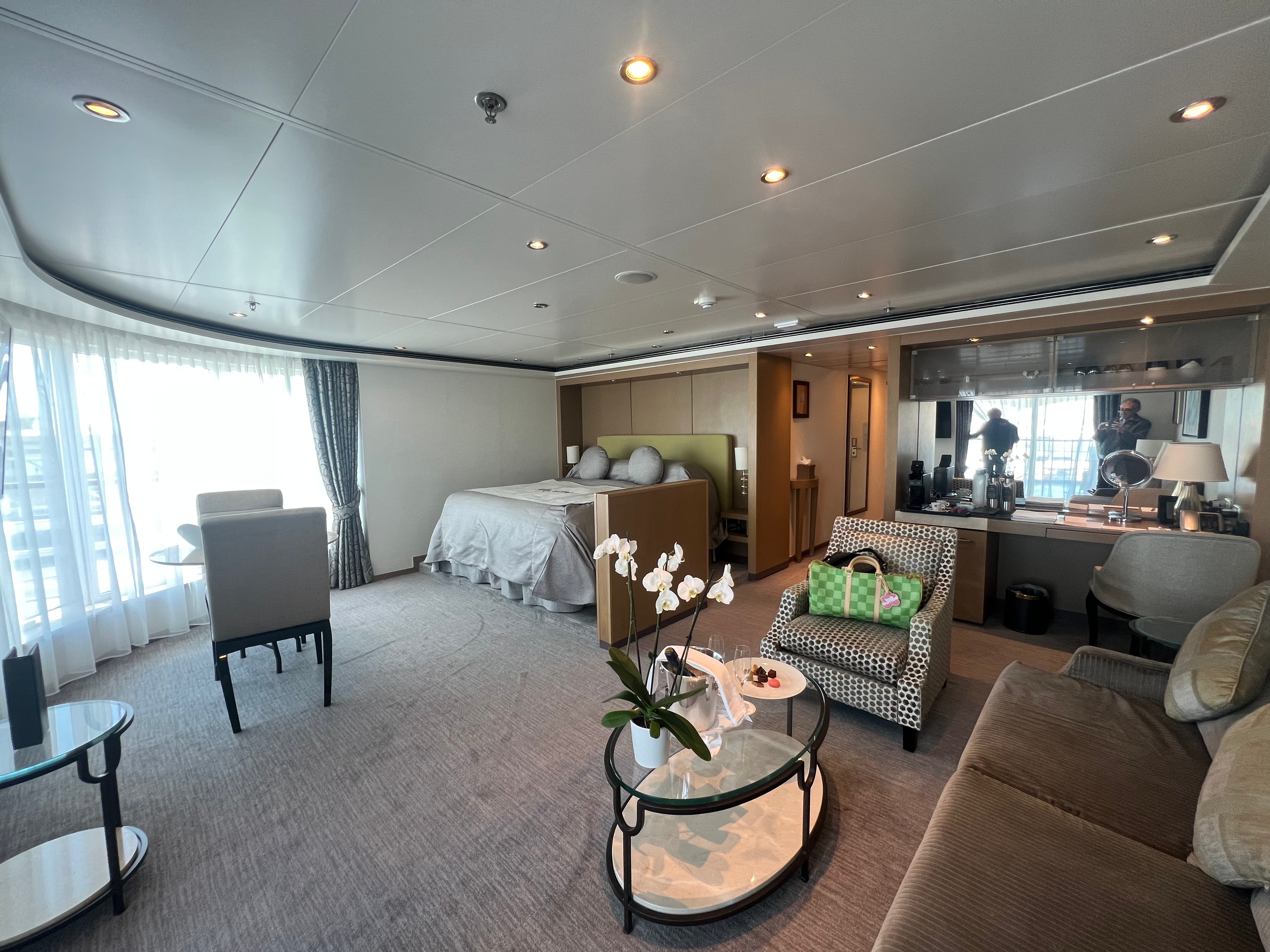
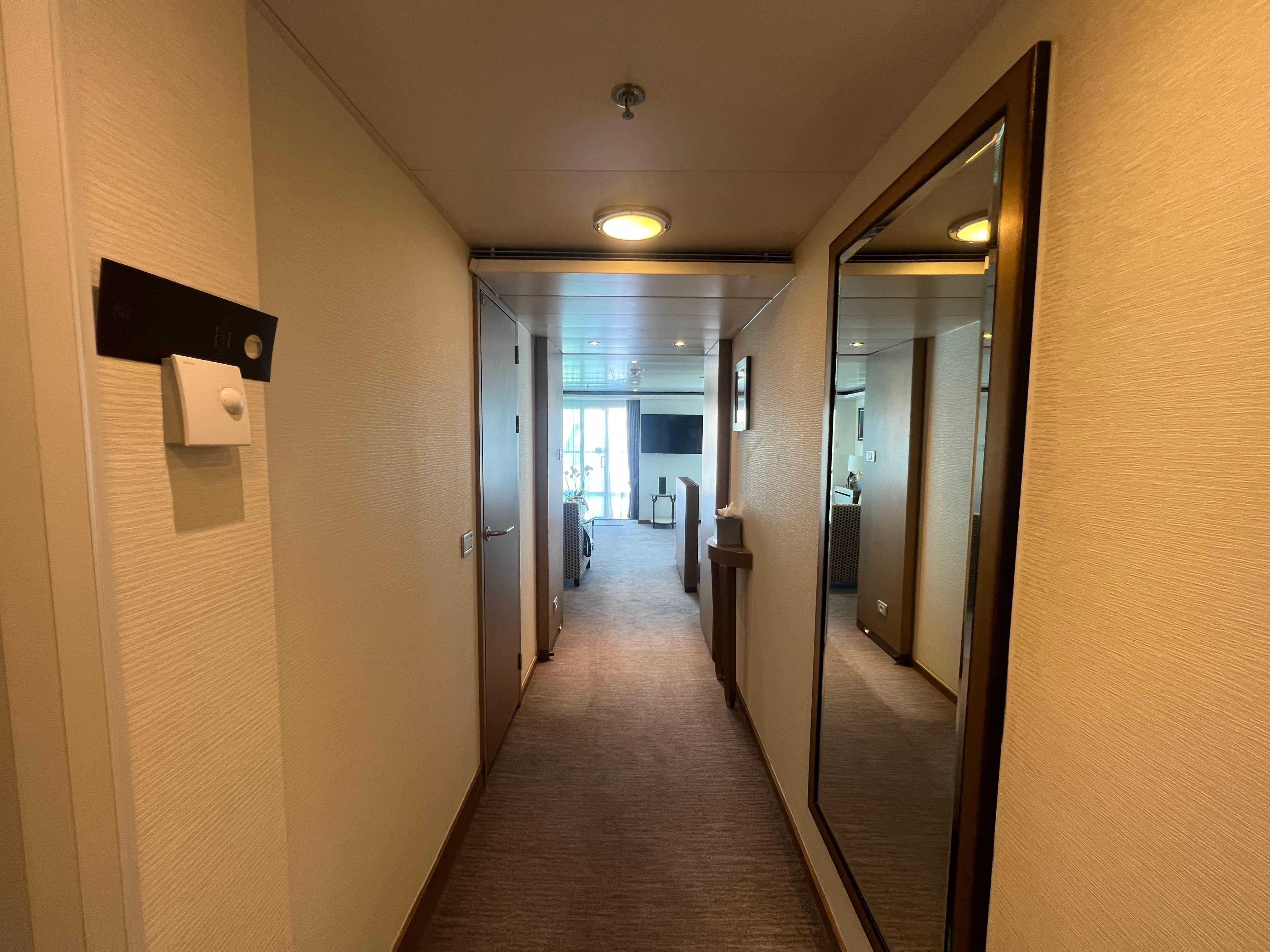

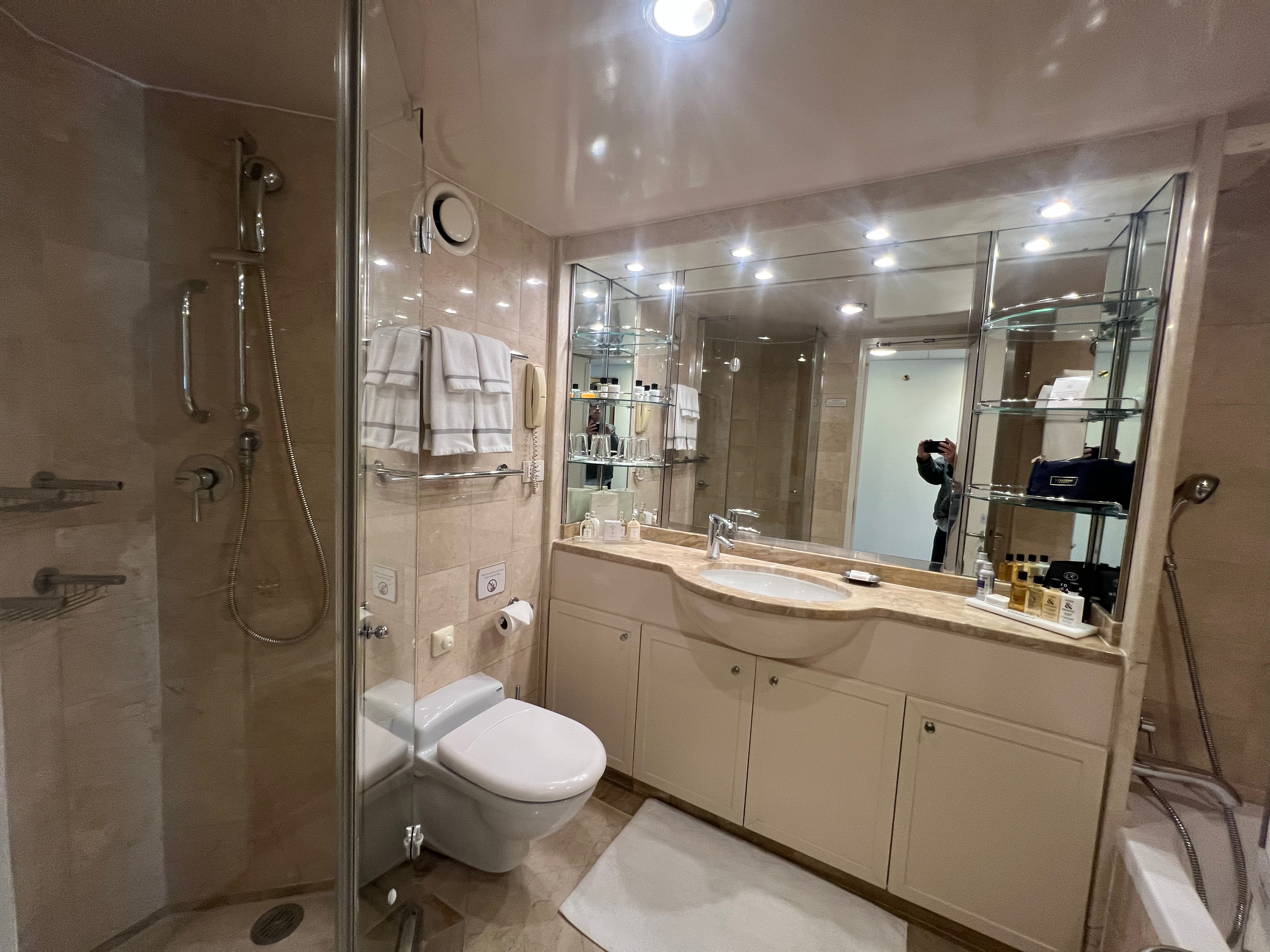


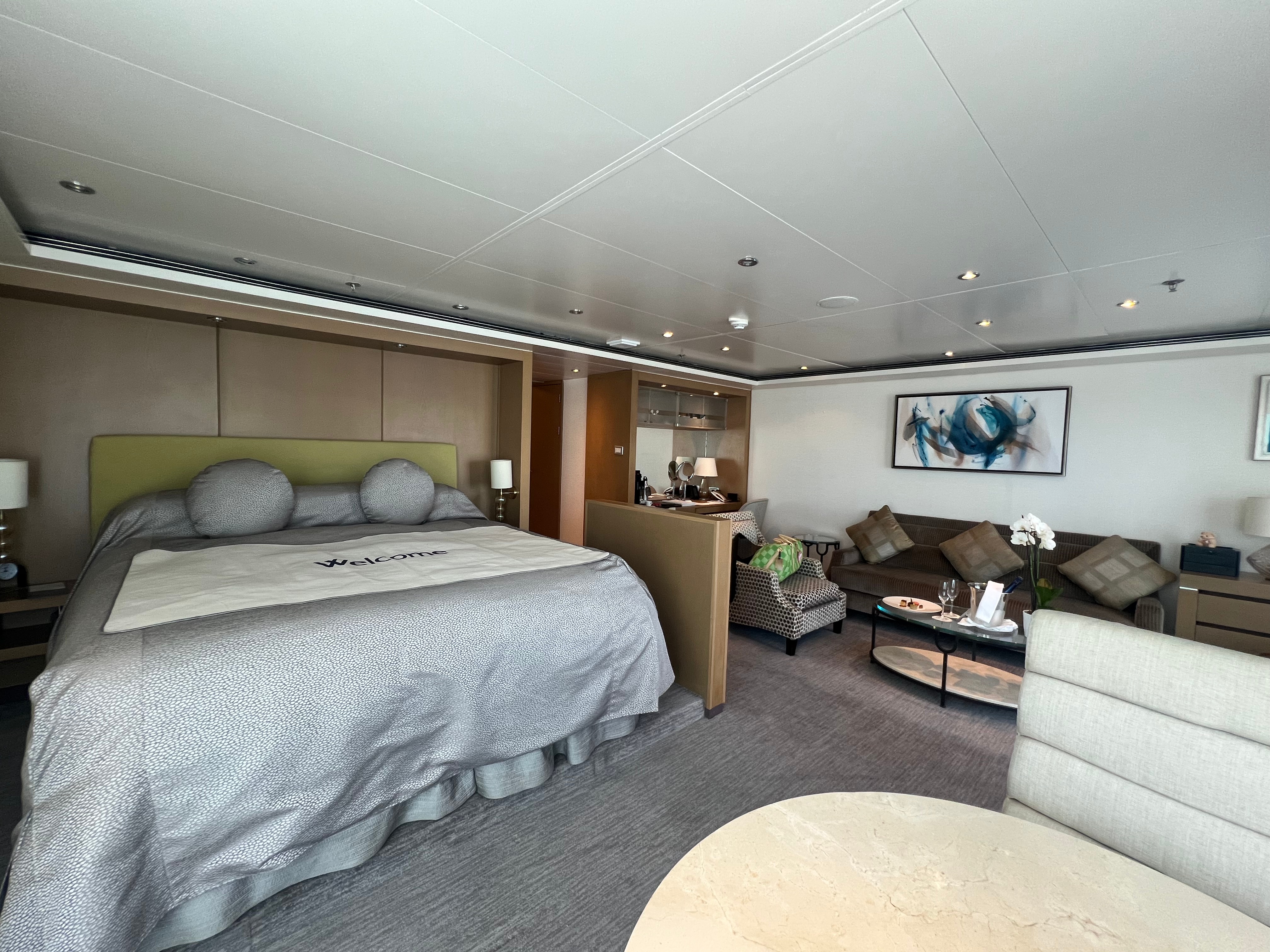
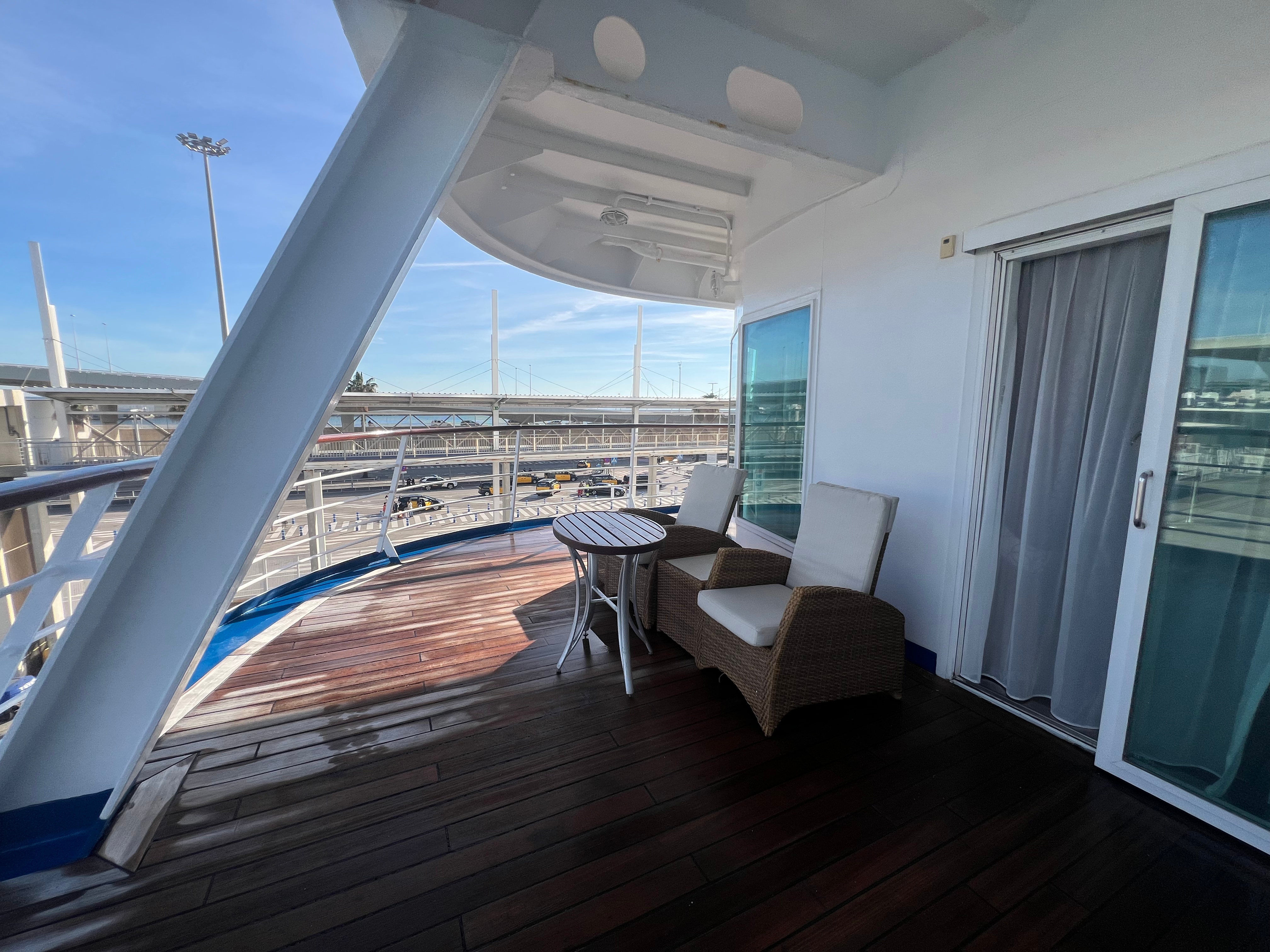
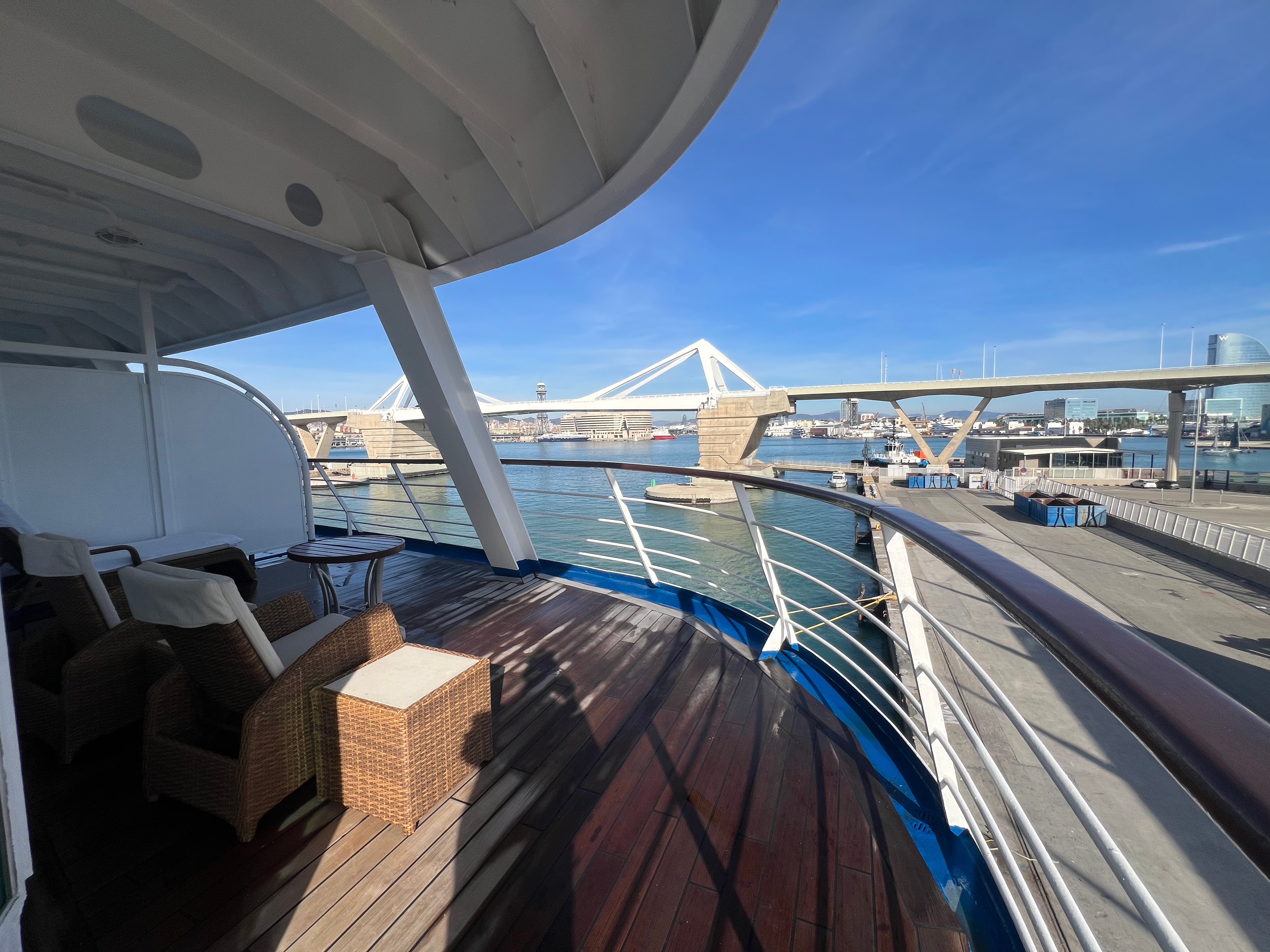
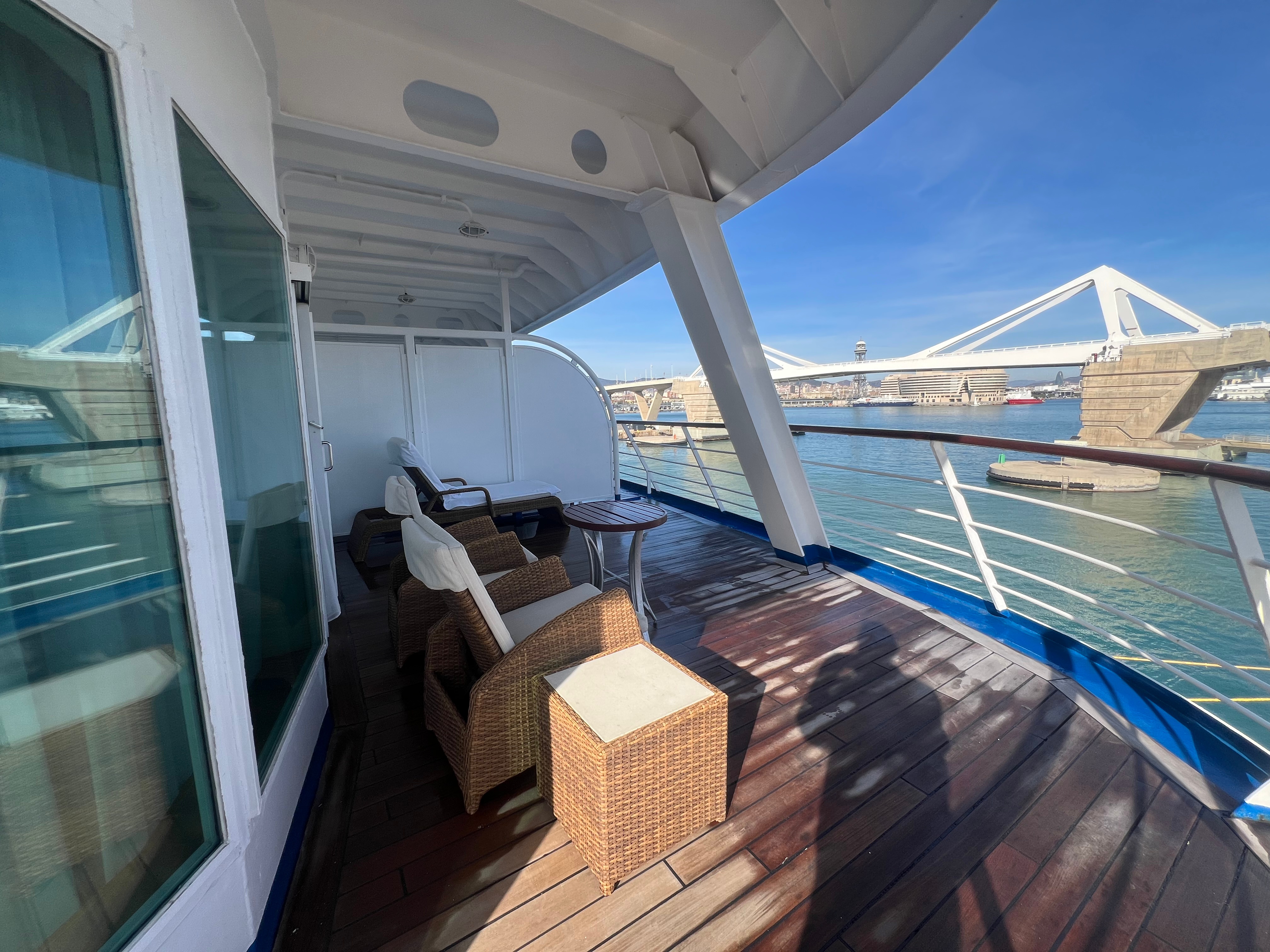
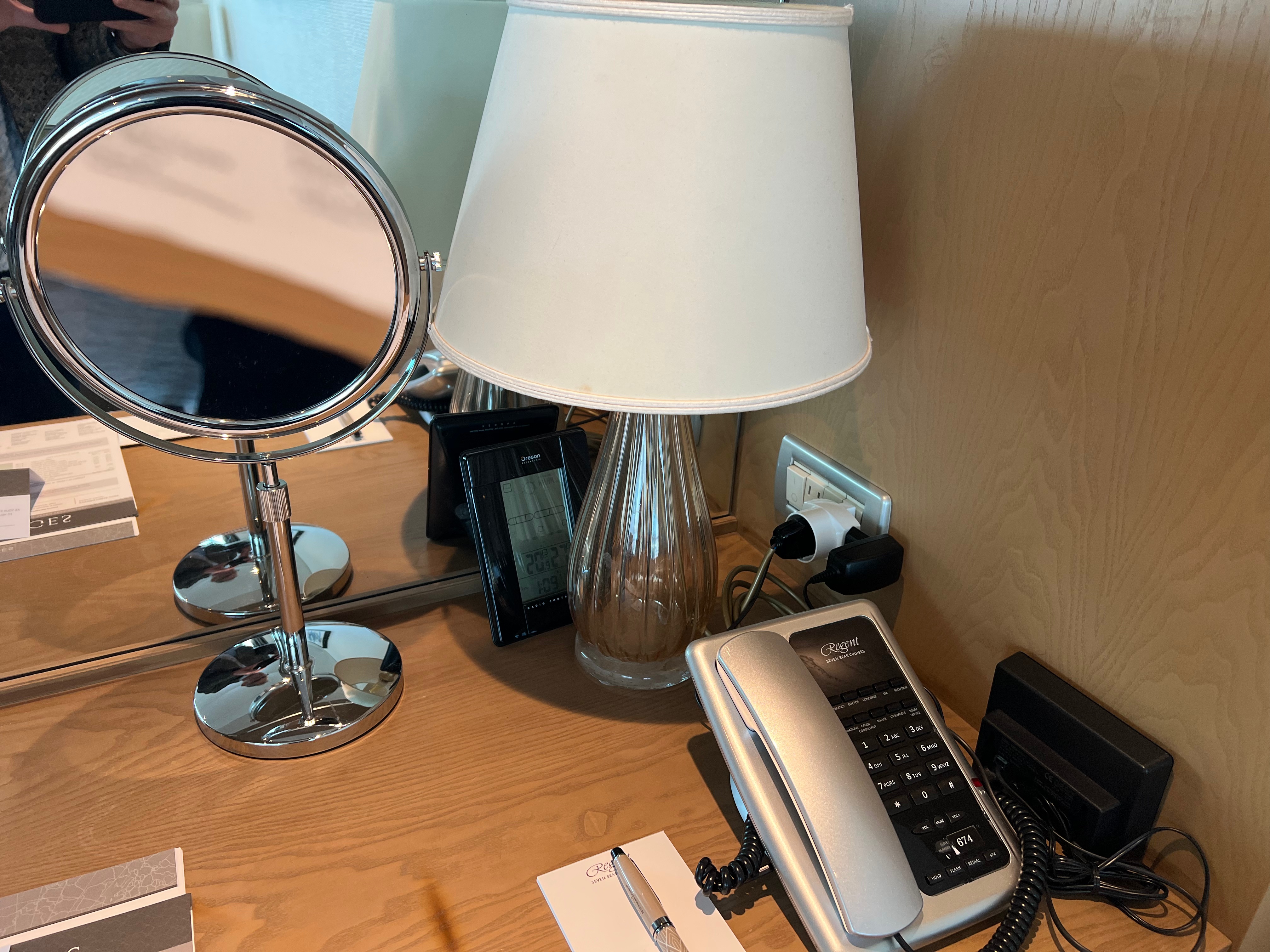


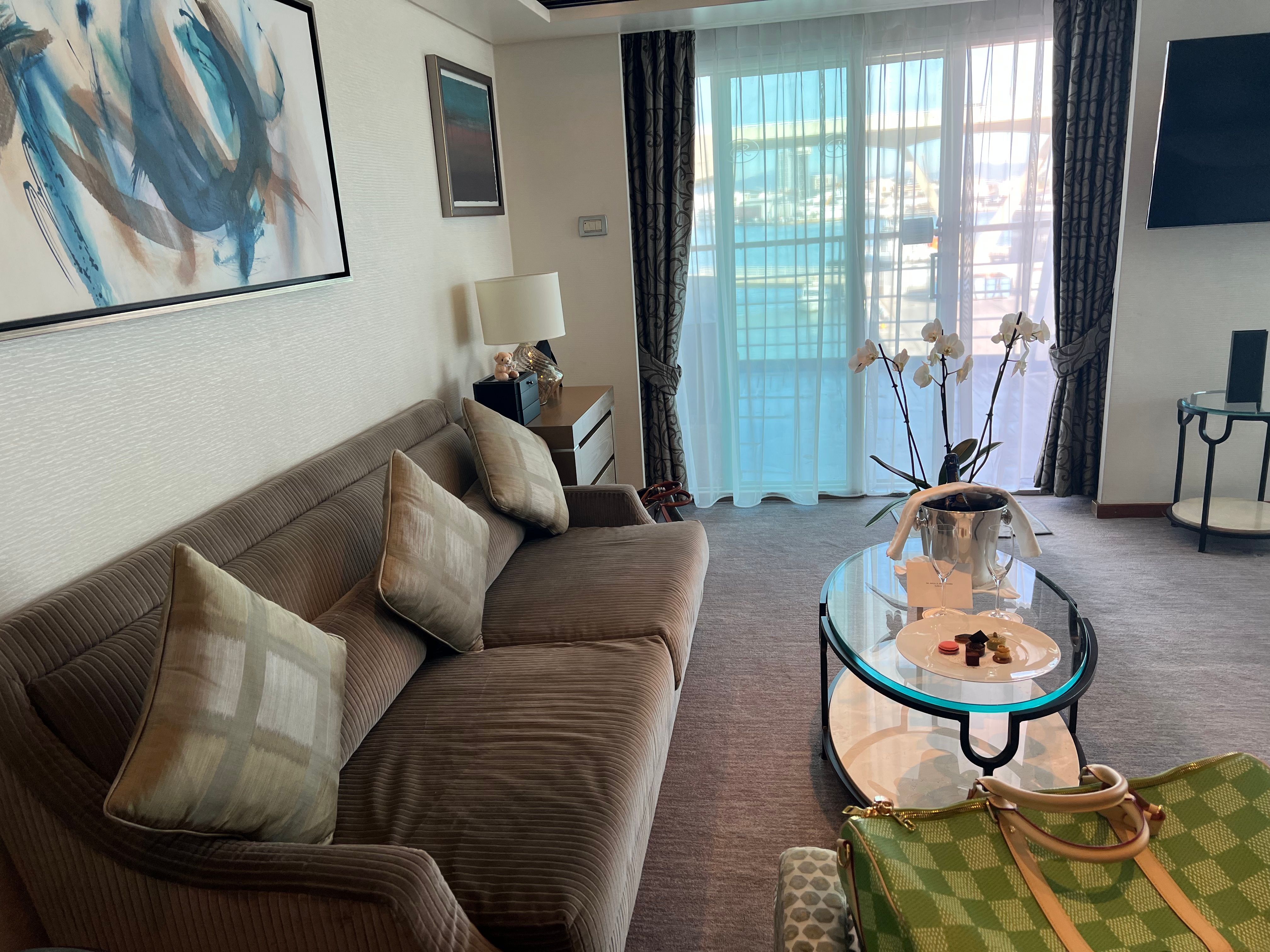
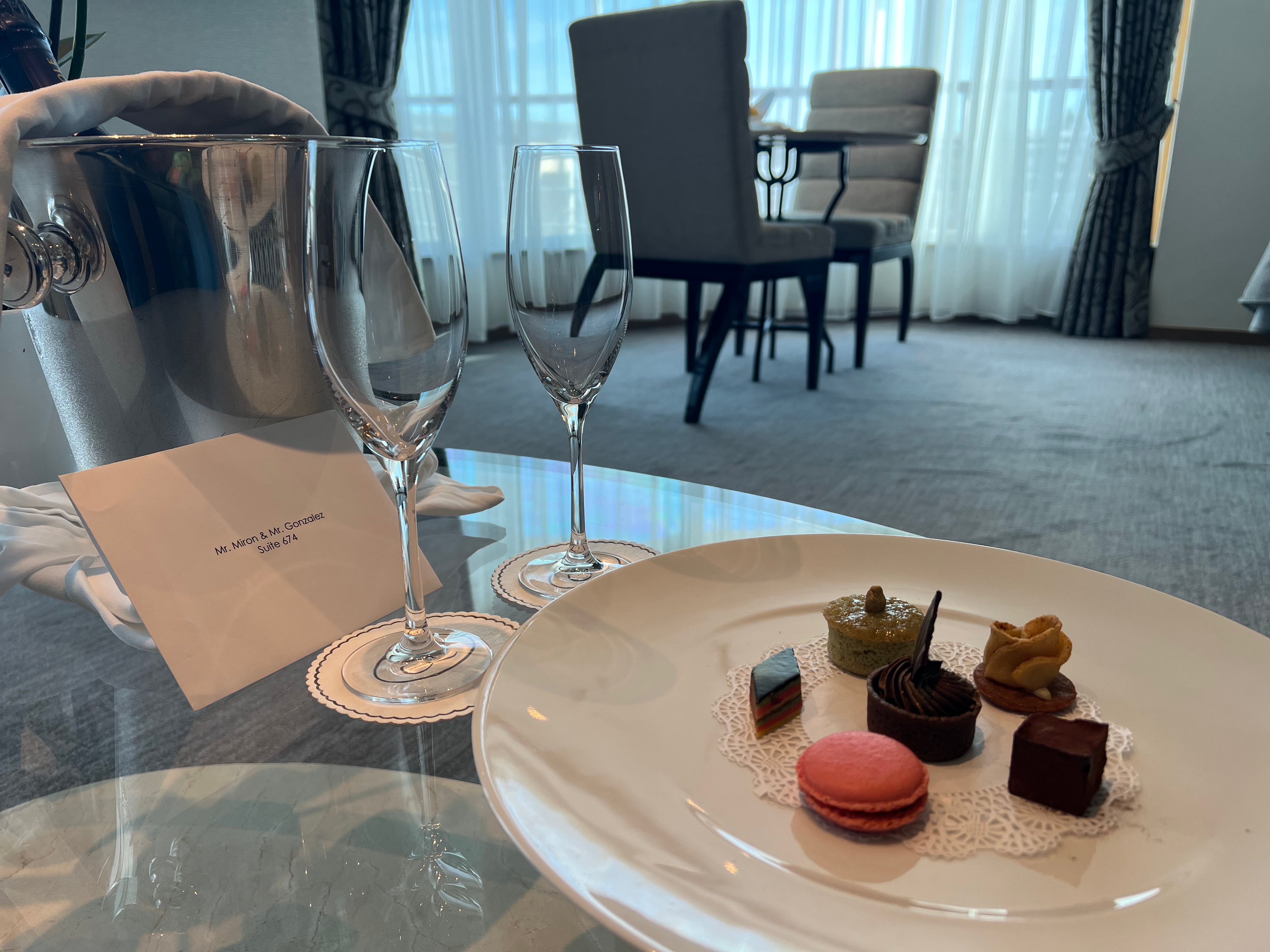


If this cabin category appeals to you, there are two important aspects you should be aware of before booking. First, due to the ship’s older design, the suite follows a fully open-plan layout, with no separation between the living, dining, and sleeping areas. While this means there is little privacy—for early risers or when room service is delivered—it does offer a generous, flexible sense of space. If you enjoy an airy, loft-style setup, this configuration may actually work in your favour.
Click here for a tour of Seven Seas Suite: https://youtu.be/GMXaDO_4eo4?si=ziQaXklfc03VKavM
The second major consideration with any cruise accommodation—beyond size and décor—is location. Cabin 674 was positioned right at the very aft of Seven Seas Voyager and on a lower deck, and this came with some unavoidable side effects. Vibrations were noticeable, particularly during docking manoeuvres and when the ship sailed at higher speeds. Seven Seas Voyager is, after all, an older vessel, and its age makes itself known through fittings that gently rattle in rhythm with the engines, creating a constant background hum.
Personally, this never troubled me. I actually enjoy feeling the movement of a ship and tend to sleep exceptionally well at sea. That said, lighter sleepers may want to pack earplugs—especially if absolute silence is a prerequisite for a good night’s rest.
The real issue with cabin 674, however, had nothing to do with vibrations. From the moment I stepped into the suite in Barcelona, it was clear that the air-conditioning system had a serious flaw. The ventilation continuously funnelled strong smells from the galley directly into the cabin. At times this meant general cooking aromas, which occasionally felt like a preview of the day’s menu. More often, unfortunately, it was the heavy, unpleasant scent of overcooked oil. During arrivals and departures, these were sometimes replaced by fuel odours—an unwelcome companion in what is meant to be a luxury suite.
I raised the issue immediately with both our butler and reception. An engineer was dispatched, and the proposed solution was to install an air purifier running 24 hours a day. While well-intentioned, this added yet another source of noise to the suite—hardly ideal in a premium environment. The alternative offered was a move to a higher deck within the same suite category, but with a smaller layout and reduced balcony space. Given what I had originally booked and paid for, this felt like a compromise rather than a solution.
Thankfully, the situation took a positive turn on the third day after a genuinely constructive and refreshing conversation with the ship’s General Manager, Vlady—an outstanding personality whose calm professionalism made an immediate difference. He arranged our move to a Voyager Suite on Deck 10, cabin 1008, and from that moment, the experience shifted dramatically.
Seven Seas Voyager has just eight Voyager Suites onboard, each offering a generous 554 square feet of interior space and a 50-square-foot balcony. Upon arrival, we were welcomed with a bottle of Veuve Clicquot Champagne—a fitting gesture for this category. However, some inclusions that had previously been advertised, such as the one-time in-suite caviar service and delivery of up to three daily newspapers, were no longer provided. Whether this was due to the nature of what was essentially a “forced” upgrade or simply another quiet cost-saving adjustment, it felt slightly misaligned with Regent’s promise of “unparalleled luxury,” especially in the context of service recovery.
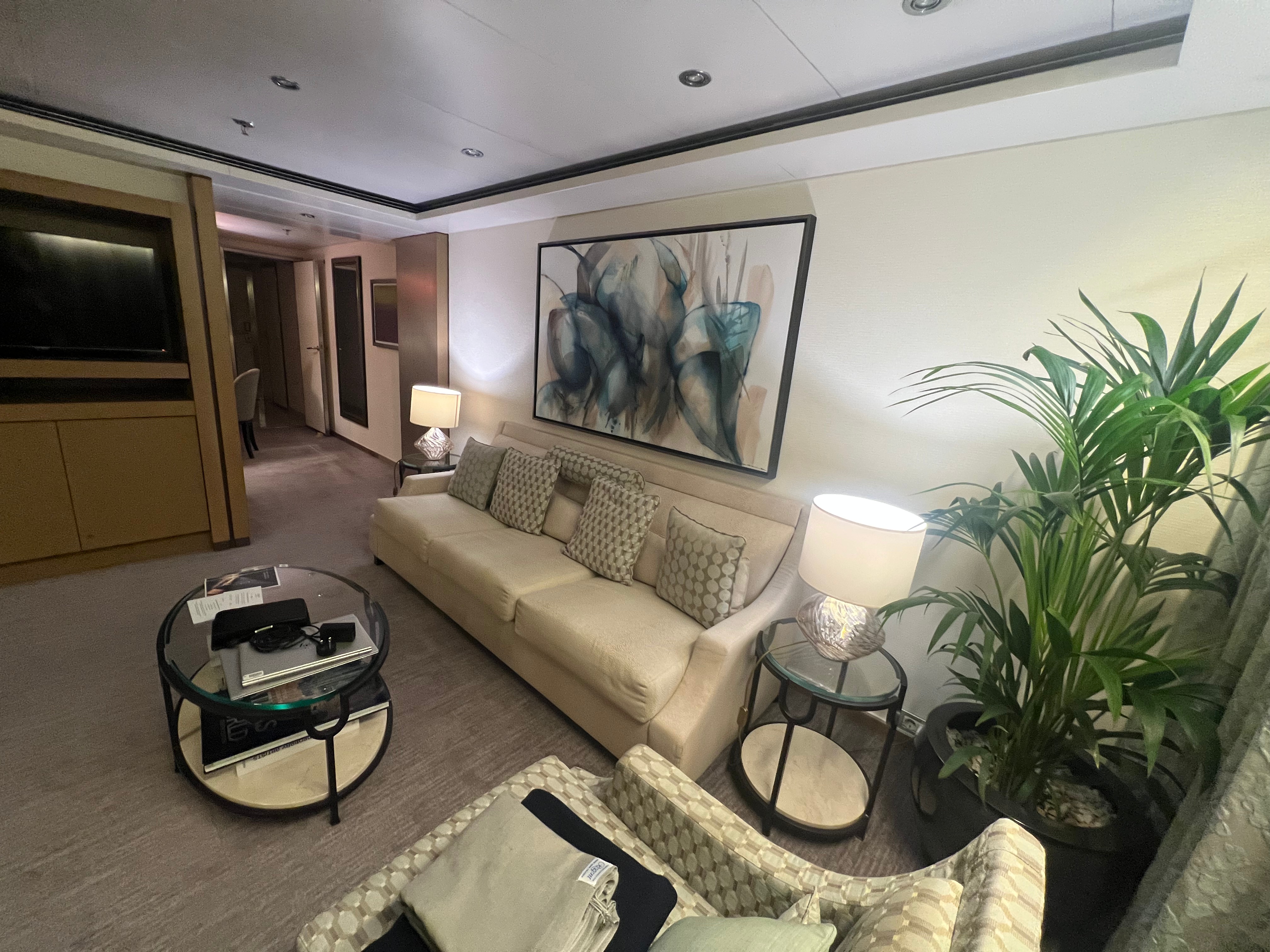
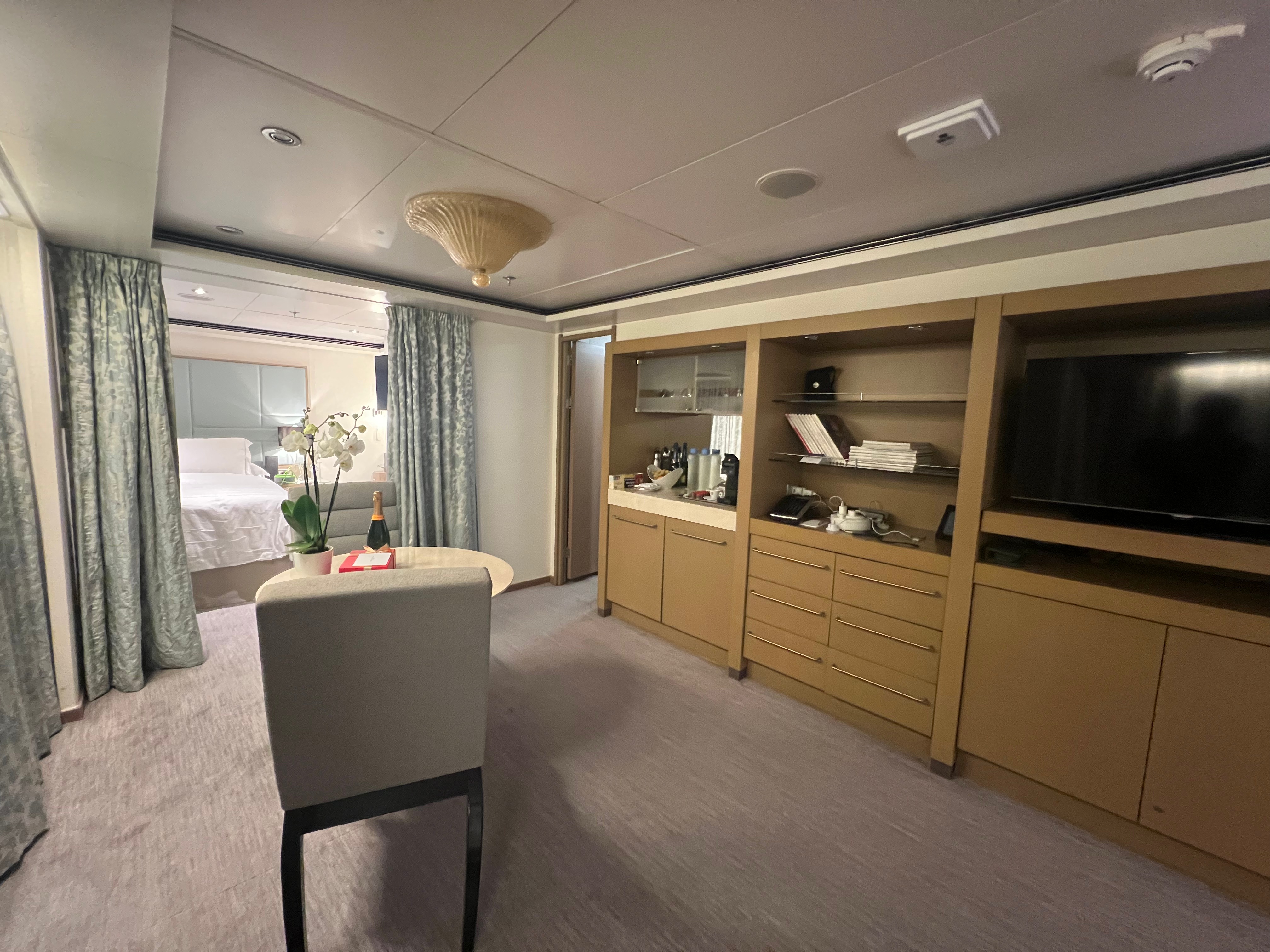
The suite itself features an unusual yet clever design. The balcony is inset between the living room and bedroom, with the railing flush to the ship’s exterior walls. This layout subtly separates social and private spaces while allowing natural light to flood both rooms through additional windows overlooking the balcony. The result is a surprisingly bright, airy, and well-balanced suite. An additional half-bath near the entrance proved particularly useful and is a real advantage for entertaining.
Décor follows a calming palette of greys, beige, and blues. A medium-toned wood shelving unit in the living area houses the television, minibar, and ample storage. Furnishings include a comfortable sofa, a glass-topped coffee table, two side tables with lamps, and a well-proportioned armchair. Floor-to-ceiling windows dominate the living room, enhanced by an extra corner window facing the balcony. Between the living room and bedroom sits a small round dining table for two, conveniently positioned near the sliding doors.
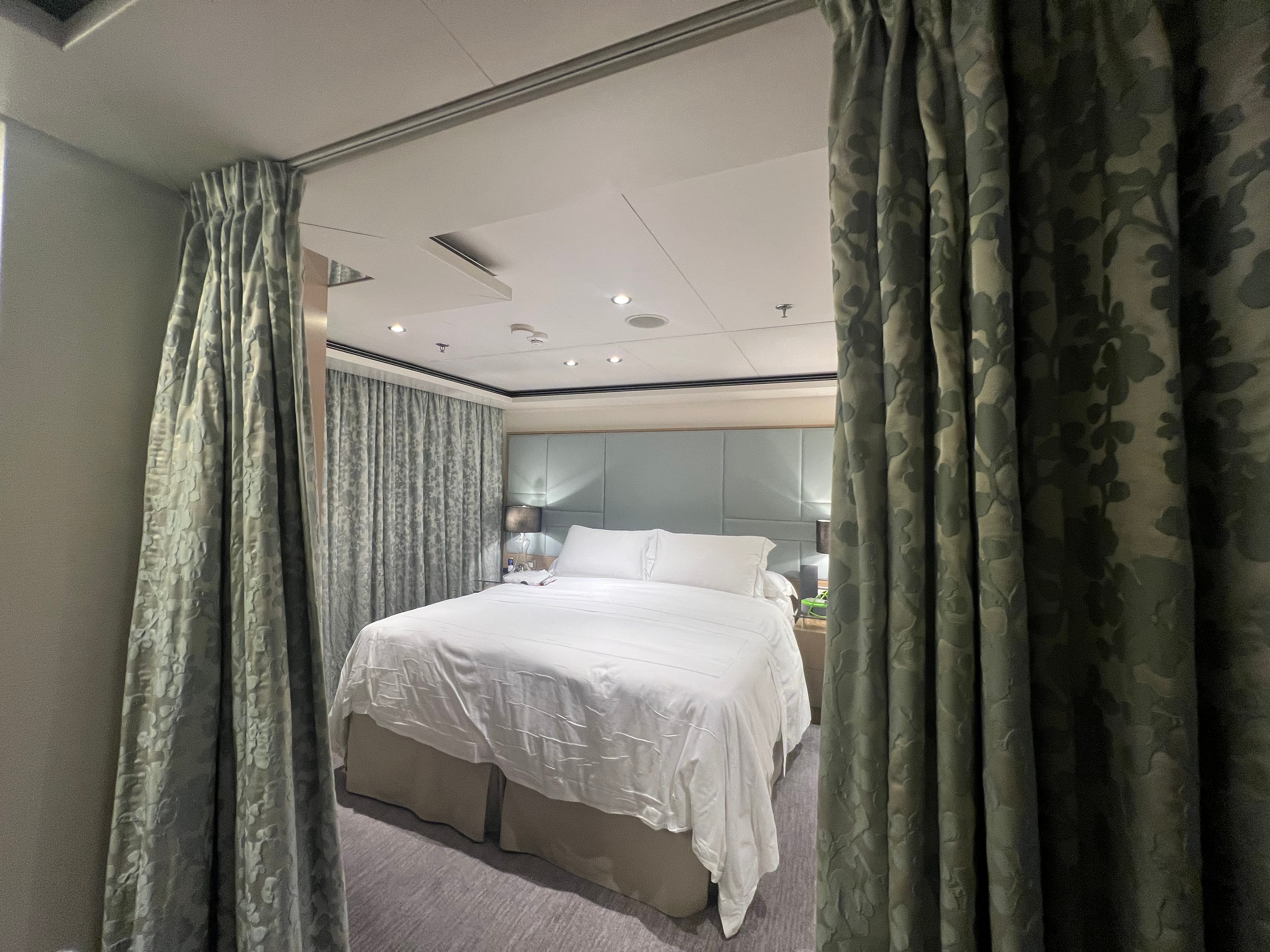
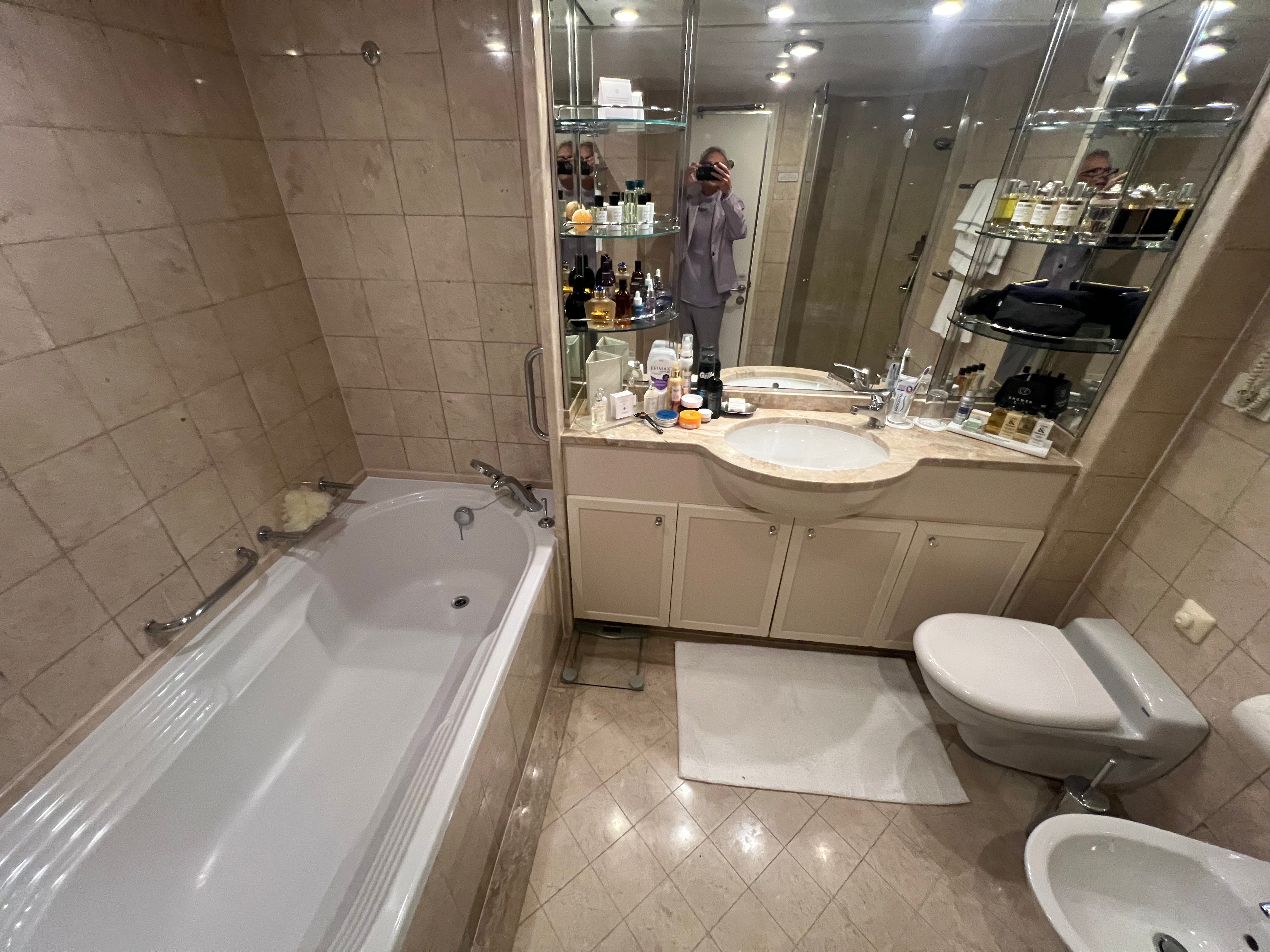
The bedroom is softly separated from the living space by curtains—a design detail I genuinely loved. Two bedside tables with lamps flank the bed, while a vanity with six drawers provides excellent storage. The bathroom felt calmer and less cluttered than in other categories, with Aqua di Parma amenities replenished daily. The addition of a bidet added a distinctly continental and very welcome touch.
Less successful was the entrance hall, where a small desk with an overhead shelf and a bureau felt awkwardly placed and underused.
Overall, this suite came closest to what I imagine Regent intends when it promises a truly luxurious experience. Retaining our excellent butler, despite a change in housekeeping team, further reinforced that impression. Once again, when Regent gets it right, it’s the people—not the hardware—who make the real difference.
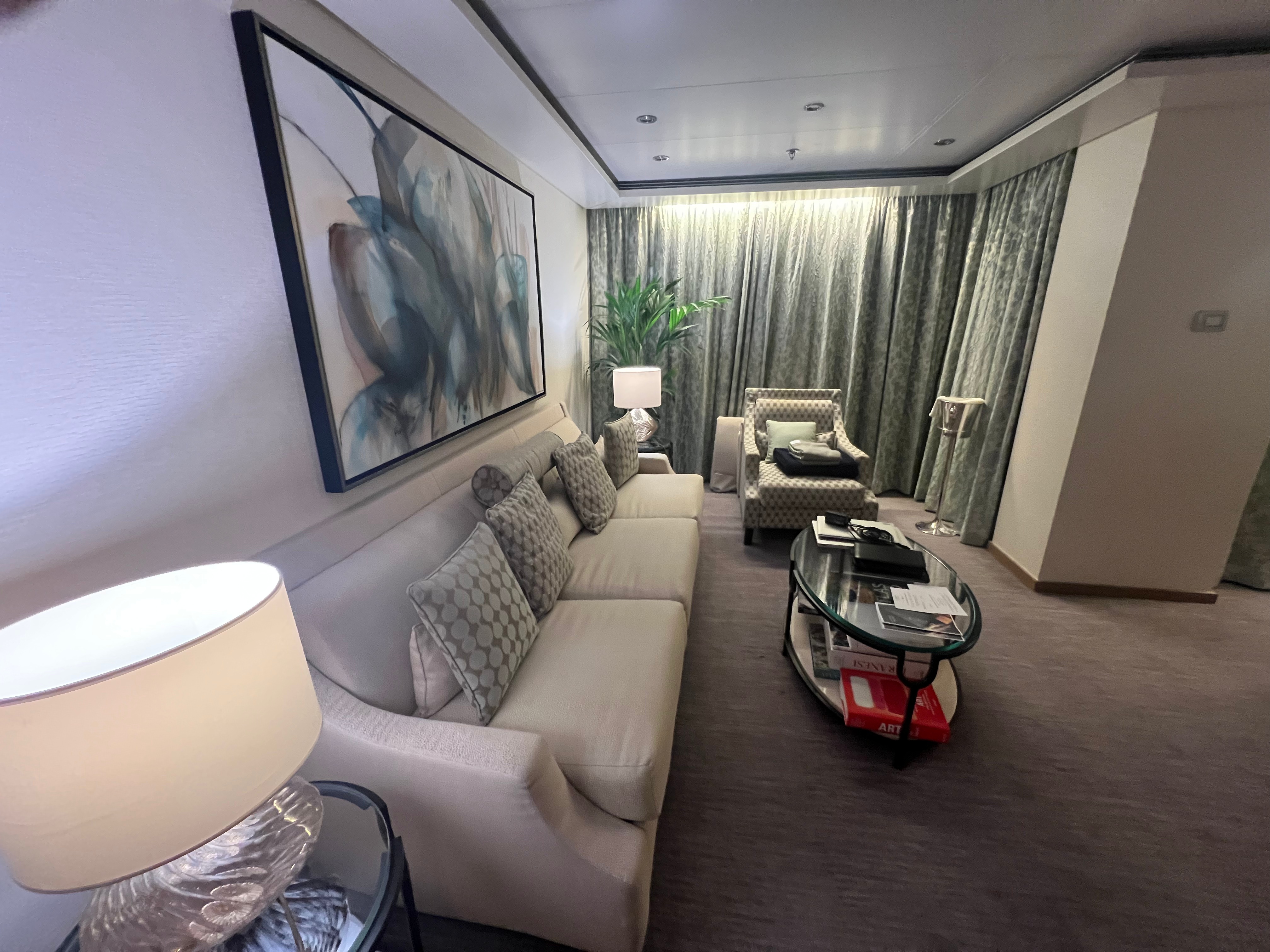





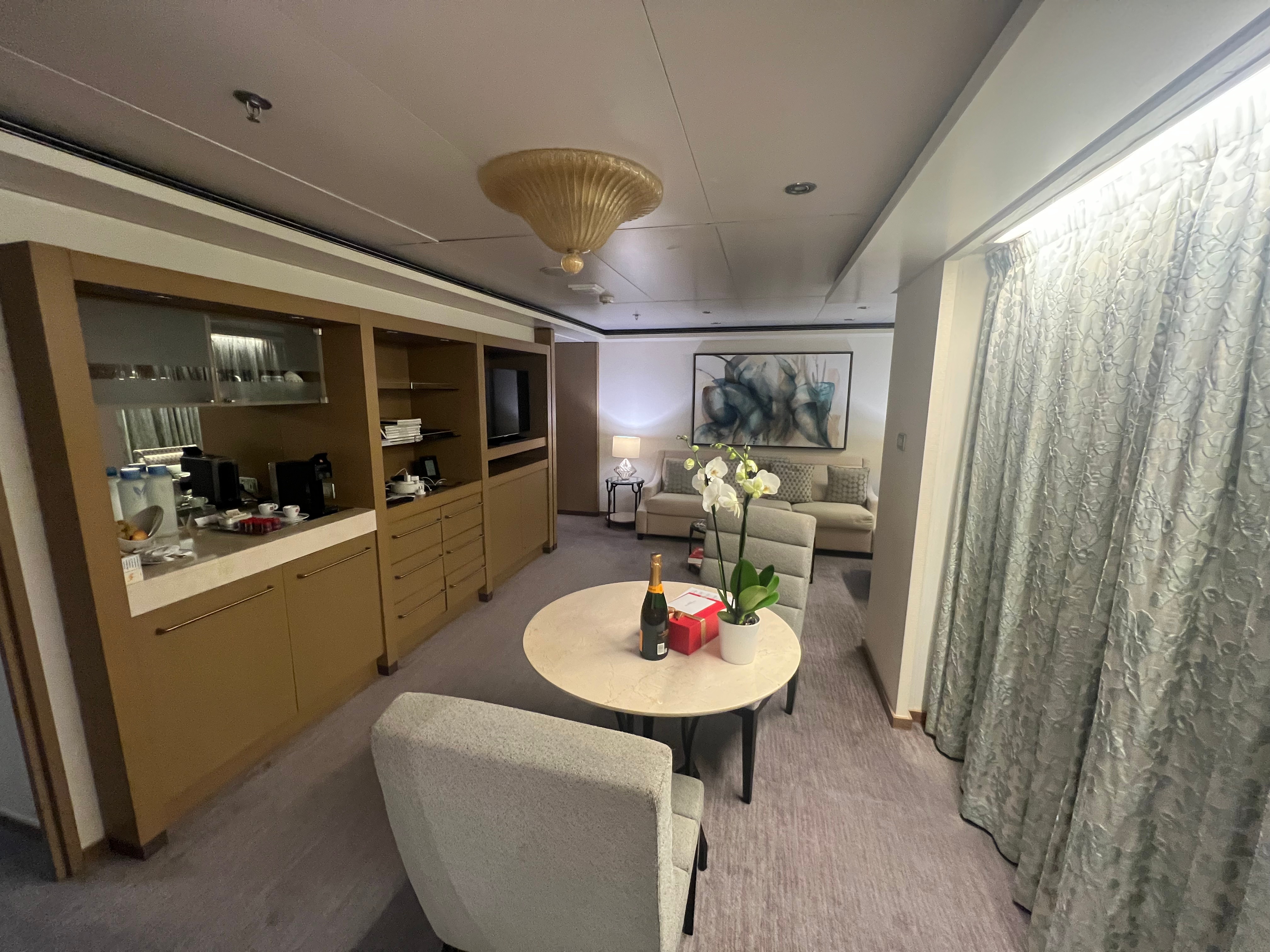
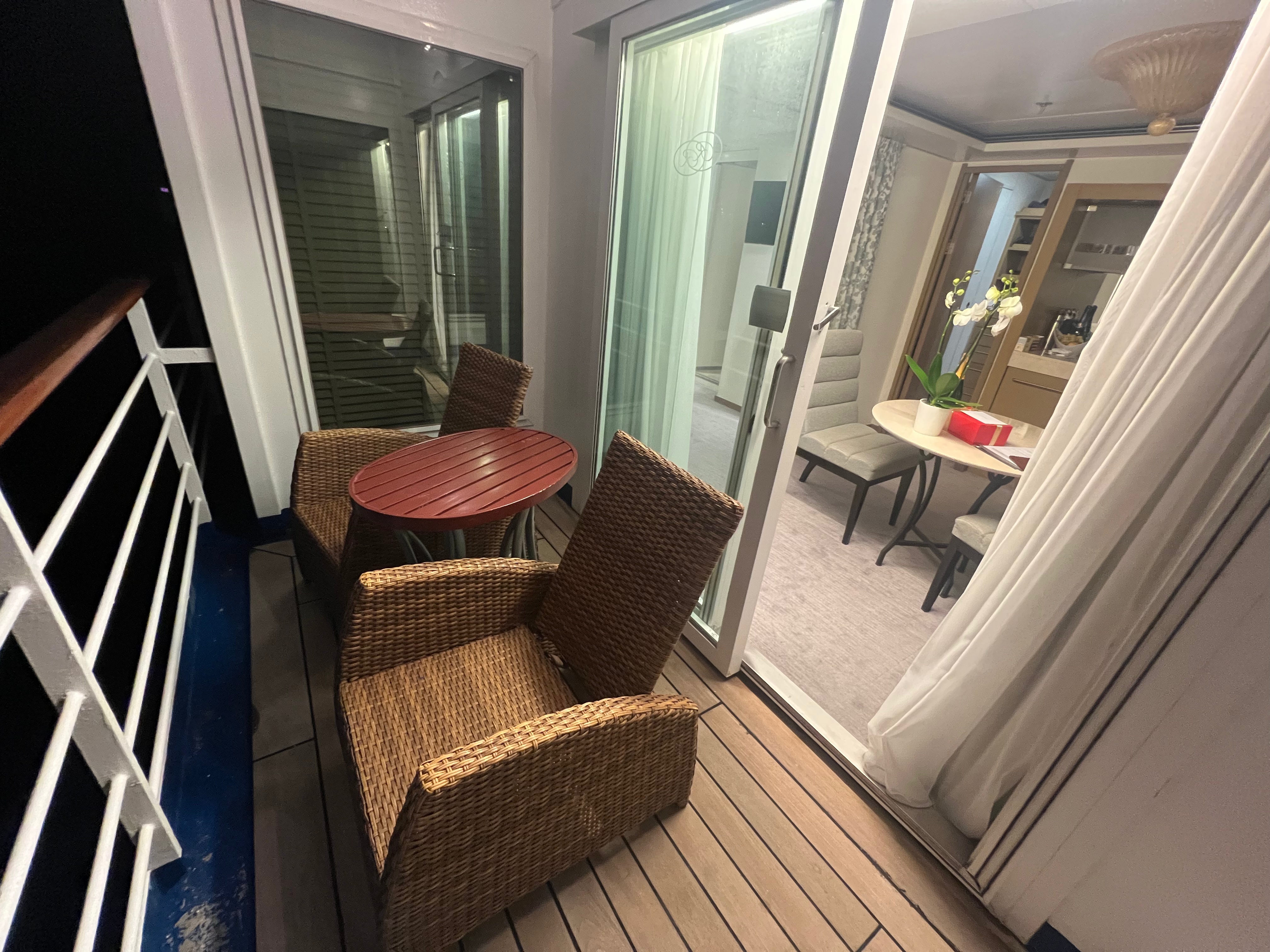


Click here to see the Voyager Suite: https://youtu.be/GMXaDO_4eo4?si=JSAEyo_30uccfuoT
Taking into account my time spent in two different cabin categories—the Seven Seas Suite and the Voyager Suite—I came away genuinely impressed. Yes, Seven Seas Voyager is very much an “old lady,” but her accommodation still comes remarkably close to what one expects from ultra-luxury cruising. The fundamentals are strong: generous space, sensible layouts, supremely comfortable beds, and, most importantly, service that often elevates the experience well beyond the ship’s age.
That said, a few details clearly need attention. Inconsistent amenities, dated technology, the odd mechanical hiccup, and subtle signs of cost-cutting feel out of place at this price point and sit awkwardly alongside Regent’s promise of “unparalleled luxury.” None of these are deal-breakers, but they are noticeable—especially for well-travelled guests who know exactly what true value at this level looks like.
With a major refurbishment planned for March 2026, the potential is undeniable. If executed well, it could close the gap between promise and reality. For now, my accommodation experience earns a confident 8 out of 10—very good, but not quite exceptional.
THE SHIP
Seven Seas Voyager immediately impresses with a sense of calm and understated sophistication. She strikes a rare balance between cultured refinement and refreshingly informal comfort, making the ship feel welcoming rather than intimidating. For first-time passengers, the reaction is often genuine surprise: “All this space for just 700 guests?” Despite spanning nine passenger decks, Voyager isn’t excessively long from bow to stern, which means navigating the ship is intuitive and walking from one end to the other never feels like a chore.
The atrium serves as the social heartbeat of the vessel, stretching light-filled and airy through the ship’s core. Here, key services—reception, the destinations desk, library, casino, boutiques, and espresso bar—are thoughtfully grouped, ensuring that everything you might need is within easy reach. The atrium also houses Club.com, the ship’s internet and computer centre, which operates 24 hours a day. Guests can access computers, attend classes on digital photography or software, or simply check emails across time zones—a surprisingly thoughtful touch for an international clientele.
When the weather allows, life naturally shifts to the Lido Deck on Deck 11. Here, the pool, pool grill, bar, and La Veranda buffet restaurant create a relaxed, resort-style atmosphere. Evenings are equally inviting, unfolding across three lounges and a cigar bar, each offering its own mood—from quiet and intimate to lively yet never overwhelming.
I was particularly charmed by the library on Deck 6. Stocked with a substantial collection of books, international newspapers, and DVDs, it remains open around the clock—a perfect retreat for readers and thinkers alike. Card rooms on Decks 4 and 5, along with complimentary self-service laundry rooms from Decks 6 through 10, add practical convenience. Each laundry room is well equipped with washers, dryers, irons, detergent, baskets, a sink, and even a television. A medical facility is located on Deck 3.
Despite some criticism of the ship’s age, I genuinely love Voyager’s indoor public spaces. Their understated elegance, thoughtful layout, and user-friendly design make the ship itself a destination. The spaces feel refined without tipping into excess, blending comfort, convenience, and style in a way that enhances the overall cruise experience. Simply put, Seven Seas Voyager is a ship you can explore and enjoy at your own pace, without ever feeling rushed or overwhelmed.

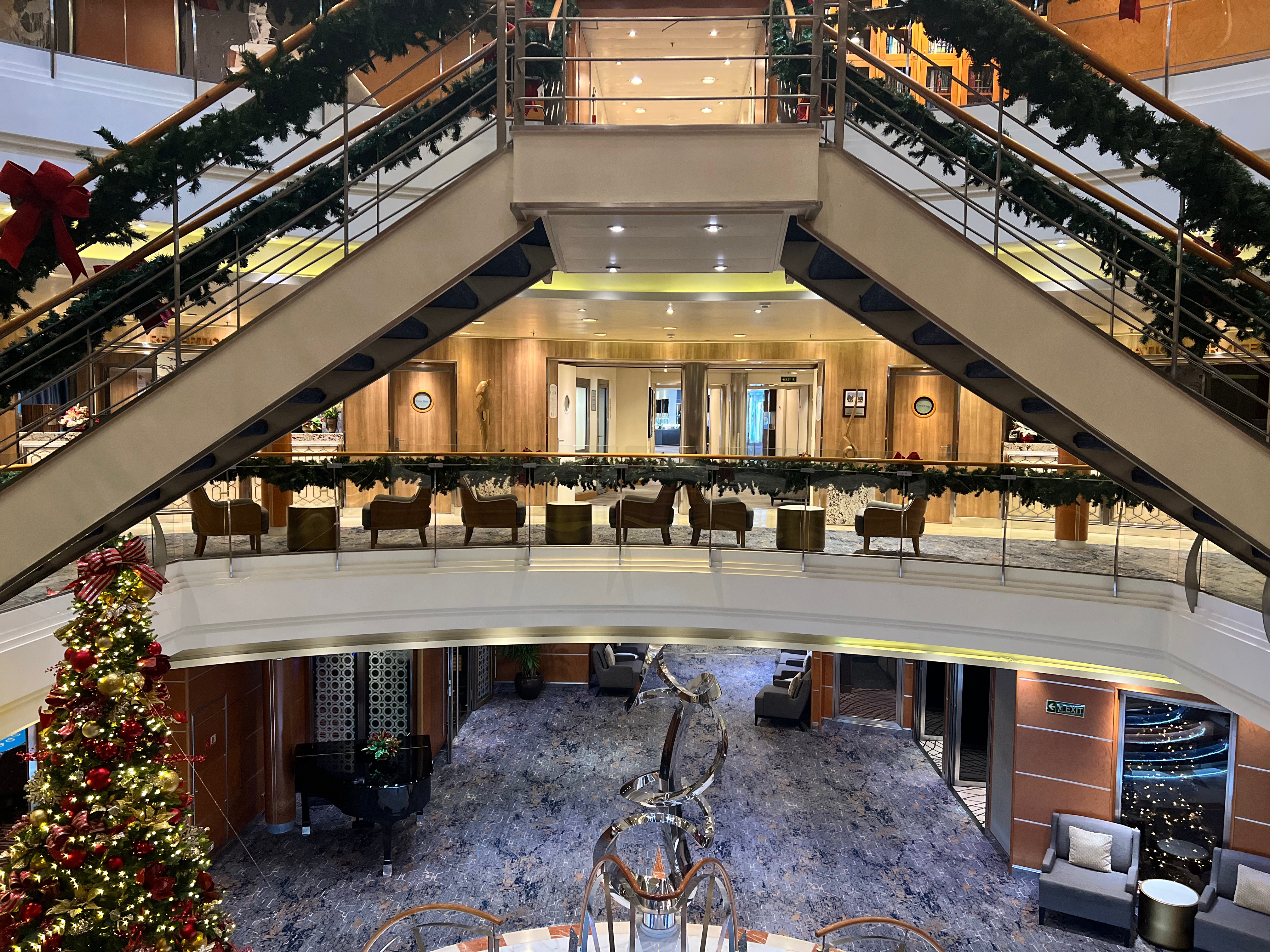
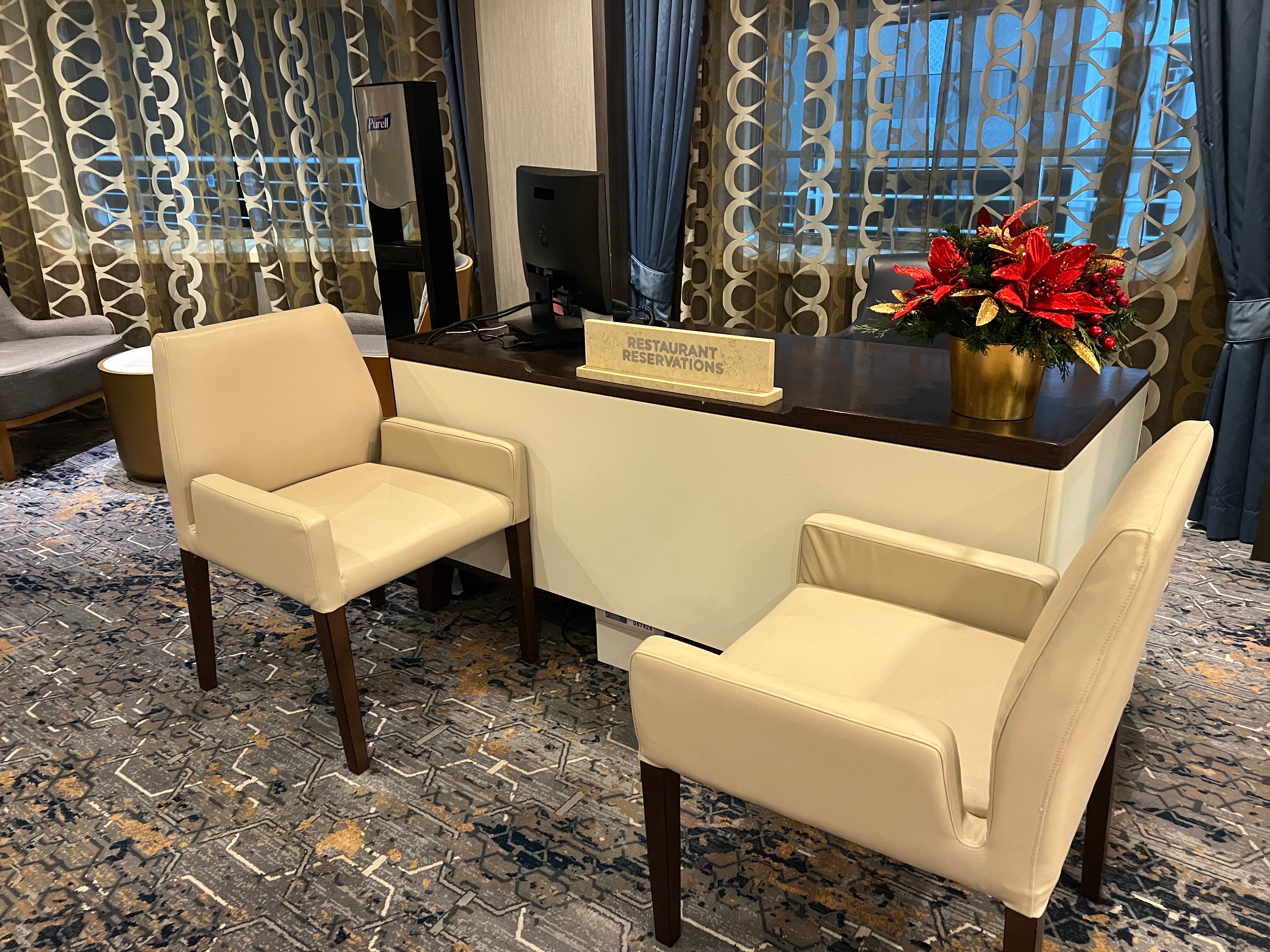
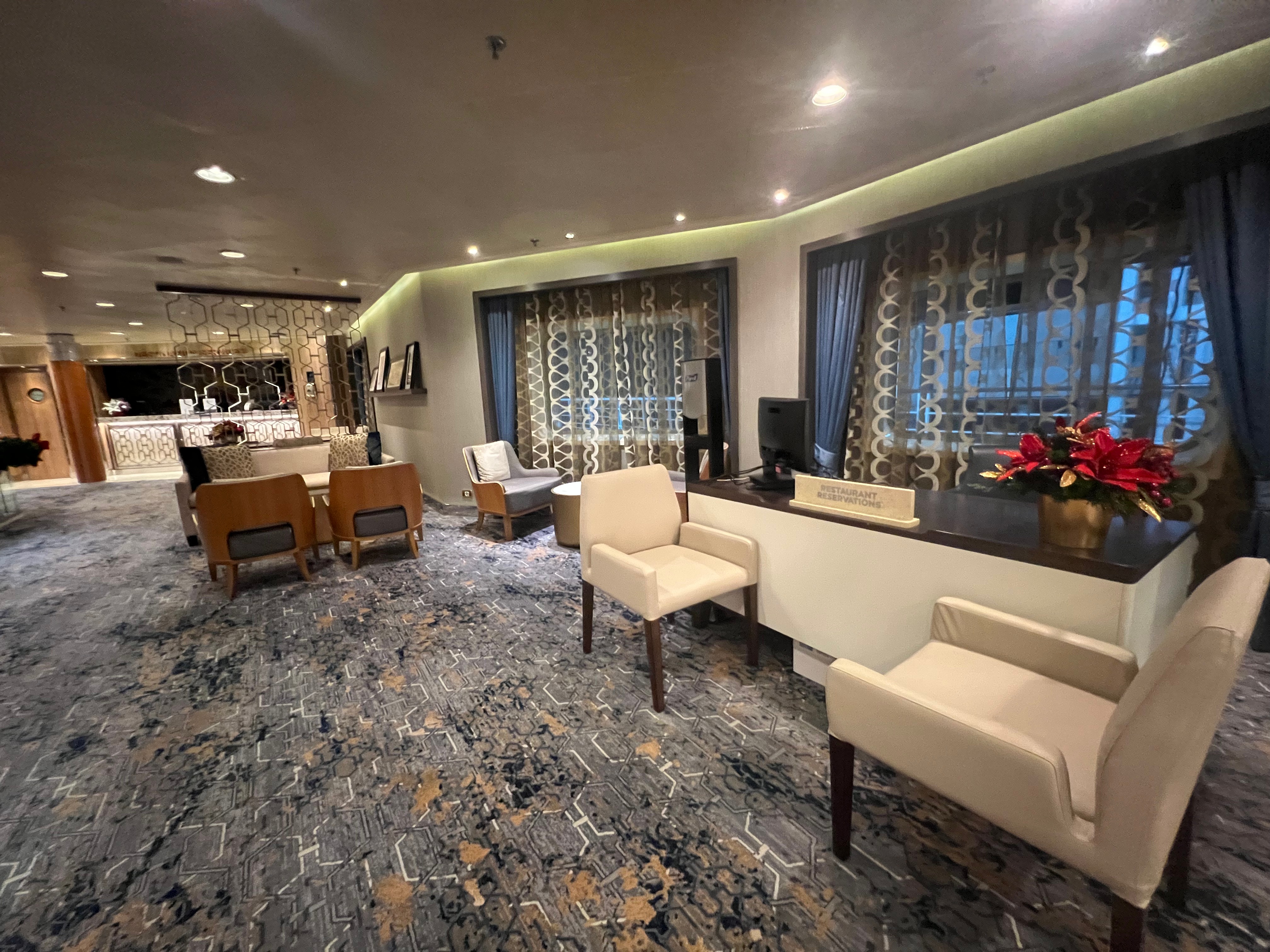


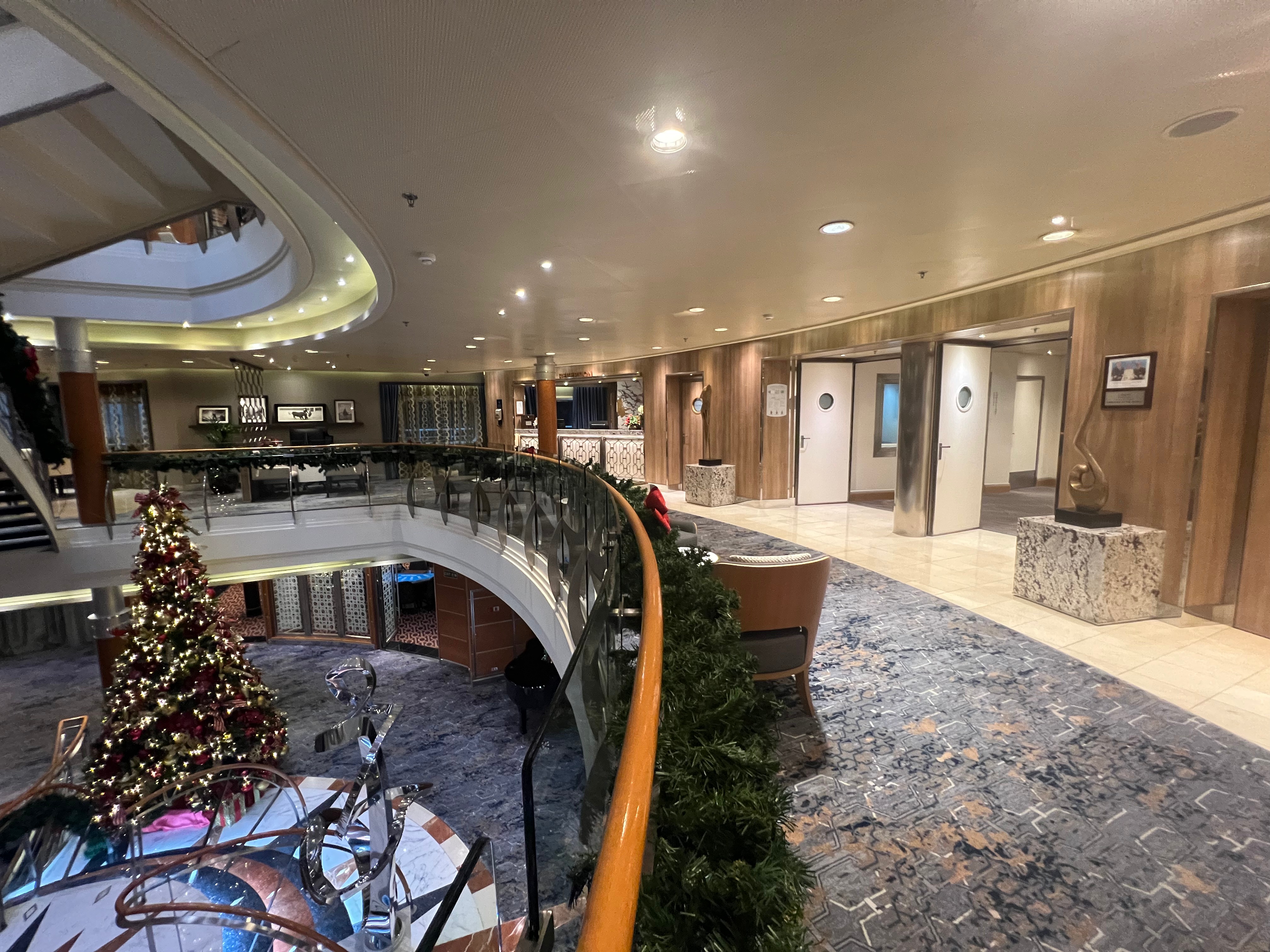


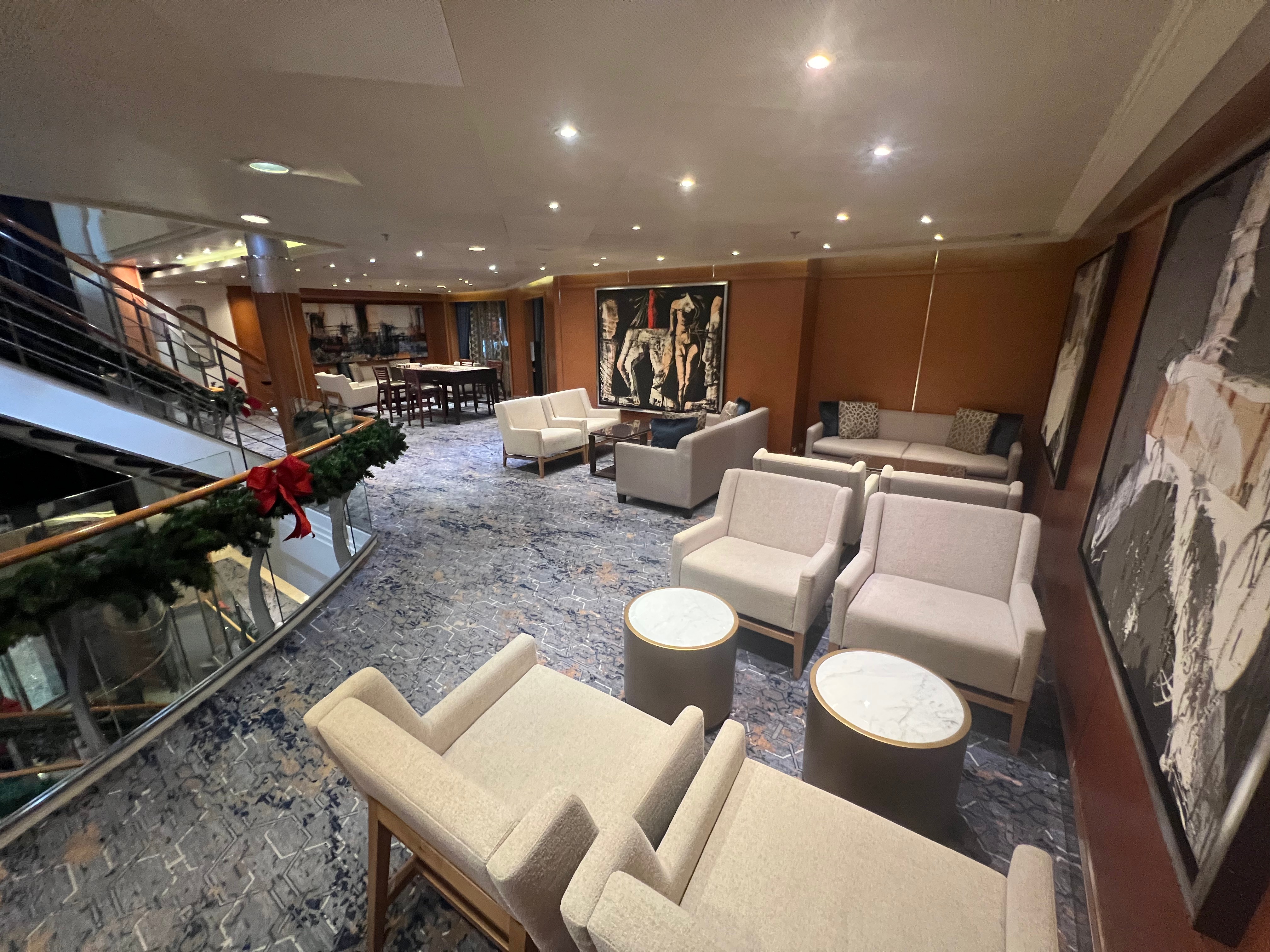


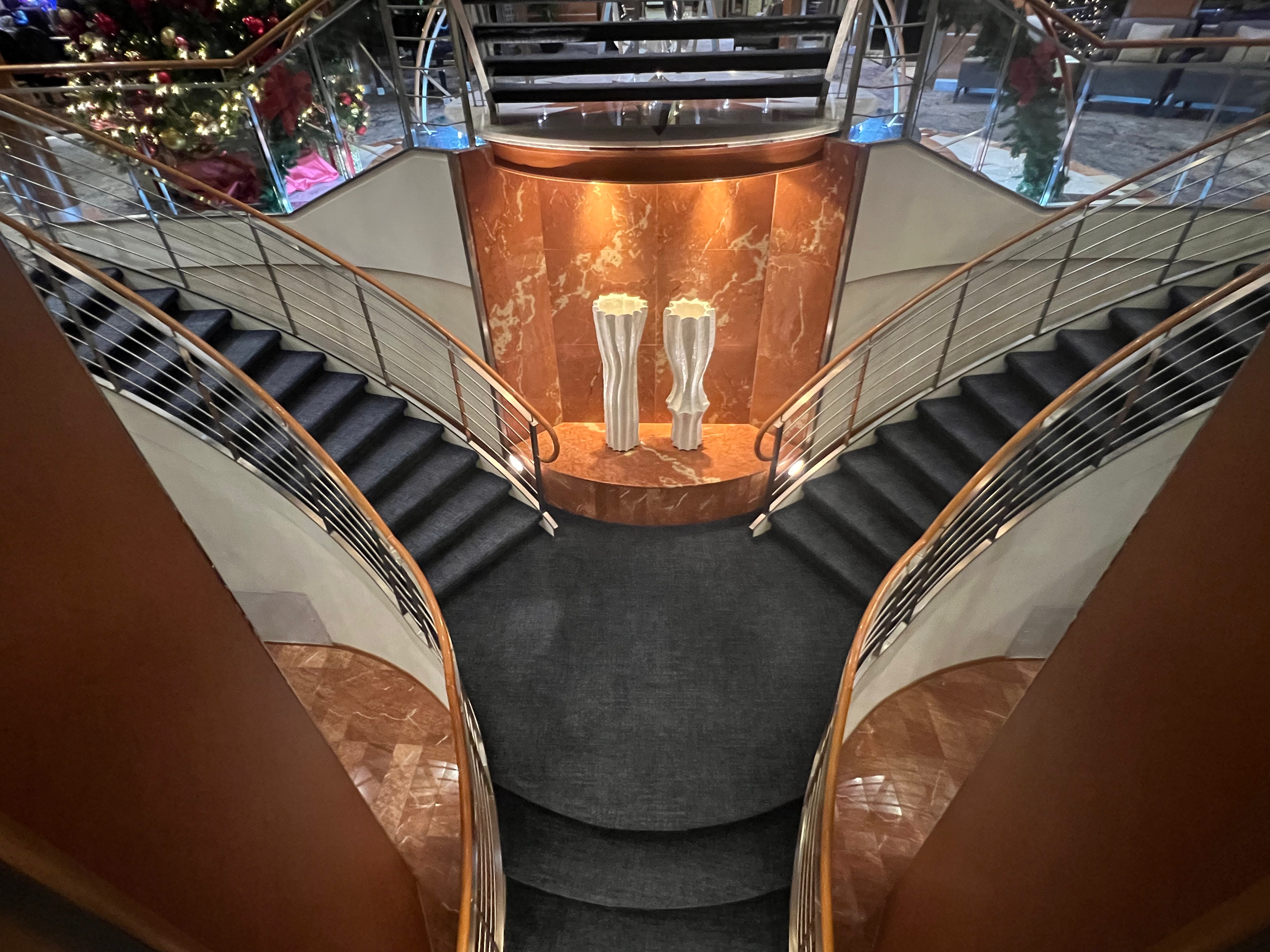
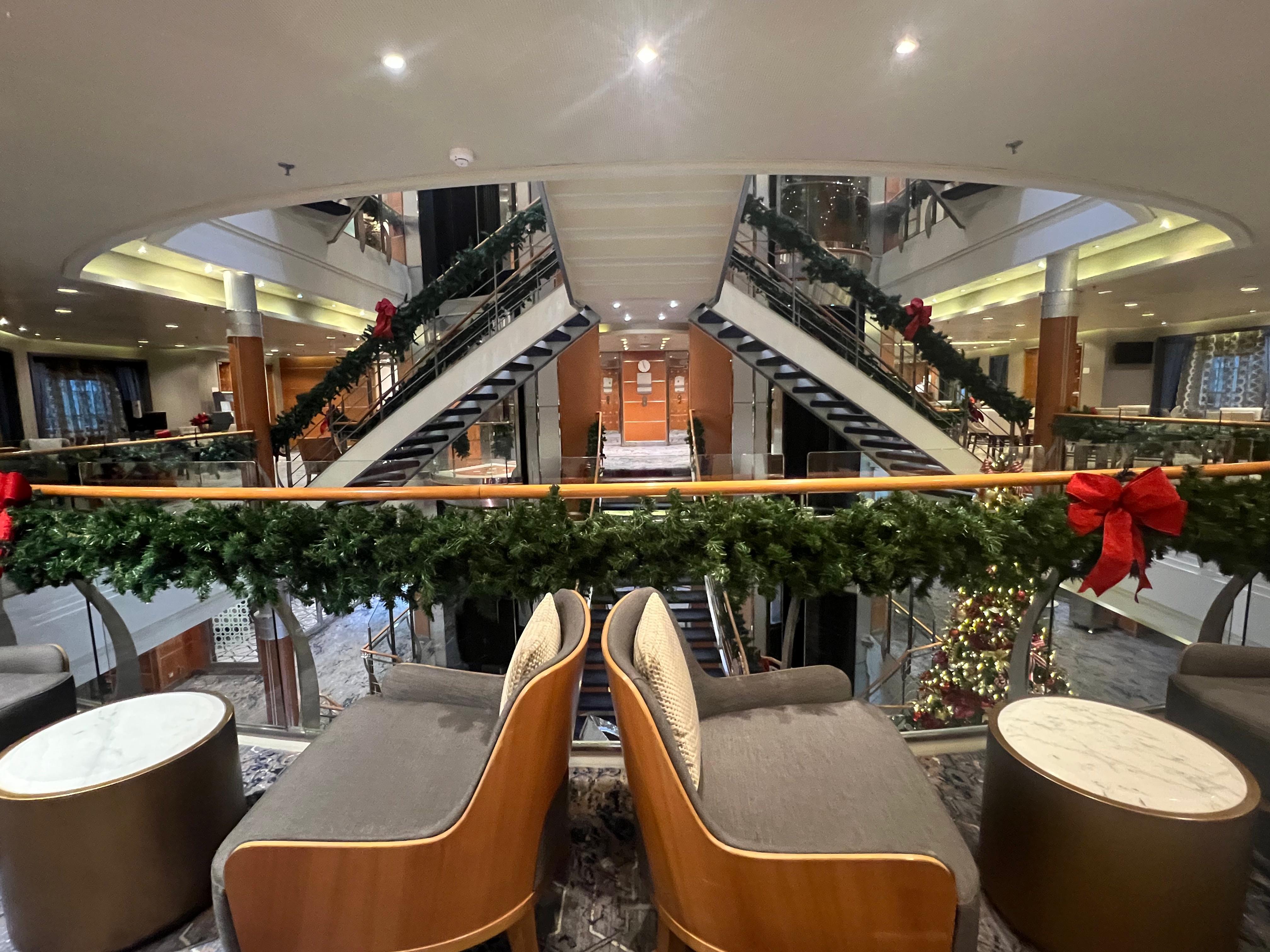
Click here to see the interior spaces on Board Seven Seas VOYAGER: https://youtu.be/FuBST-WtfvE?si=g8wCz8Ahu1AwFJa6
Click here to see the Cigar Lounge and Casino on board Seven Seas Voyager: https://youtu.be/CVkOo0o5d1Y?si=lz_SBpLAmXHOqglO
Click here to see the laundry service on board: https://youtu.be/Cmob3tpeDxI?si=CBEPOdL2jwxPaSgt
The same sense of effortless ease that defines Seven Seas Voyager’s interior extends seamlessly to her outdoor spaces. While these areas aren’t enormous by today’s mega-ship standards, they are thoughtfully designed and perfectly proportioned for a vessel carrying fewer than 700 guests.
The Lido Deck (Deck 11) is the heart of the outdoor experience. A large heated swimming pool takes centre stage, flanked by two jetted hot tubs, while white terrycloth-covered loungers line the deck, offering comfort and classic style. Adjacent to the Pool Grill, tables with cushioned chairs sit under the generous overhang of Deck 12, providing welcome shade. At either end of this covered space, cushioned sofas and cocktail tables create inviting corners for relaxed socialising or quiet people-watching. Unsurprisingly, these areas can become lively under bright sun, but even at peak times, the layout feels calm and manageable.
For guests seeking activity, Voyager doesn’t disappoint. A shaded area on Deck 11 hosts a Ping-Pong table, while Deck 12 offers a compact but well-considered selection of sports facilities: a golf driving cage, five-hole putting green, two shuffleboard courts, and a paddle tennis court. These amenities add variety and fun without disturbing the ship’s overall serene, refined vibe.
Sailing through the Canary Islands in December, the cooler weather had its perks. Finding a table or sunbed was effortless, and I never encountered the all-too-common cruise annoyance of loungers “reserved” with towels or books—a small but very welcome detail.
Overall, while not cutting-edge, Voyager’s indoor and outdoor public spaces strike a pleasing balance of elegance, comfort, and usability. In my Net Promoter Score framework, I confidently award them a 7 out of 10—well-maintained, thoughtfully designed, and perfectly suited to a relaxed luxury cruise experience.

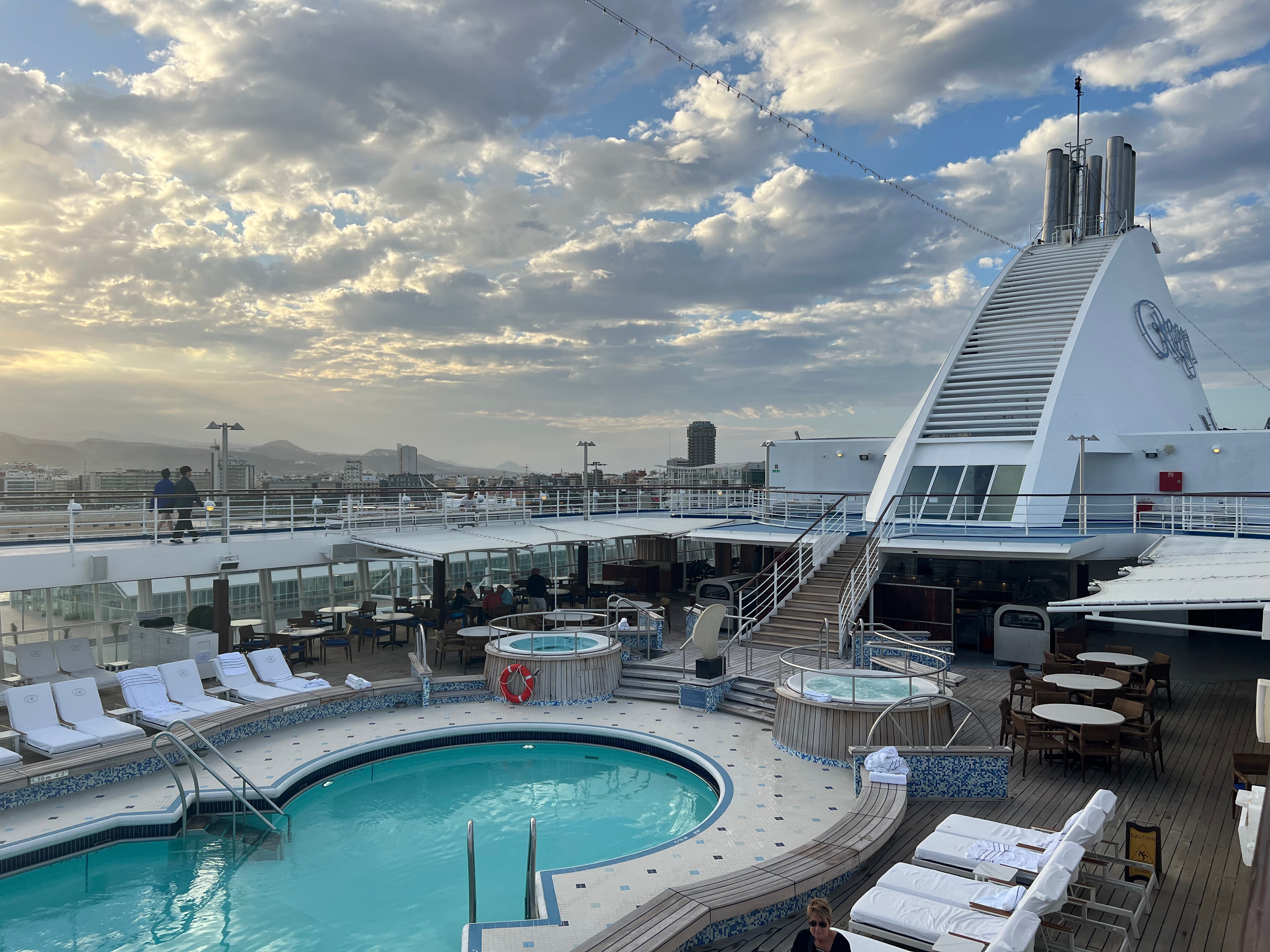


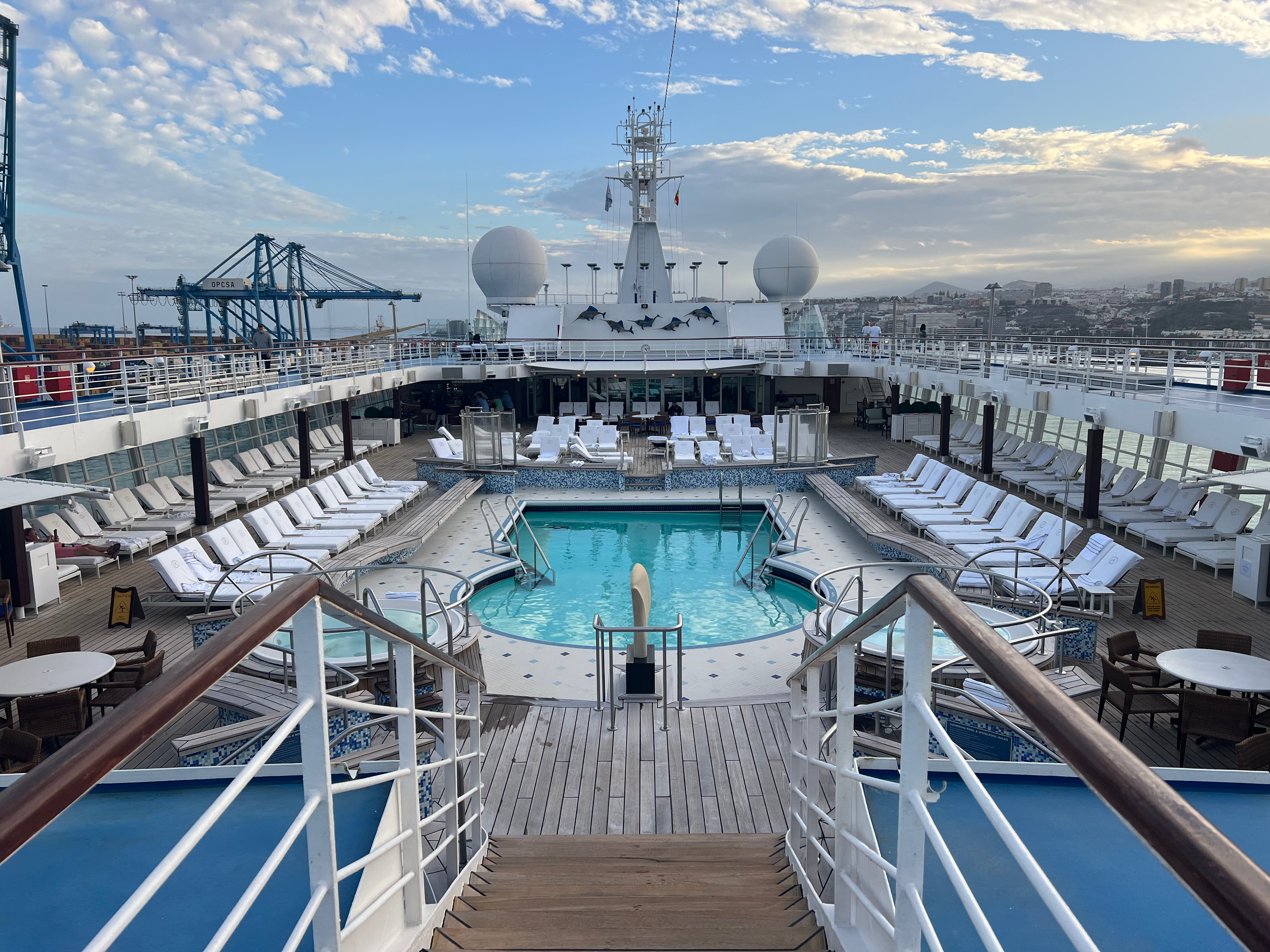


Click here to see the outdoor spaces on board Seven Seas VOYAGER: https://youtu.be/N79bNRq3A6s?si=VLCr79xWqmmLt7GV
BARS, LOUNGES & STYLISH SIPS
It comes as little surprise that bars and lounges are a major focal point onboard Seven Seas Voyager—especially since all beverages are included in the cruise fare. Each venue offers both bar seating and attentive table service, allowing guests to enjoy a cocktail wherever the evening finds them.
The Voyager Lounge on Deck 4 is the ship’s intimate, late-night hotspot. Draped in rich purple hues and furnished with bucket-style chairs and banquettes, it’s the place to unwind once the main evening entertainment winds down. Karaoke and dancing frequently draw a lively crowd, making it ideal for night owls seeking a more spirited scene.
Also on Deck 4, the Connoisseur Club offers a completely different vibe. With deep-blue walls, leather armchairs, and a refined, clubby atmosphere, it’s a haven for cigar aficionados. Guests can pair a Cuban cigar with a vintage cognac or port, enjoying an old-world, sophisticated retreat that feels worlds away from the busier lounges.
Horizon Lounge on Deck 5 is the ship’s largest and most versatile social hub. Decorated in warm pumpkin and gold tones, with beaded room dividers and a central bar, it plays many roles throughout the day. Afternoon tea is served daily between 4 and 5 p.m., complete with sandwiches, pastries, and a soothing soundtrack of background music. Come evening, the space transforms into the ideal venue for pre-dinner cocktails, often accompanied by a guitar player or members of the show band. Guests can even take their drinks to the aft deck, where comfortable armchairs and a designated smoking area provide a relaxed al fresco option.
High above, the Observation Lounge on Deck 11 offers sweeping forward views and a quiet, stylish setting. Grey carpeting, neutral walls, and white bucket chairs create a serene atmosphere perfect for a post-excursion cocktail. Surprisingly, it was the least frequented lounge on our sailing, despite its ideal vantage point and understated live music—typically a piano or duo performance.
When the weather cooperates, the Pool Bar on Deck 11 becomes the ship’s liveliest venue. Centrally located on the Lido Deck, it was consistently busy, drawing guests for casual drinks poolside. The only drawback? It closes by 7 p.m., which felt unusually early given warm evenings when no one was ready to retreat indoors.
Overall, Seven Seas Voyager’s bars and lounges cater to every mood—from intimate and reflective to lively and social. Each venue is thoughtfully designed, effortlessly blending comfort, style, and accessibility, ensuring that every evening onboard is a chance to relax, mingle, or simply watch the sun set over the horizon.


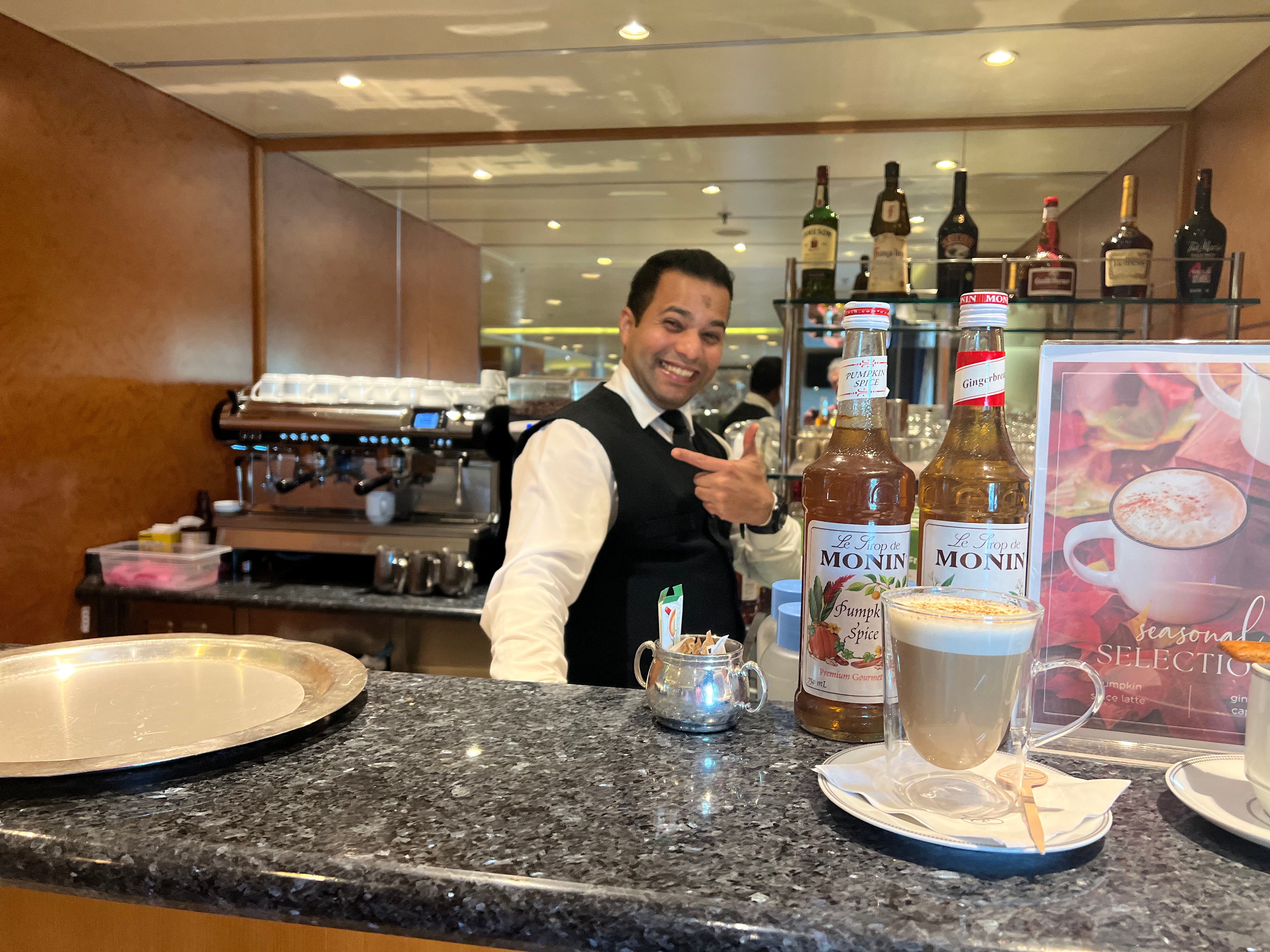



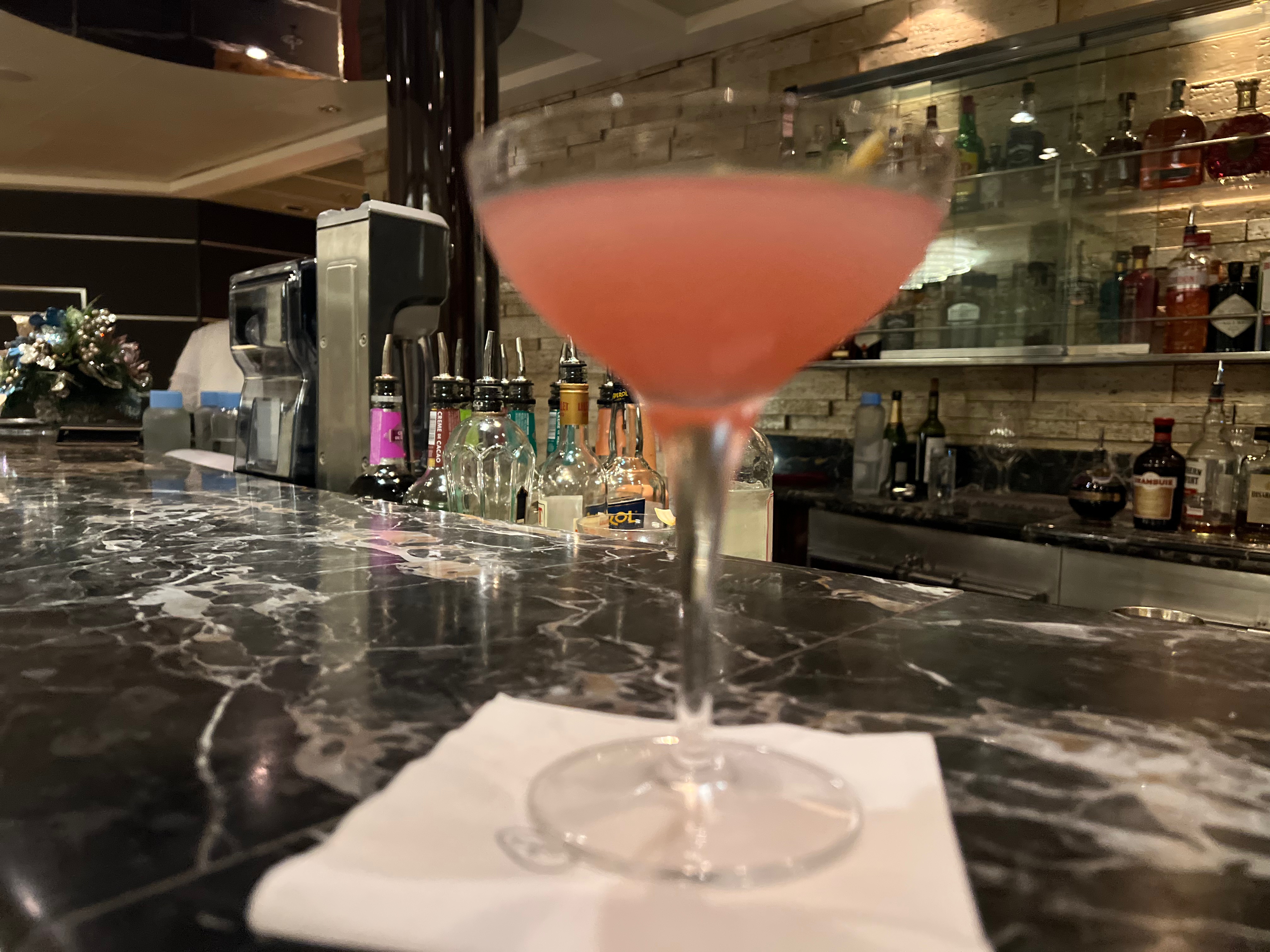


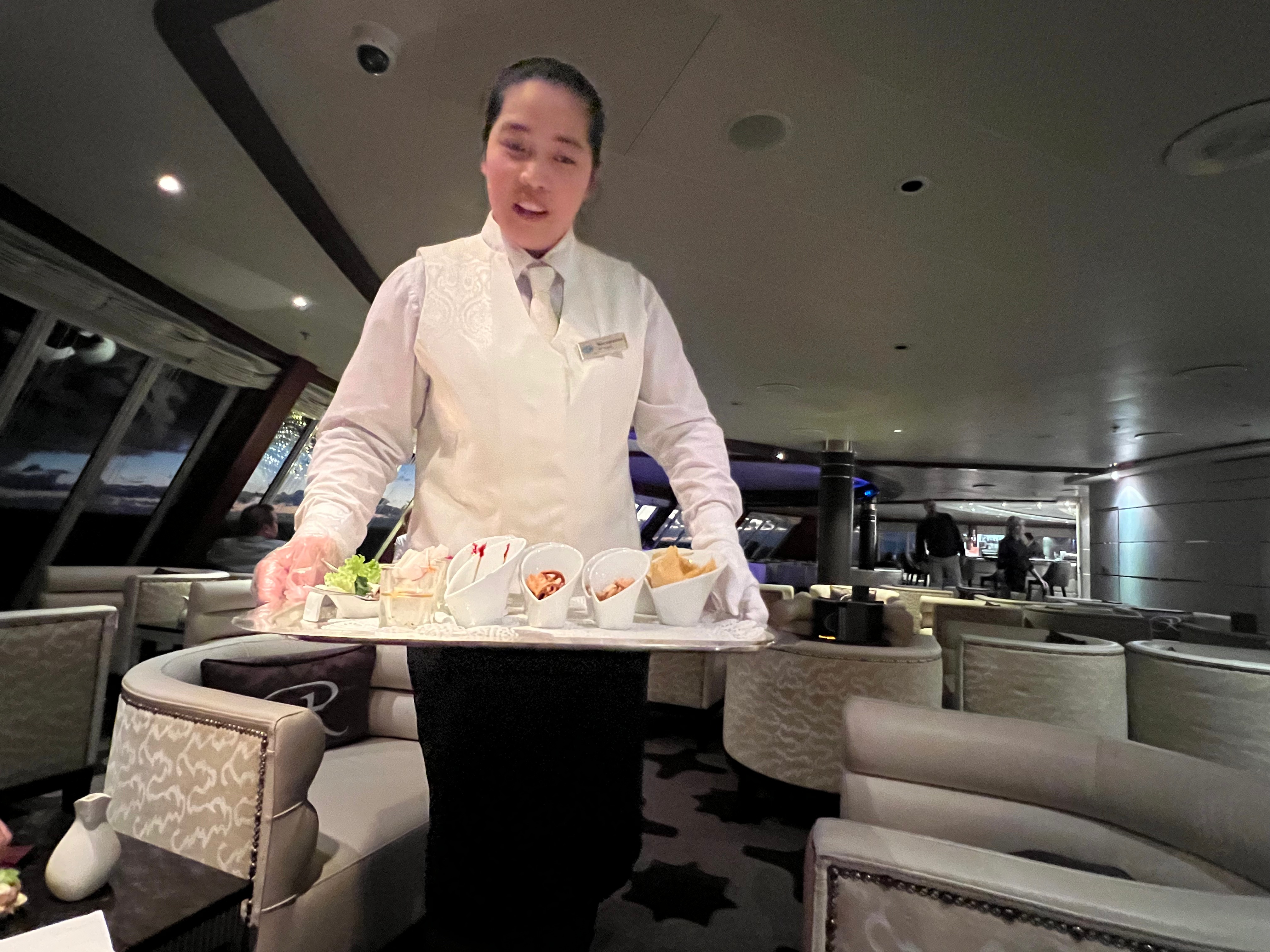

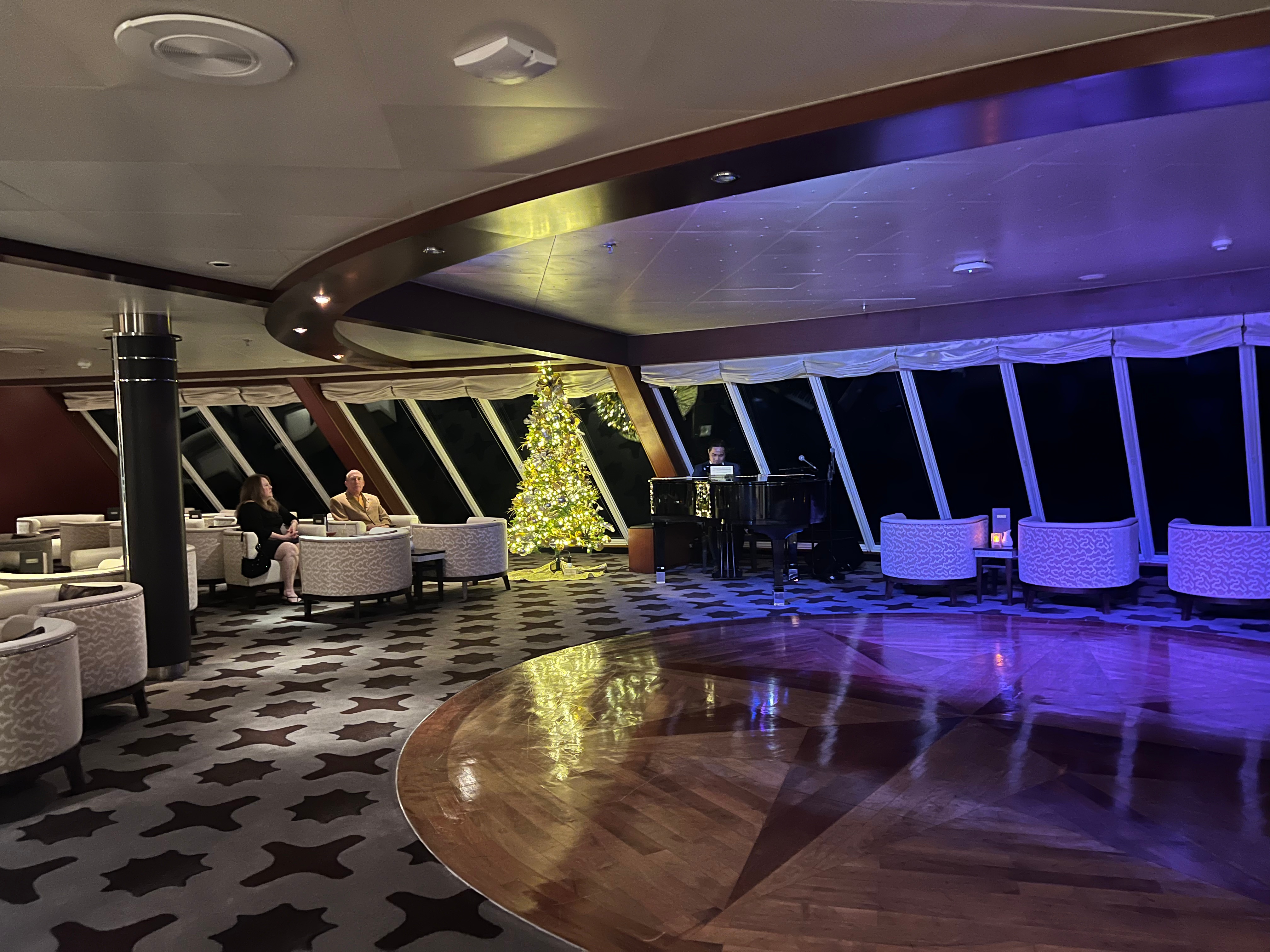

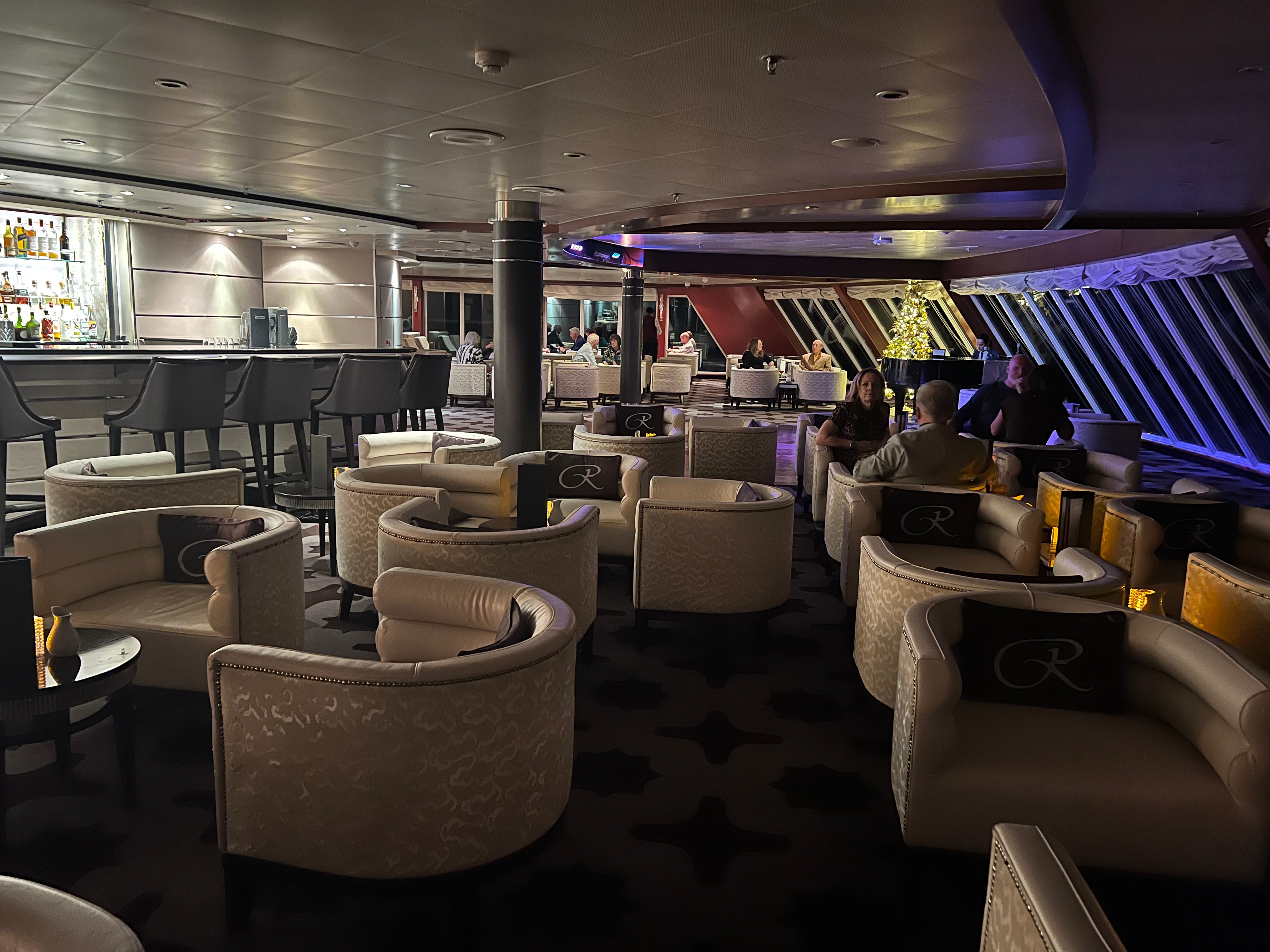


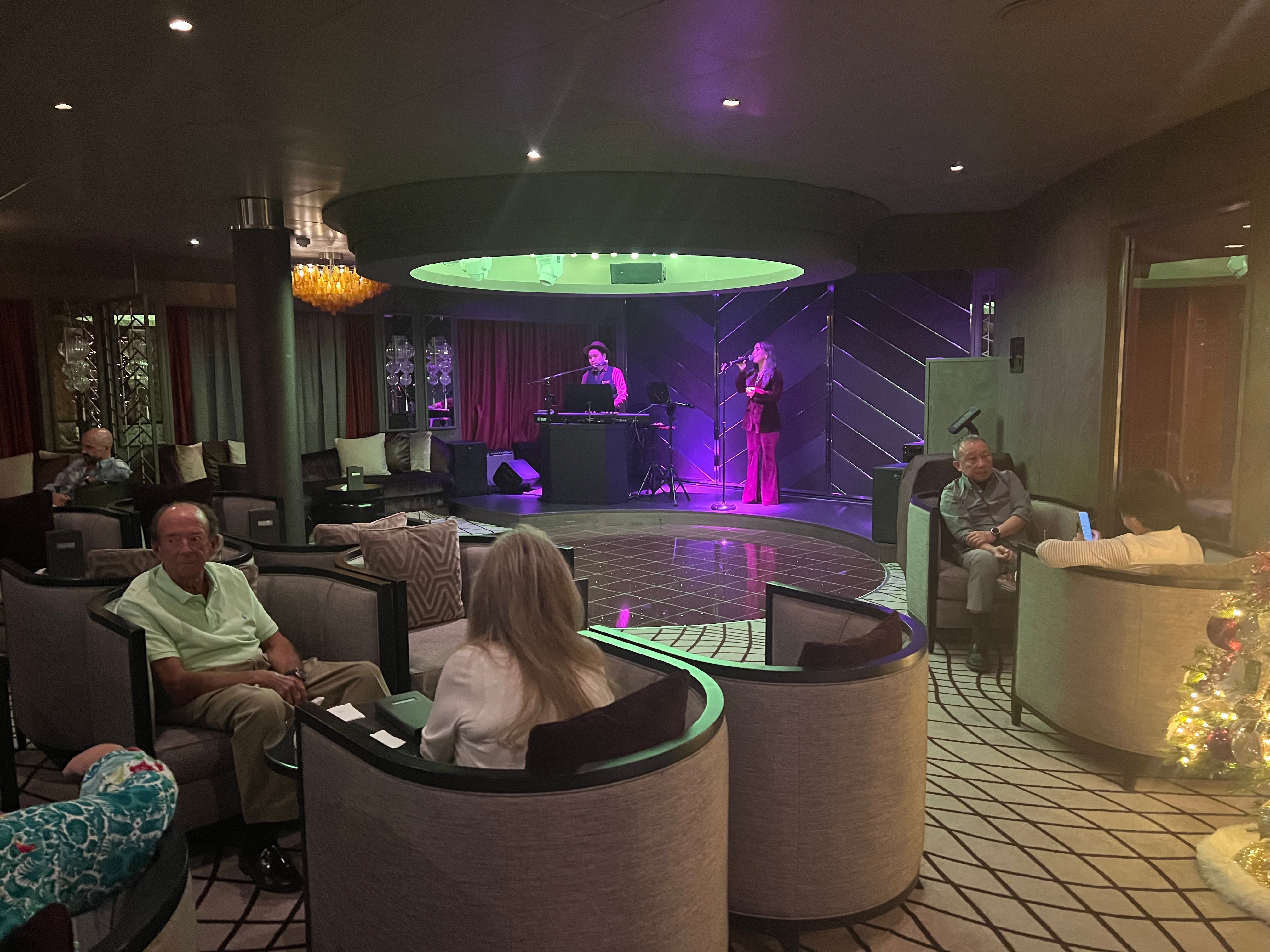
Across Seven Seas Voyager, drinks were consistently well crafted. Bartenders handled both classic and unusual requests—yes, that includes a proper Negroni—without hesitation. House Champagne flowed freely and was perfectly drinkable, making it an ideal time to explore cocktails or indulge in higher-end spirits. Service at the bars was friendly, professional, and attentive, which is exactly what you want when enjoying an evening at sea.
Where the experience falls short of true “ultra-luxury,” however, is in choice and creativity. The spirits selection mirrors what you’d find on many mainstream cruise lines, and while cocktails were competently made, they lacked originality, premium flair, and unexpected touches. At this price point, one hopes for elevated mixology, inventive presentations, and top-shelf brands—not a drinks experience replicated across the industry.
Despite the excellent service and Regent’s signature ship-themed cocktails, my Net Promoter Score for bars and drinks lands at a solid 7 out of 10.
Click here to see the Lounges & Bars on board Seven Seas Voyager: https://youtu.be/LXNP4O3RPWM?si=5tA1JQJ_77IPh8nX
ENTERTAINMENT & SHORE EXCURSIONS – Relaxed, But Not Unforgettable
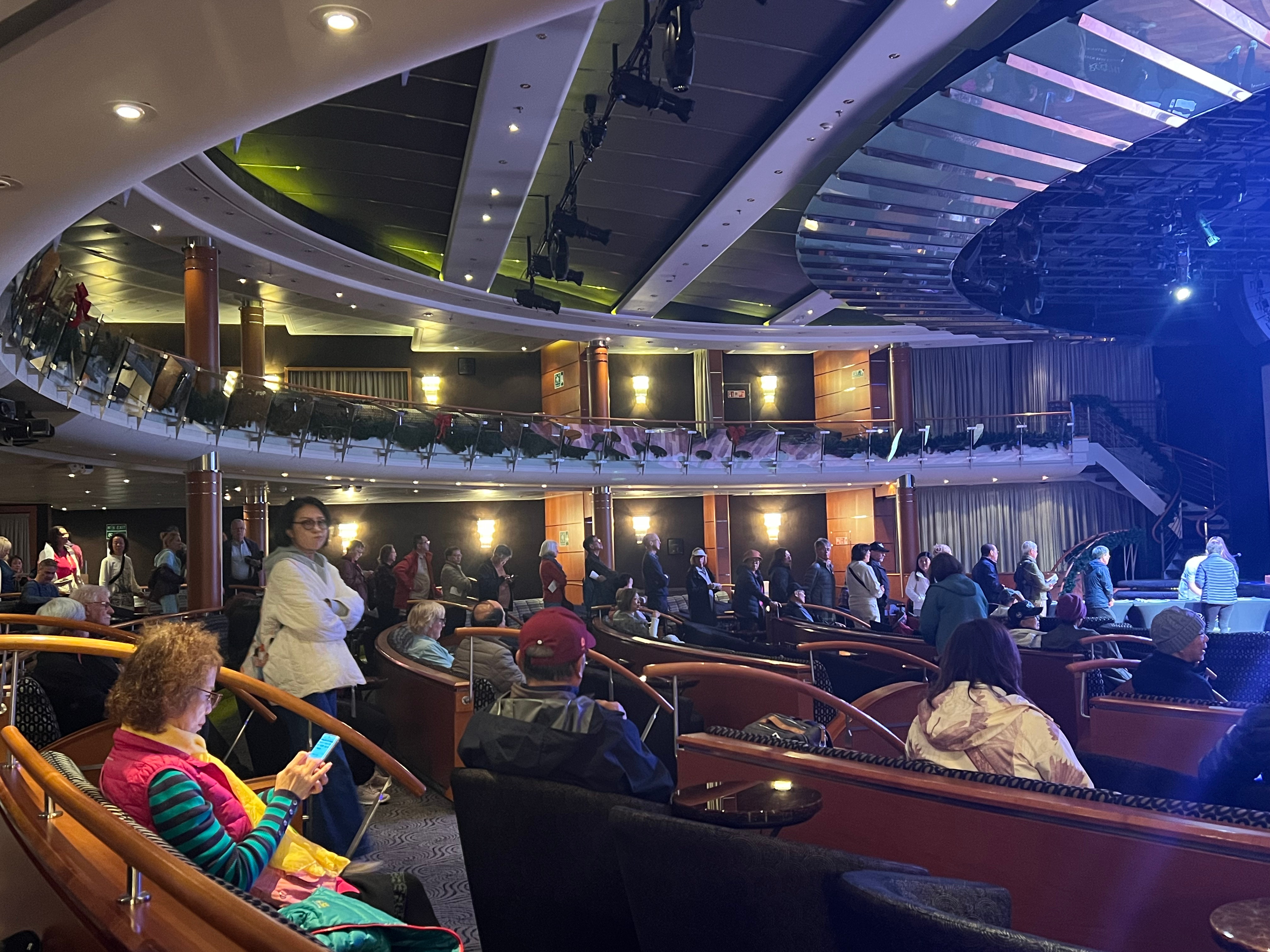
It’s no secret that I’m not a huge fan of cruise ship shows, with the exception of large-scale productions based on well-known onshore licences. So, my approach to entertainment onboard Seven Seas Voyager was deliberately light-touch. I dropped into the Constellation Theater (Decks 4 and 5) during each production just long enough to get a sense of what was on offer.
The theatre itself spans two decks, with alternating rows of chairs and banquettes on the main floor and balcony seating above. Productions ranged from tributes to Hollywood, Las Vegas, and Broadway, to dance-focused performances covering a variety of styles. While the staging, lighting, and set design were adequate and suited the performances, the overall quality fell squarely into the “mediocre-to-acceptable” category. In short, there’s very little risk of regret if you decide to skip a show. With only one performance per evening, starting at 9:30 p.m., catching a 45-minute show can also be tricky unless you opt for early dining.
Where Voyager really shines is in its live music offerings. Pianists, duos, and small bands performed in lounges throughout the ship, creating the perfect backdrop for a pre- or post-dinner cocktail. These more relaxed, atmospheric performances felt far more in tune with the ship’s understated character than the staged theatre shows ever did.
Daytime activities are gentle and predictable. Mornings typically feature instructor-led Pilates or guided walks around the jogging track with the fitness director. Card and board games are always available in the card room, while more active guests can enjoy shuffleboard, bocce, Ping-Pong, or paddle tennis. Afternoons offer unhosted bridge and mah-jongg, spa seminars on topics from reflexology to detoxification, and the ever-present—but overused—team trivia. Guests compete in teams of up to six to earn Regent Rewards points, redeemable later for branded merchandise like caps, polo shirts, and tote bags. Support group meetings for “Friends of Bill W.” and LGBTQ+ gatherings are also scheduled, though somewhat sporadically and without a clear structure.
The Cruise Director and her team followed a predictable routine, delivering activities with an enthusiasm reminiscent of a high-end supermarket’s self-checkout: functional but uninspiring. There were no standout moments or “must-do” events; entertainment was available if you wanted it, but never compelling enough to rearrange your day around.
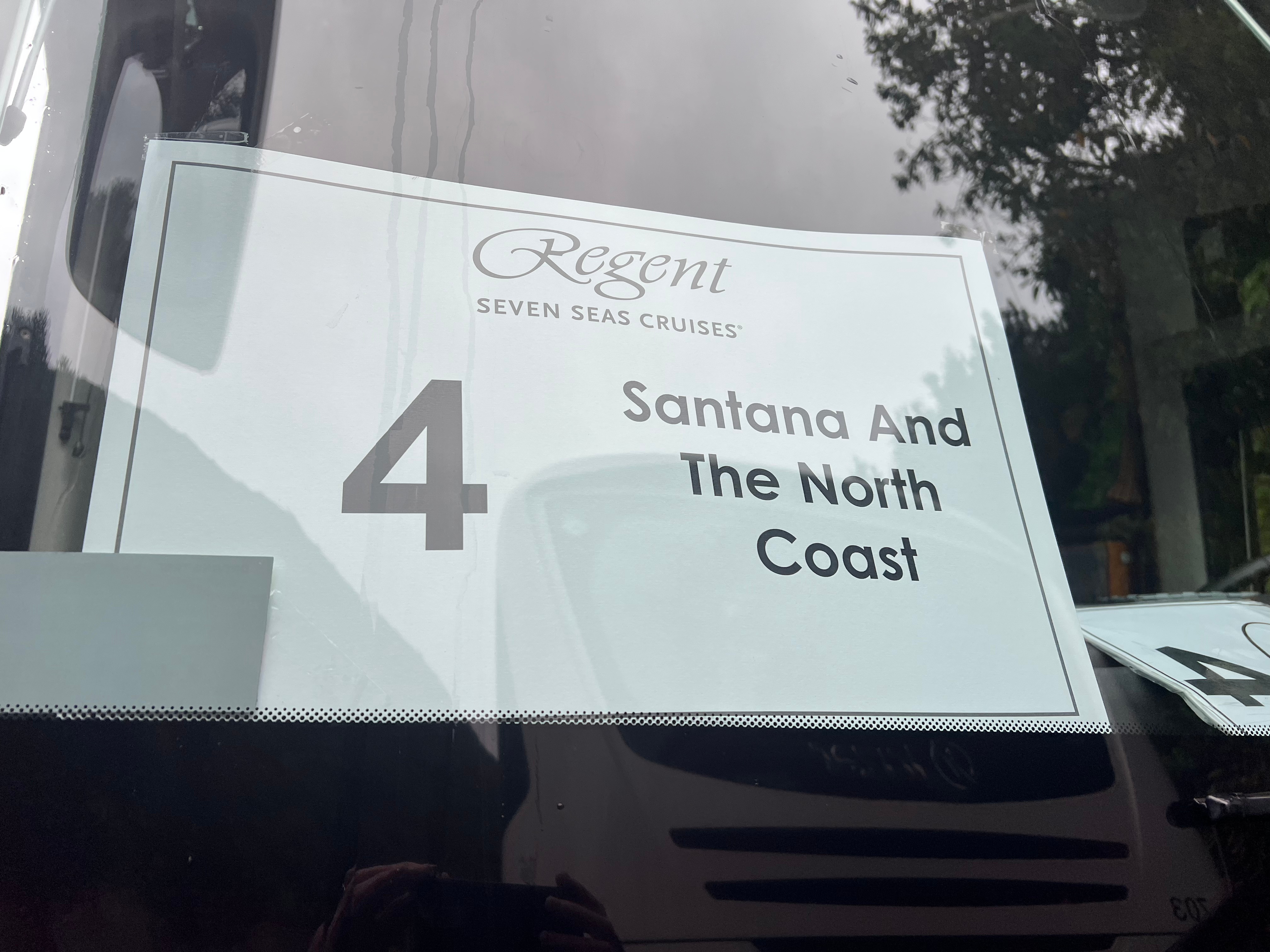
Shore excursions, however, remain a cornerstone of the Regent experience. Complimentary tours are offered in every port, with capacity controls designed for comfort. Guests can also opt for Regent Choice excursions for a modest supplement. I selected two—one in Funchal and one in Lanzarote. Both were well organized but exposed several flaws: inefficient logistics, long waits in the theatre before departure, inconsistent audio systems, uneven guide quality, subpar transportation, and an imbalance between travel time and actual sightseeing. While these issues might be tolerable on a mainstream cruise line, they are harder to excuse when the promise is “unrivalled” experiences.
In comparison with lines like Azamara, Viking, or Silversea, entertainment and onboard activities on Voyager feel safe but unremarkable. For this reason, my Net Promoter Score for entertainment and activities lands at a modest 5 out of 10—adequate for filling time, but rarely inspiring.



Gastronomy: Promise vs. Reality
Regent Seven Seas Cruises makes no secret of its culinary ambitions, promising “a myriad of opportunities to satiate your inner gourmand” and discover the “power and beauty of a shared culinary experience.” As someone who places gastronomy near the top of the cruise hierarchy, I boarded Seven Seas Voyager with high expectations—and a healthy appetite.
Dining is organised across four main venues, all marketed as offering open seating. The idea: freedom, flexibility, and spontaneity. The reality: a polite fiction. For the most popular specialty restaurants, Prime 7 and Chartreuse, reservations are not just recommended—they’re essential. The freedom to “dine when you wish” quickly feels like an illusion when every evening’s prime slots are already booked.
In short, Regent’s culinary universe looks spectacular on paper, but in practice it sometimes behaves more like a well-meaning restaurant with slightly overbooked tables. Delicious, yes—but perfect freedom? Not quite.
COMPASS ROSE – Ambitious but Uneven
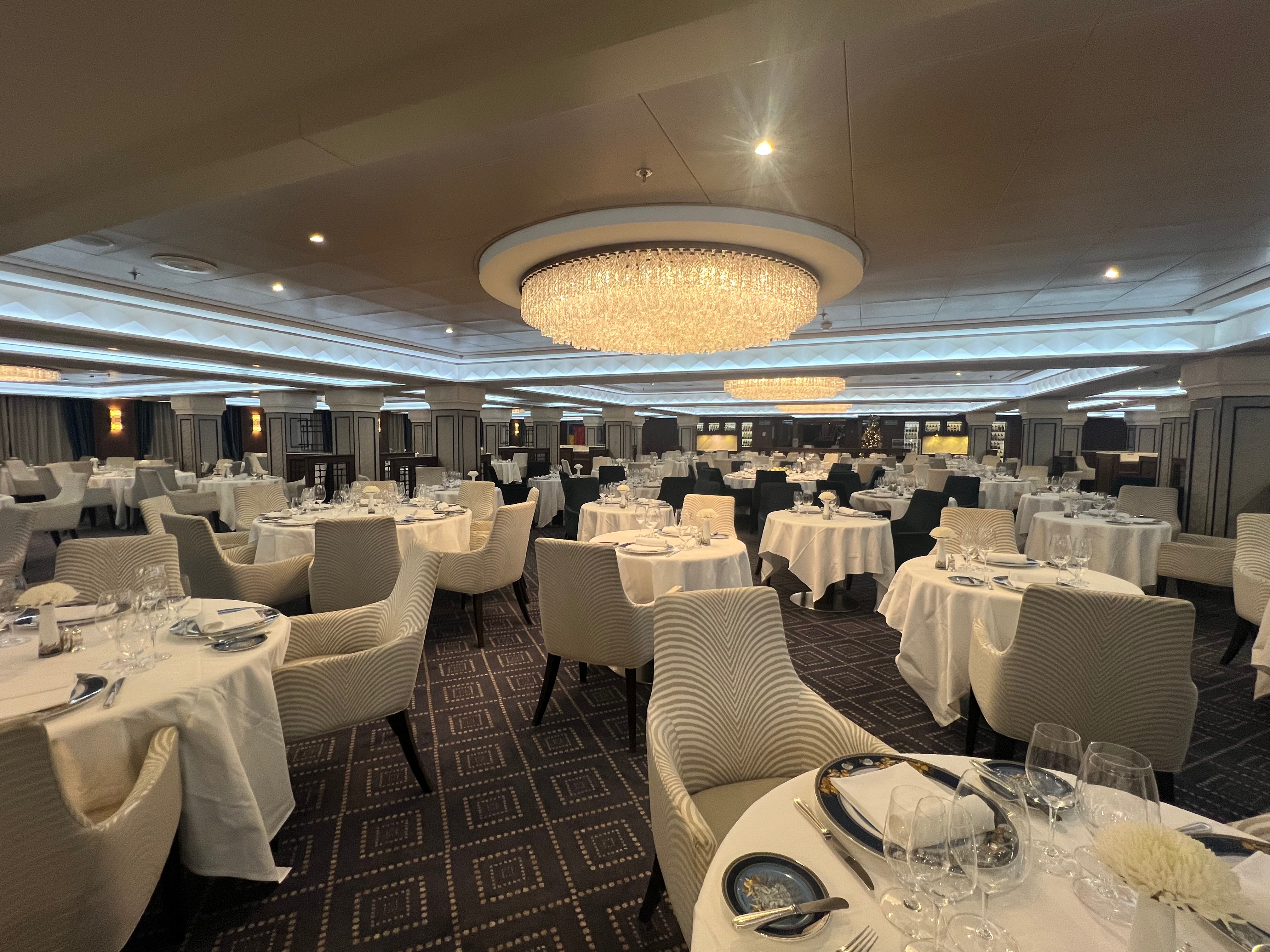
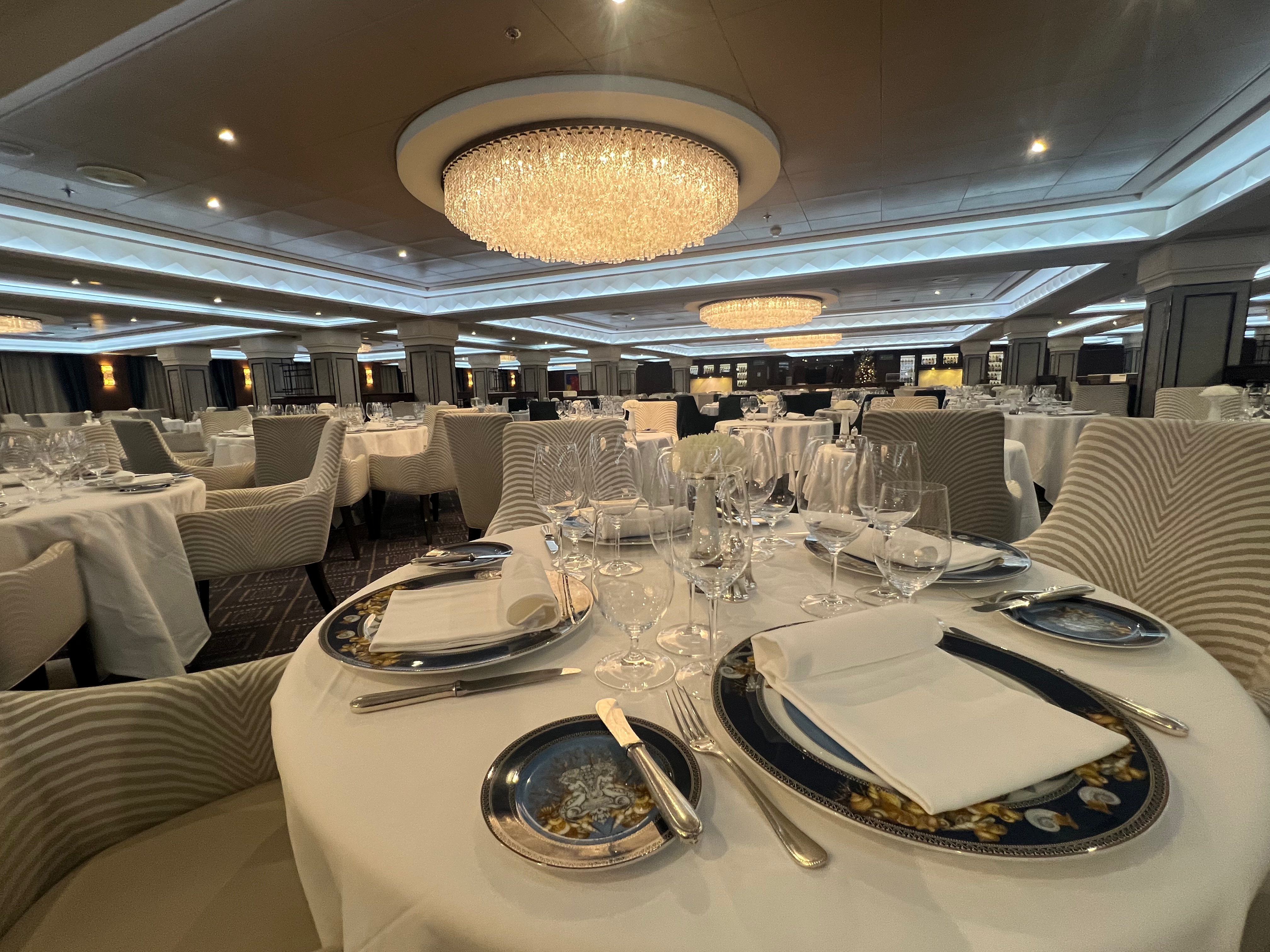
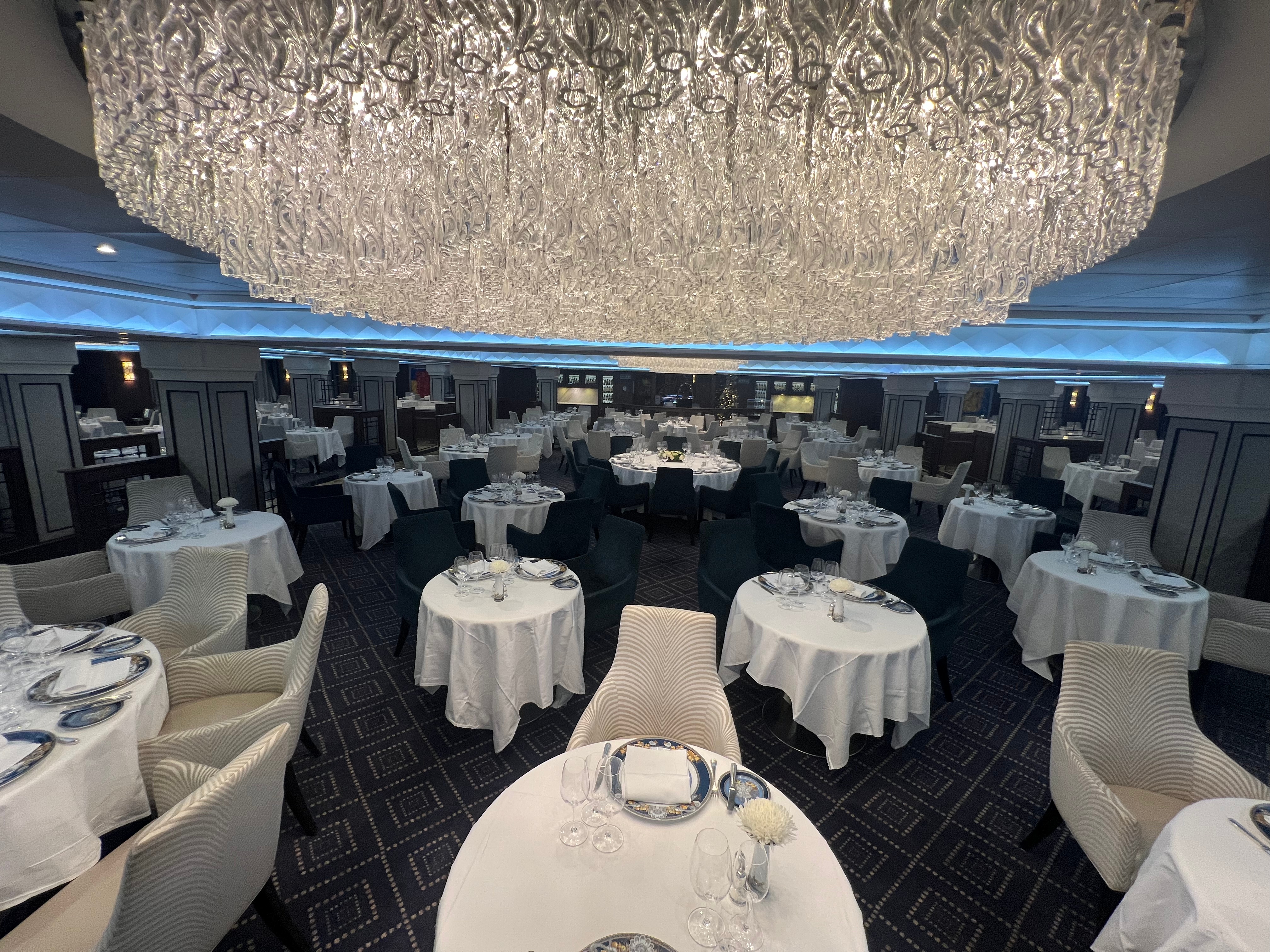
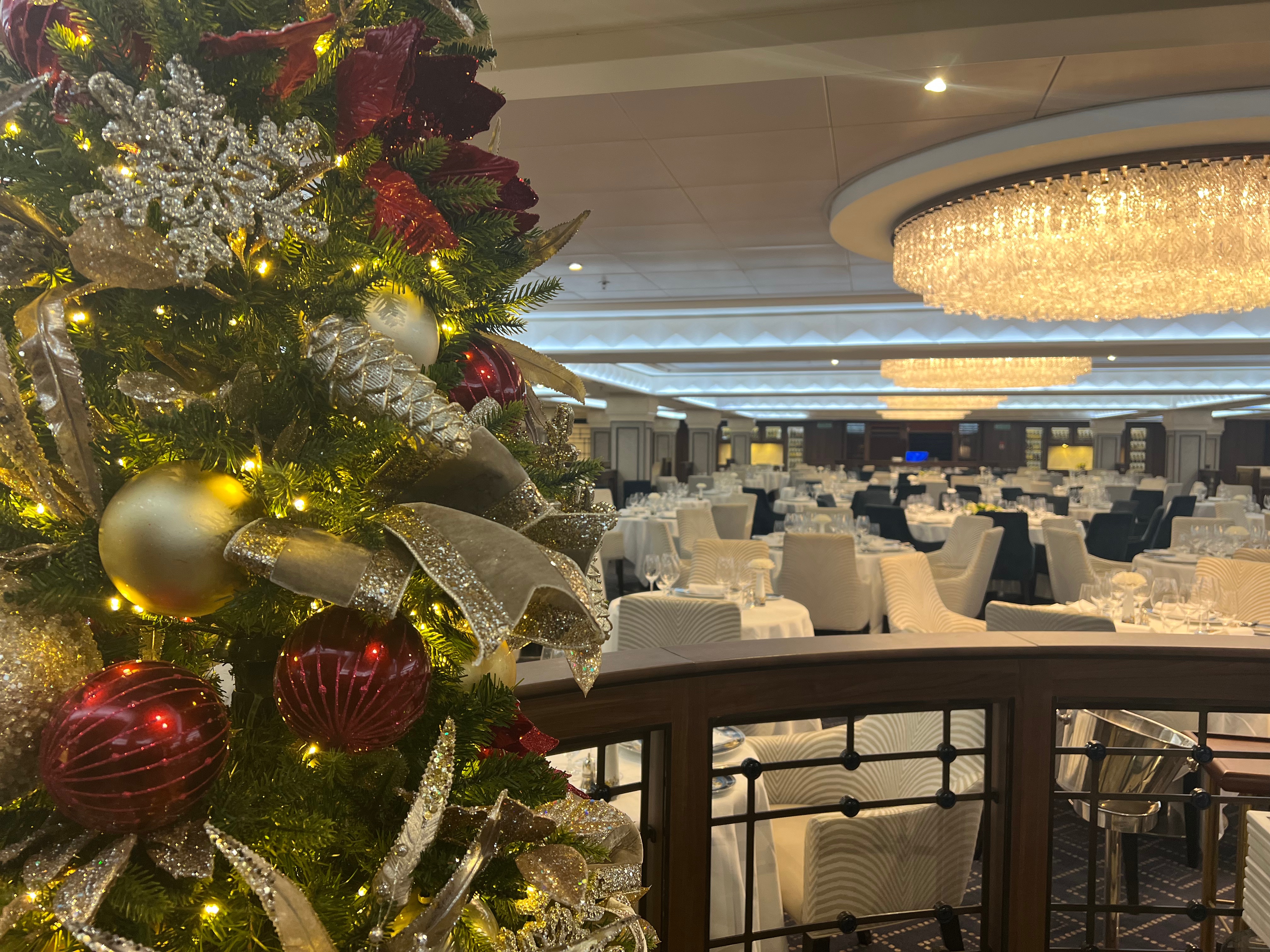
Compass Rose, located on Deck 4, makes a strong visual first impression. The bright, airy dining room seats 570 guests and is decorated in a pale blue-grey palette, accented by modern chandeliers, cream-upholstered chairs with gold zebra-style stripes, and Versace-designed plates that promise a touch of luxury. Regent even promotes it as “the largest specialty restaurant at sea,” a claim backed by its extensive permanent menu.
Guests can select their main protein—meat or fish—and customise it with sauces, add foie gras to their steak, or even request surf and turf. On paper, it’s a gourmand’s dream. In practice, execution is inconsistent. Ingredient quality varies, cooking techniques often feel uninspired, and some sauces seem designed to mask rather than elevate flavours. Plating occasionally borders on amateurish. A true “wow” moment is as rare as it is welcome—requiring either impeccable timing or exceptional luck.
Wines included with meals were adequate but forgettable. A 2015 Sancerre paired with a 2014 Côtes du Rhône one evening, or a 2015 California Sauvignon Blanc alongside a 2014 Bordeaux on another, left reds particularly harsh and unrefined. Fine for a mainstream cruise, but underwhelming when compared with Regent’s epicurean promises.
Breakfast at Compass Rose, by contrast, delivers abundance: charcuterie, cured fish, cheeses, made-to-order eggs, pancakes, French toast, Swedish pancakes, hot cereals—even steak and lamb chops. Lunch rotates daily specials across multiple categories, with no reservations required. Plenty of tables for two make it ideal for diners who prefer relaxed, unforced seating. Elegant on arrival, uneven in execution, Compass Rose is ambitious but doesn’t always hit the mark.


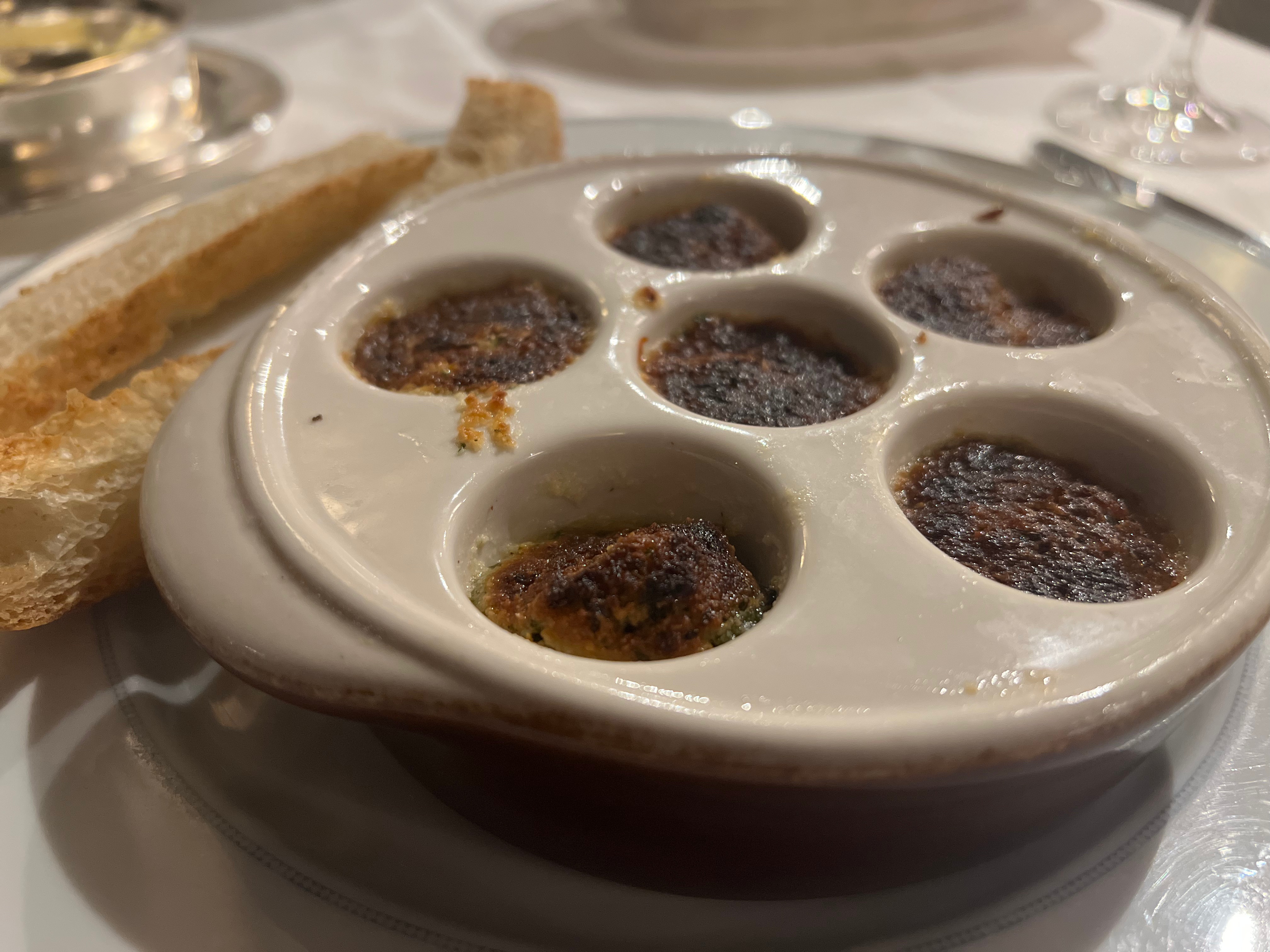


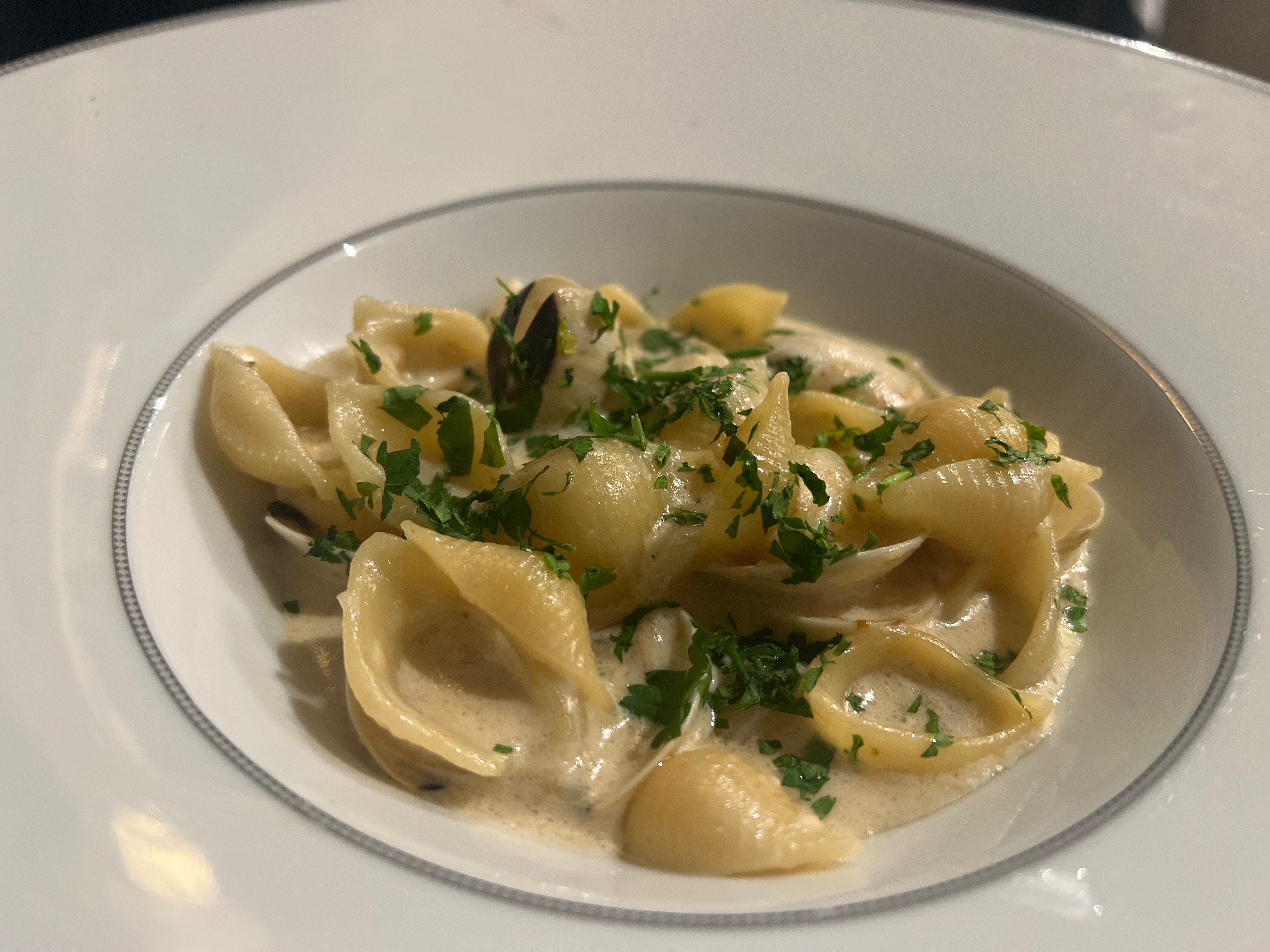
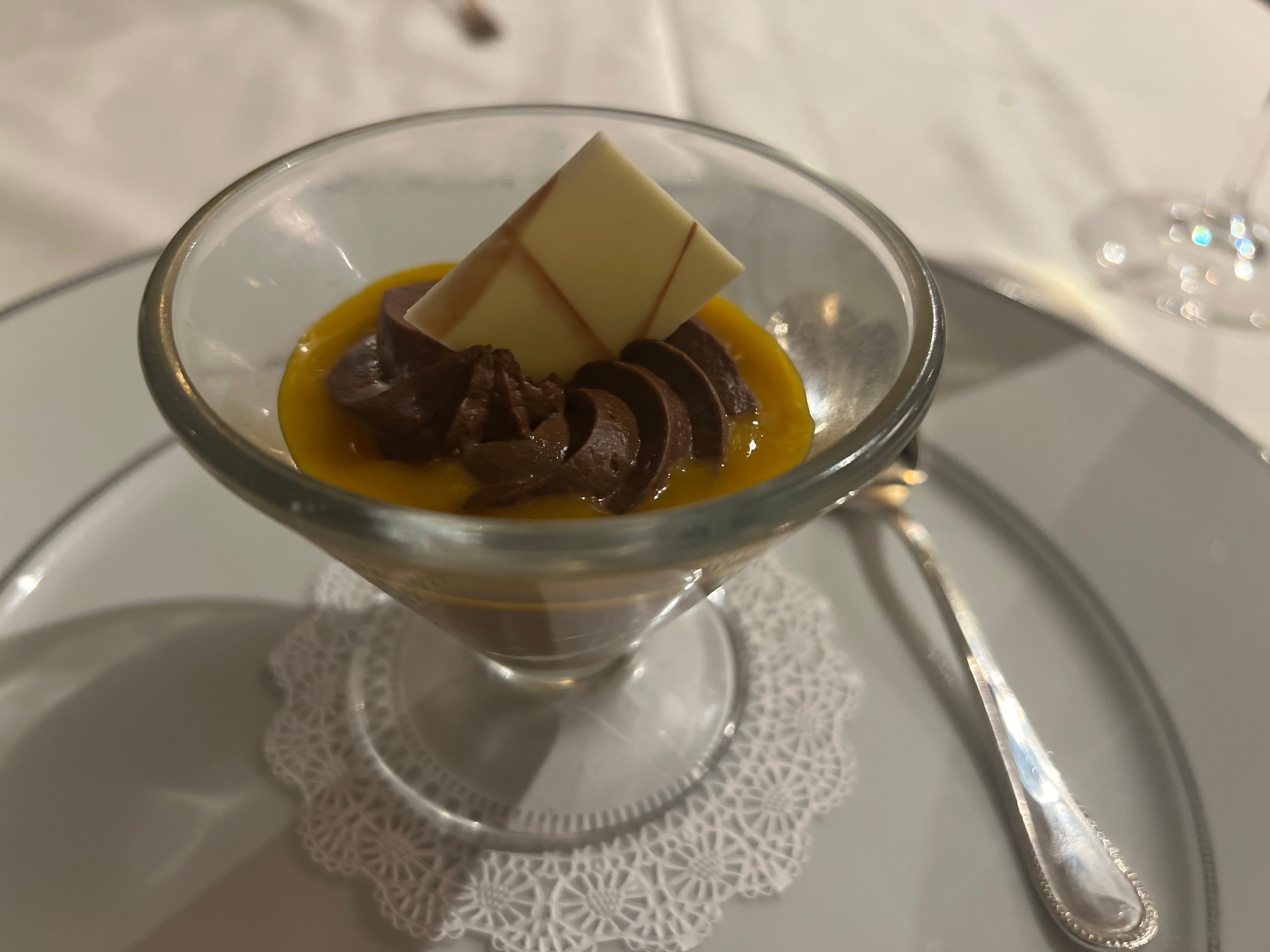


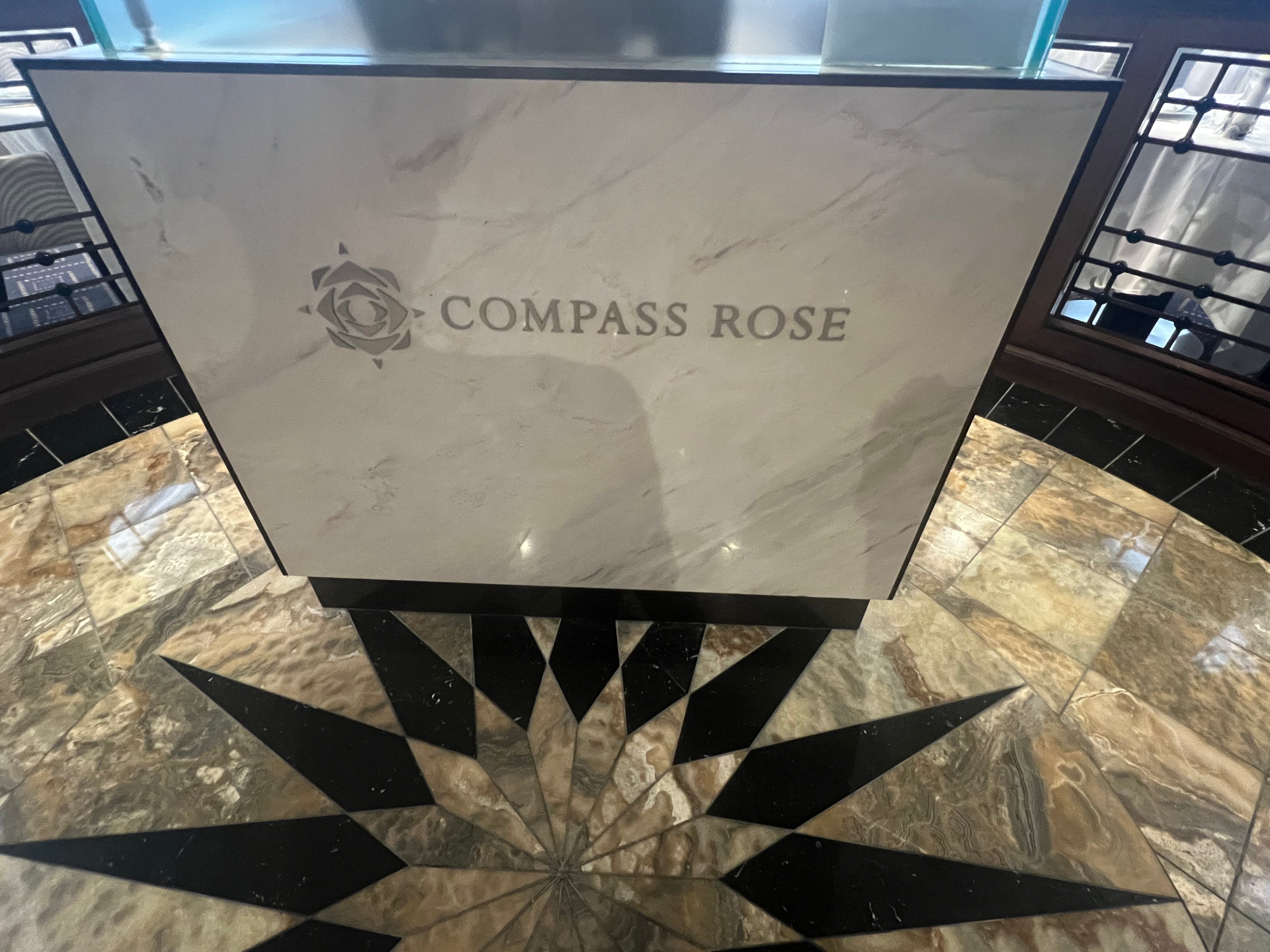



Click here to see the lunch in Compass Rose: https://youtu.be/ufnu0gUcCVY?si=g3nqqRf88qAGZ4xA
Click here to see the first lunch and dinner on board Voyager: https://youtu.be/fU6_-vASkrM?si=jmhMRLF9OaeOhjh-
Prime 7: Classic Steakhouse, Safe but Not Exceptional
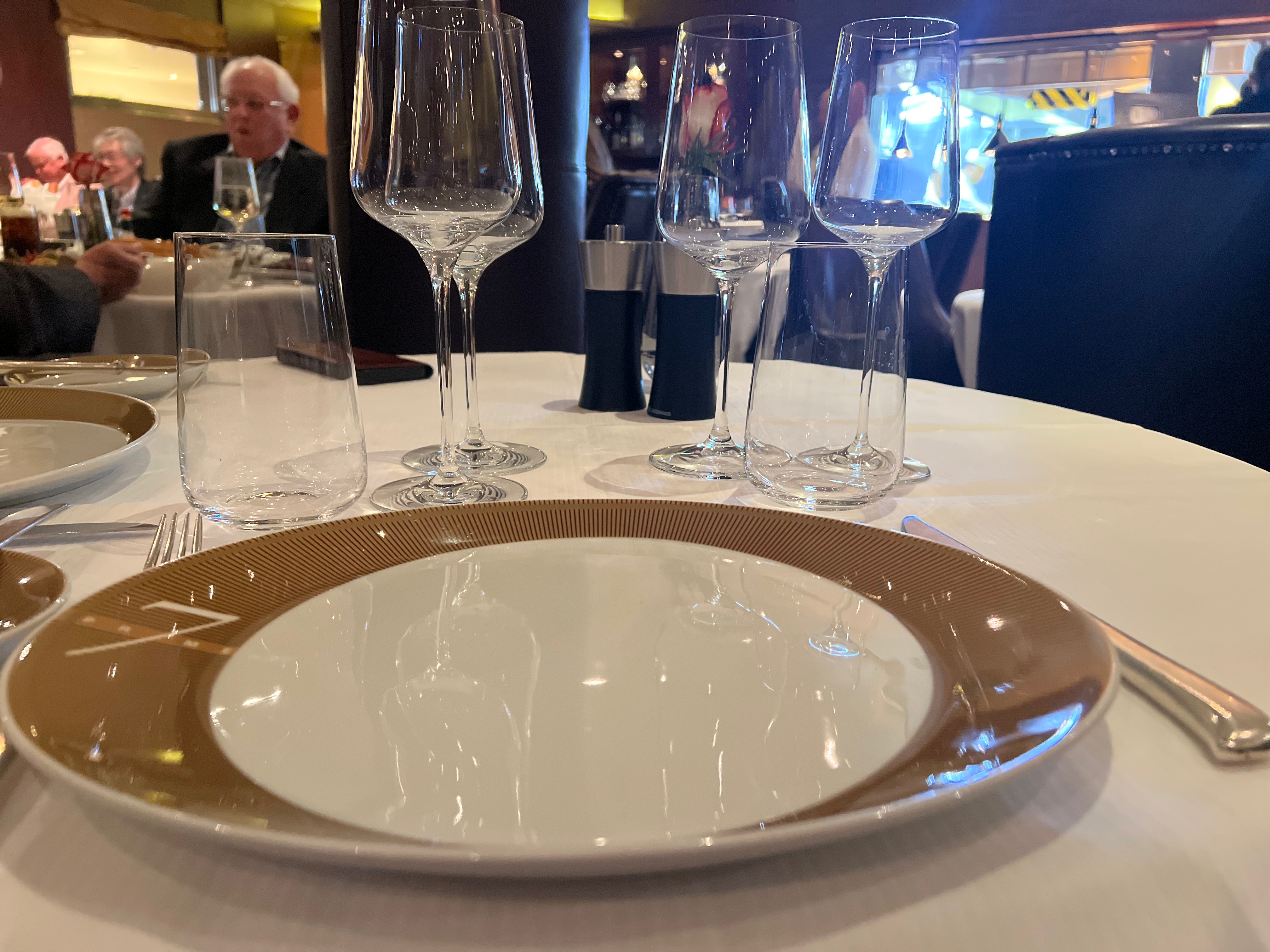
Prime 7, located on Deck 5, is Regent’s take on the classic upscale steakhouse, open for dinner only and by reservation. The décor immediately signals tradition and sophistication: dark woods, leather accents, clubby lighting, and floor-to-ceiling wine displays. Open kitchen windows add a dash of theatre, though late-night diners may also catch the less glamorous end-of-service clean-up—a gentle reminder that even luxury has its backstage realities.
The menu is unapologetically meat-forward. Starters range from foie gras sliders and steak tartare to clam chowder, Caesar salad, and the obligatory iceberg wedge. Steaks include New York strip, filet mignon, and an 18-ounce porterhouse—or a dramatic 32-ounce version for sharing. Seafood lovers aren’t left behind, with lobster tail and king crab legs on offer, alongside veal, pork, and lamb chops. Seven sauces and eleven sides provide plenty of customisation; highlights included truffle fries, twice-baked potatoes, and creamed spinach. The pretzel rolls from bread service were dangerously addictive.
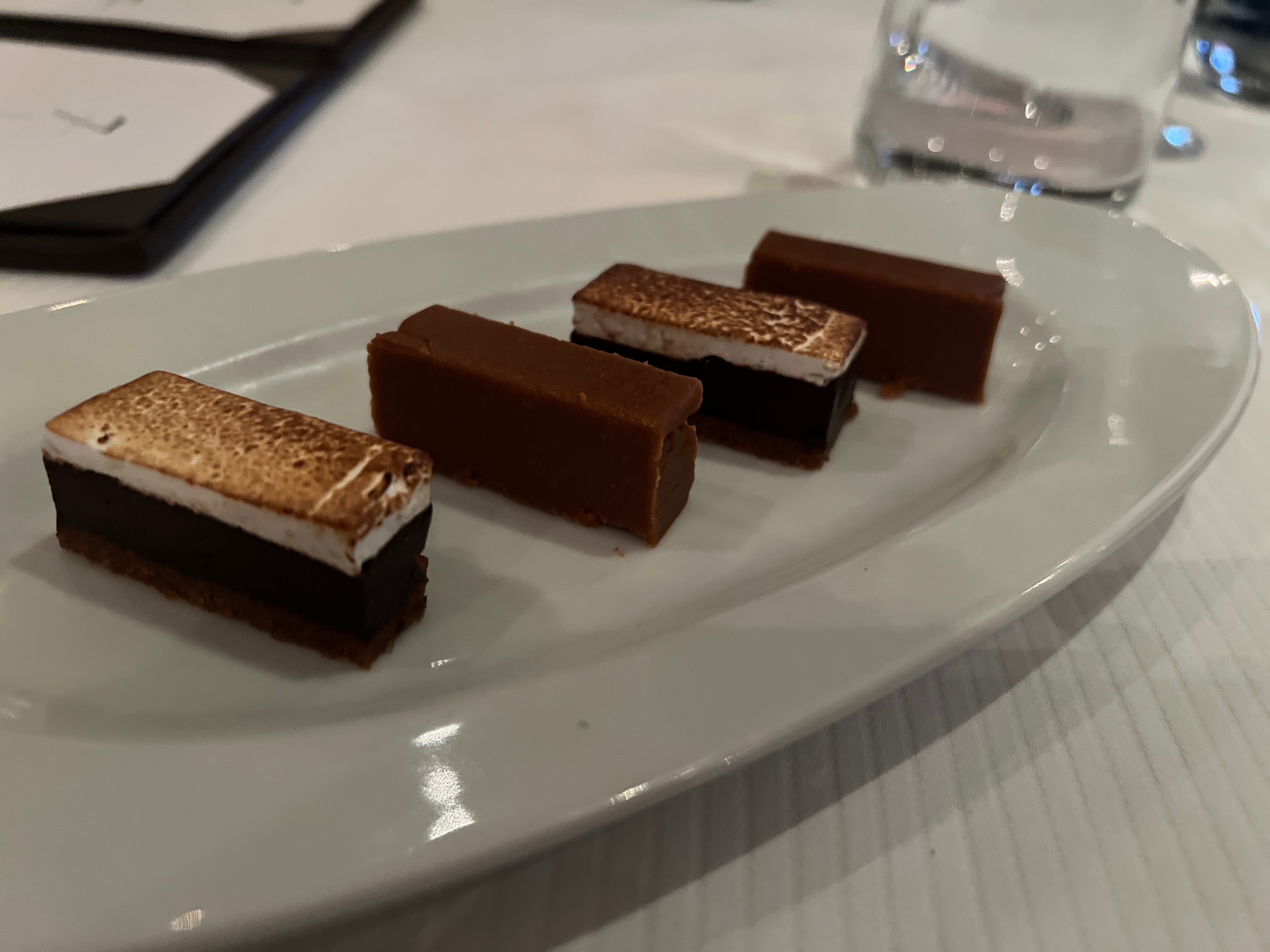
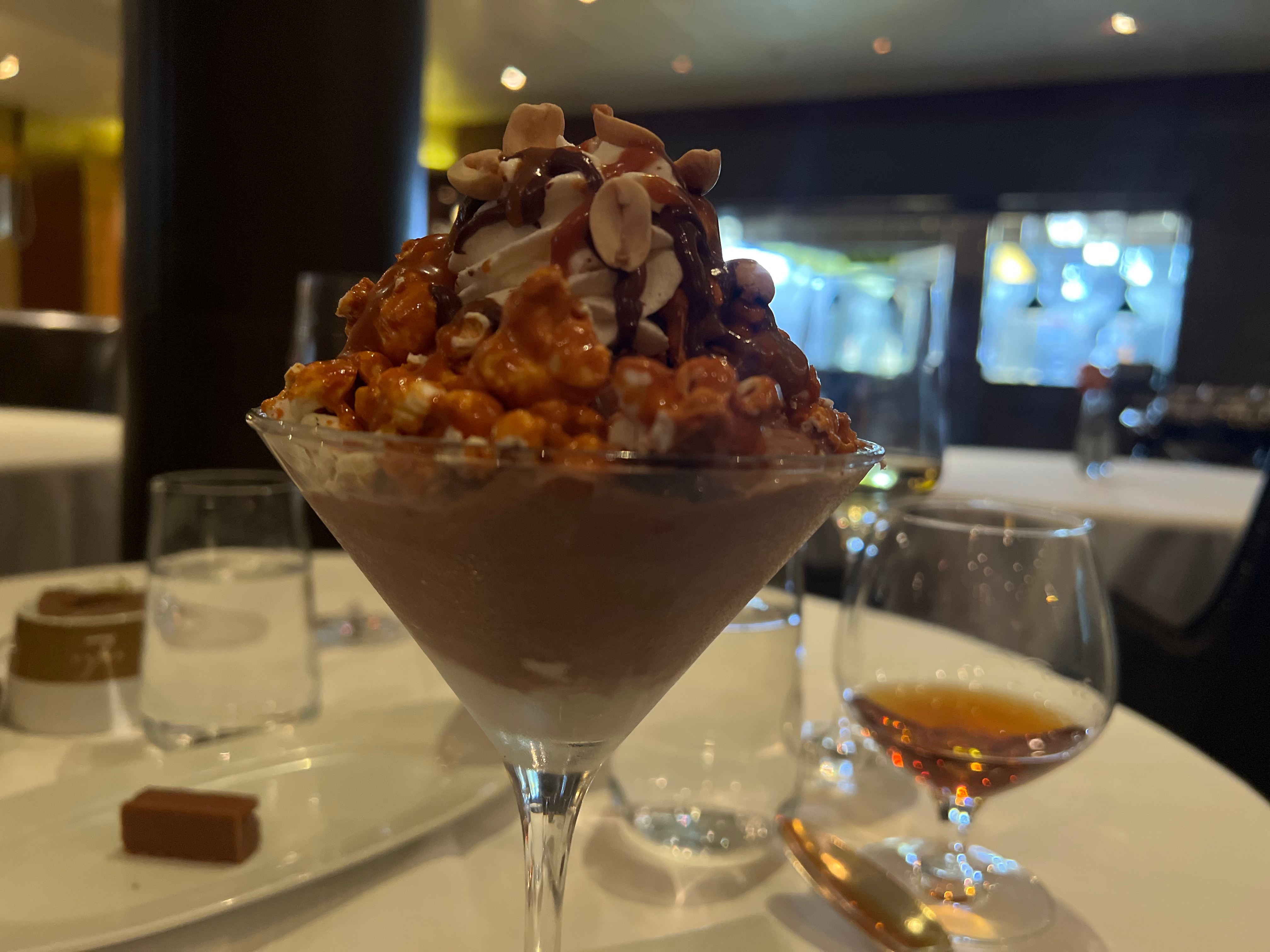
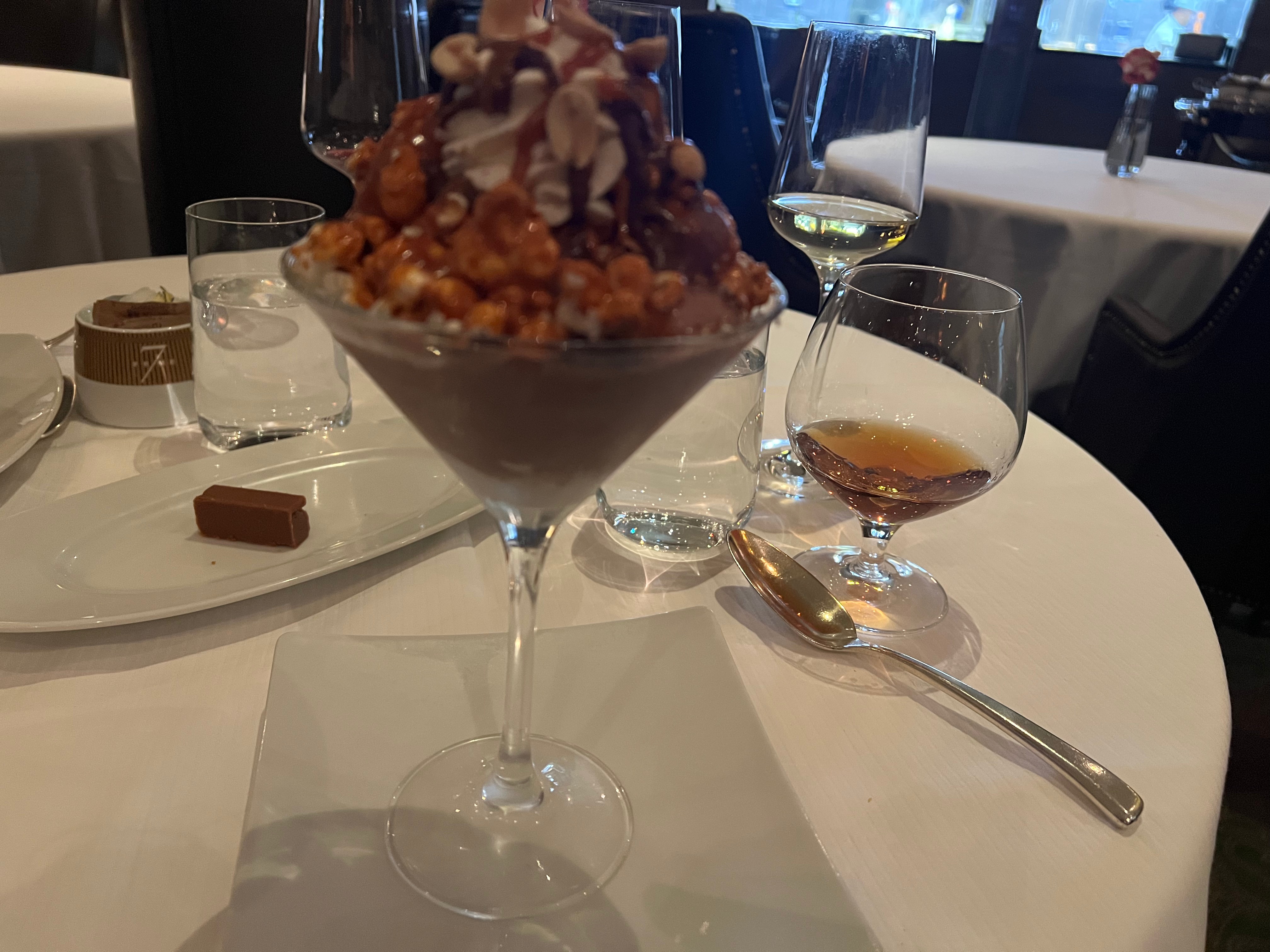
Desserts were a mixed bag. The Chicago cheesecake was excellent, and the deconstructed s’mores were indulgent fun. The visually impressive 14-layer chocolate cake, however, was disappointingly dry. Wines included with the meal paired adequately but lacked the depth and prestige expected at this price point.
Overall, Prime 7 delivers a solid and pleasant experience, but it never truly dazzles. Conservative plating, inconsistent ingredient quality, and occasionally confused cooking styles keep it firmly in the “good” category—comfortably satisfying, but far from the luxurious culinary adventure that Regent promises.






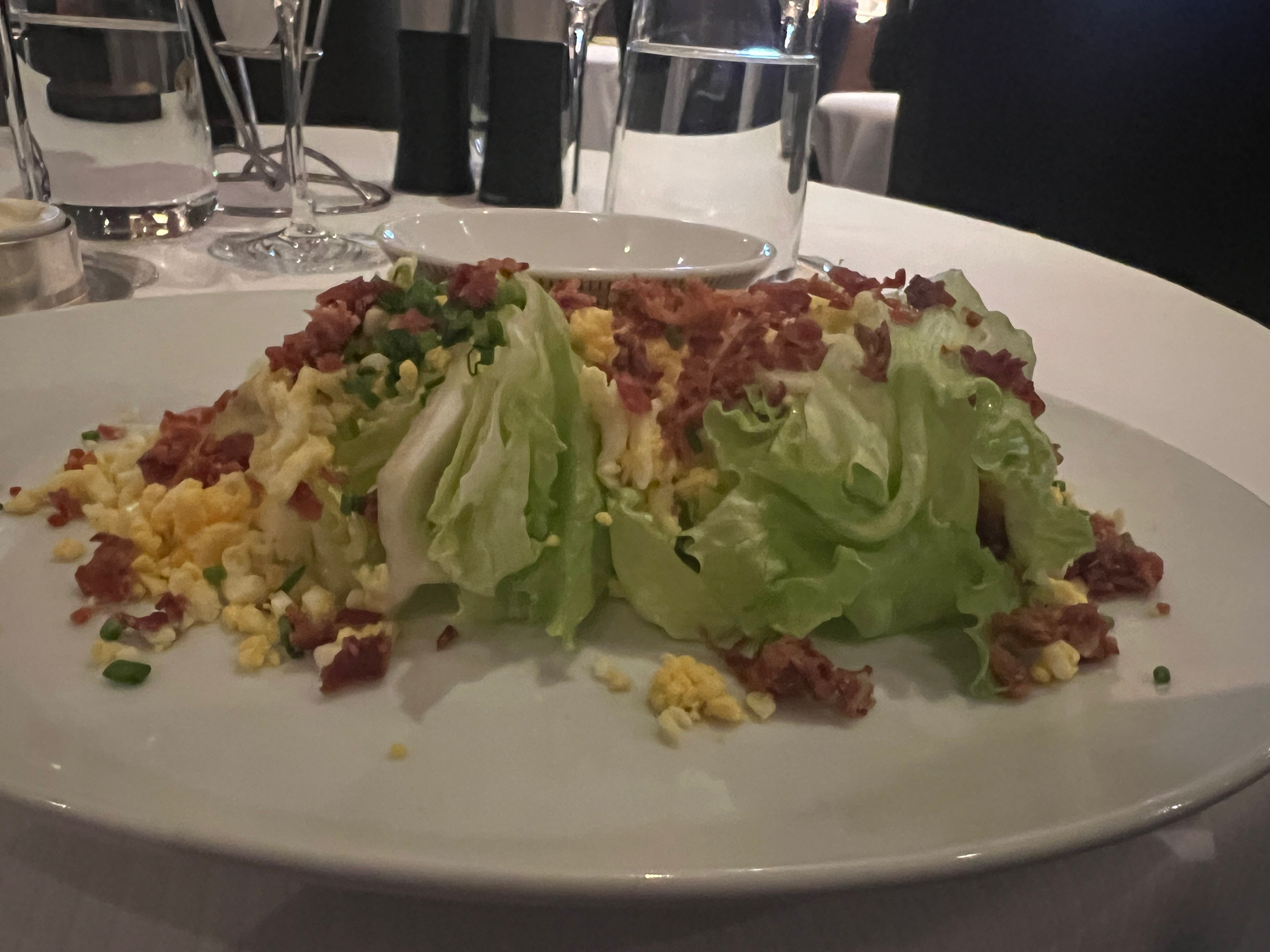


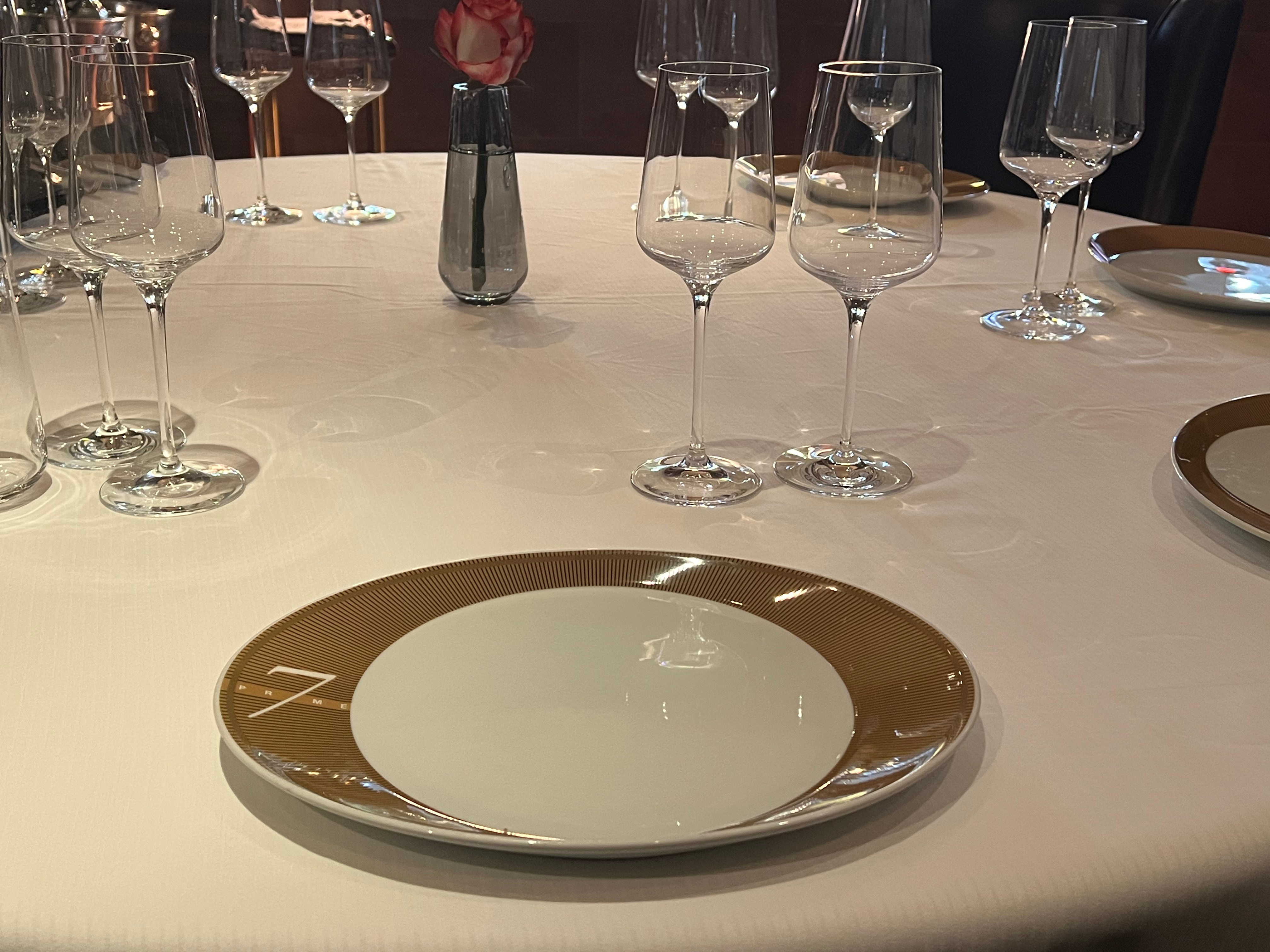

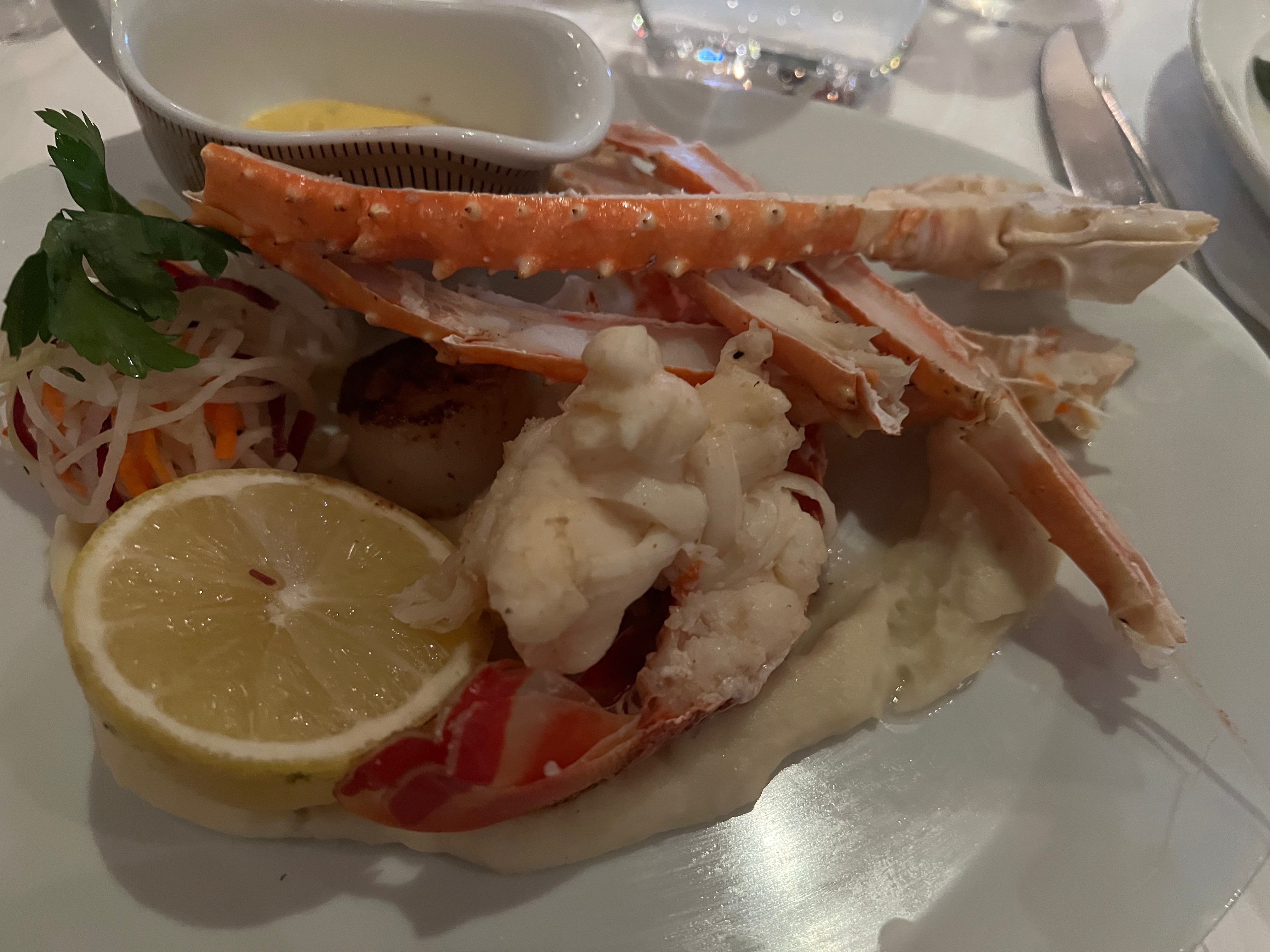

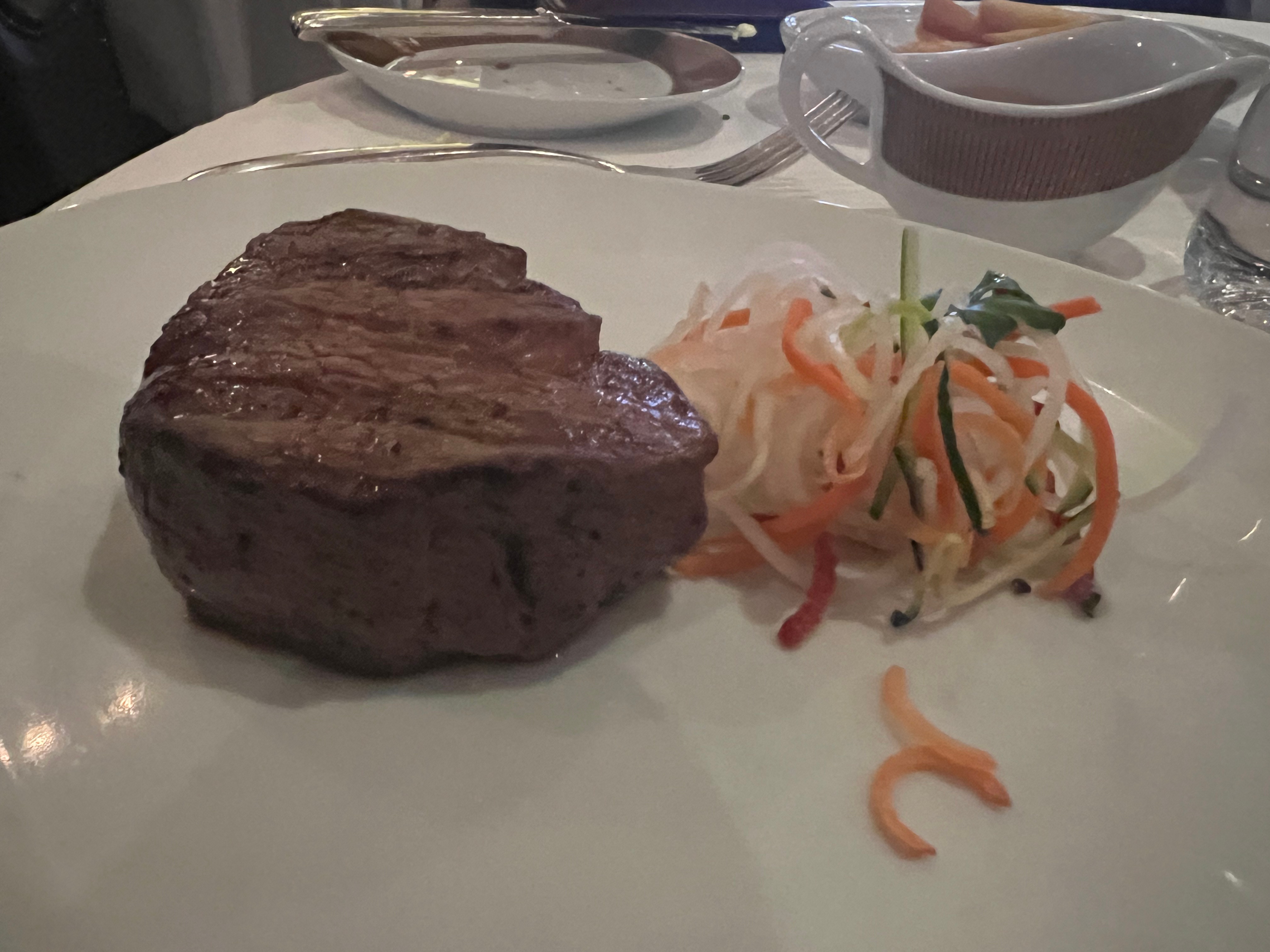


Click here to see a dinner in Prime 7: https://youtu.be/fU6_-vASkrM?si=x7WENUk86xaFANGe
Chartreuse: Where the Promise Finally Delivers
Chartreuse, located on Deck 5, is the undeniable star of Seven Seas Voyager’s dining scene—and the only restaurant onboard that truly feels aligned with Regent’s luxury narrative. This modern French venue takes inspiration from the cuisine of younger Parisian chefs, and for the most part, it gets it right.
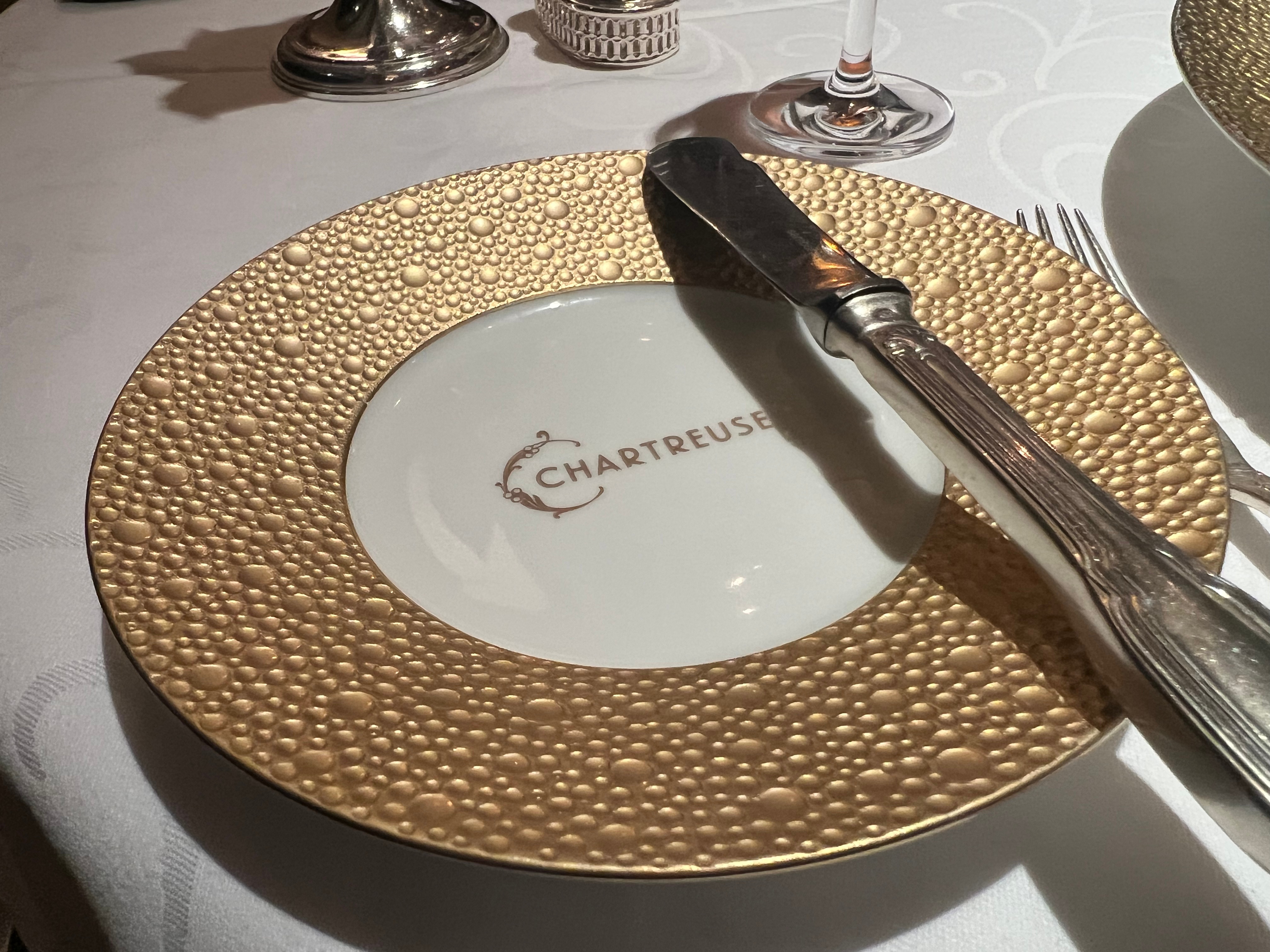
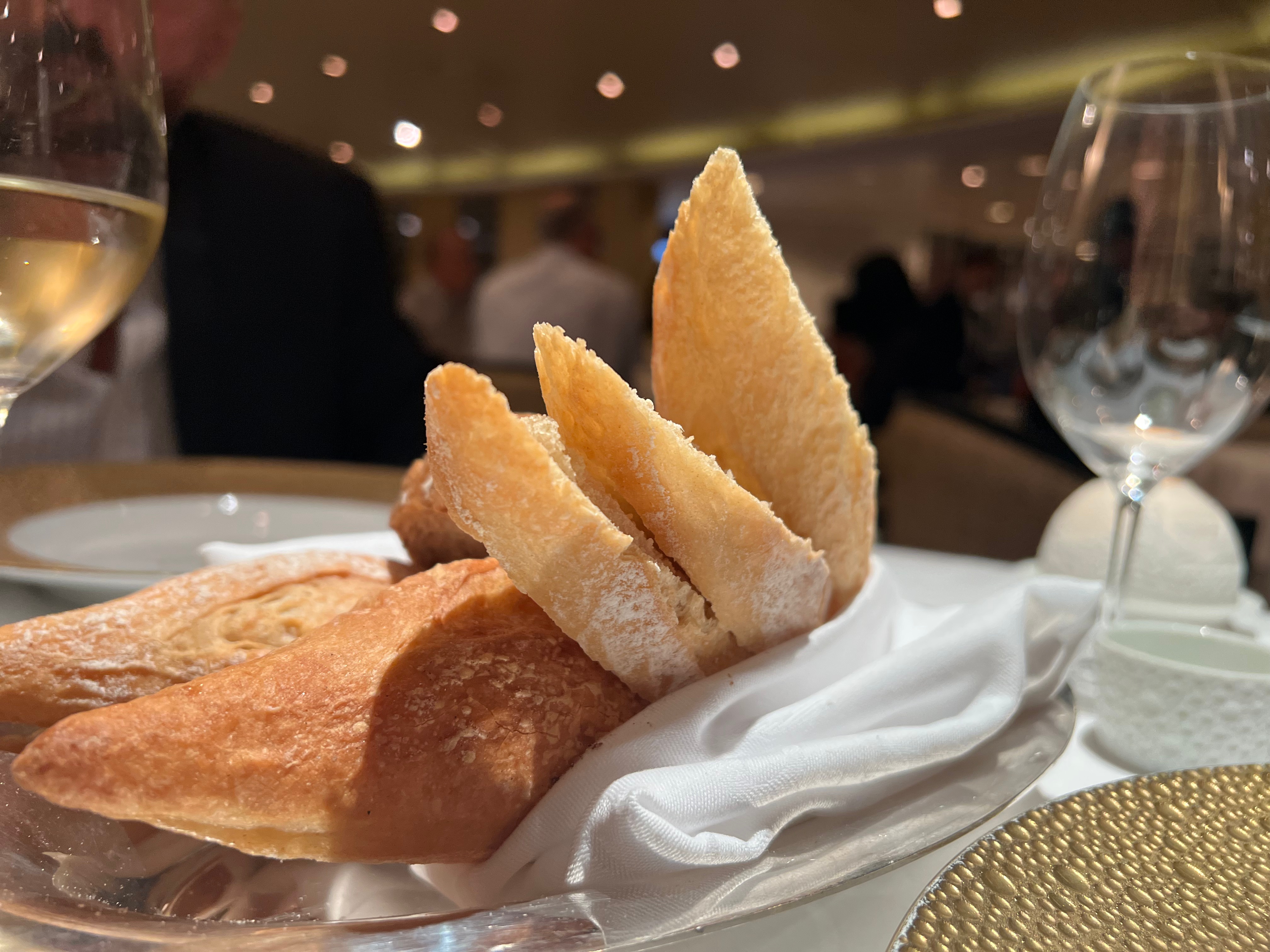
The décor sets the tone beautifully. A chic, theatrical mix of modern Art Deco elements, cream velvet chairs, black lacquered wood, gold brocade curtains, and blue-toned contemporary artwork creates a sophisticated yet playful atmosphere. Gold water-drop charger plates and oversized white serving dishes add visual drama, while French cabaret music subtly reinforces the sense of place.
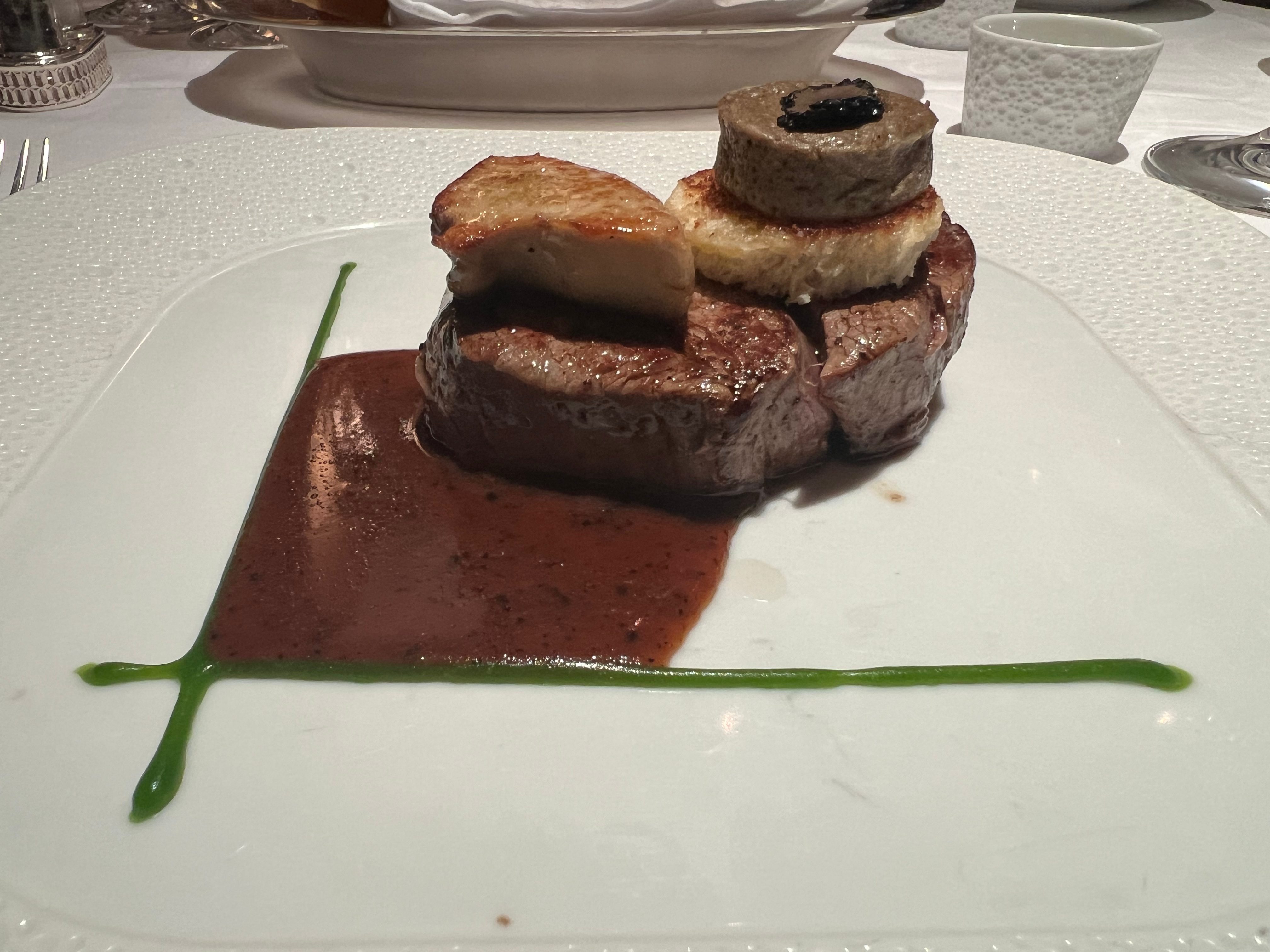
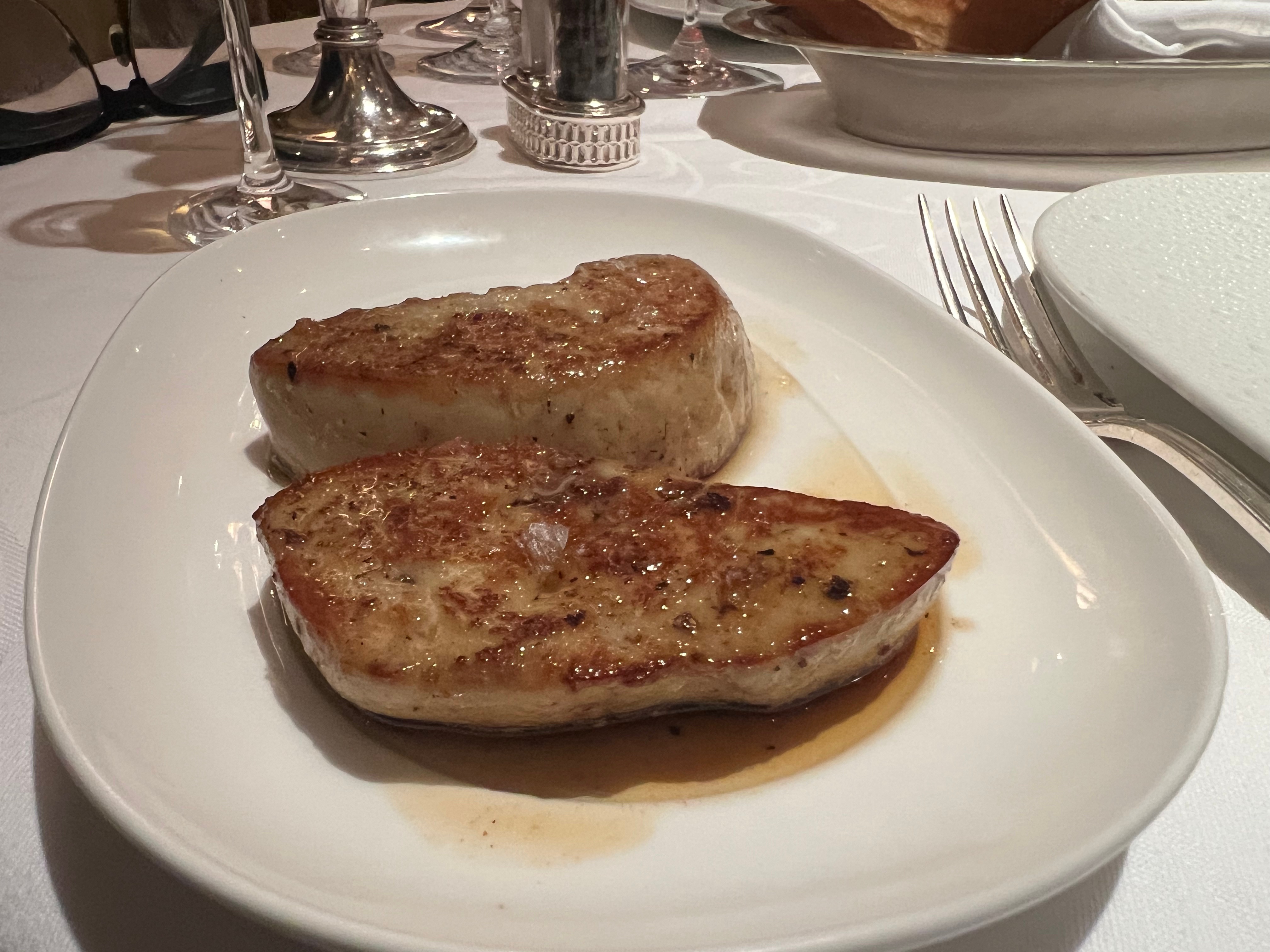
Here, the food finally rises to the level promised in Regent’s marketing. Menus blend classic French ingredients—duck, foie gras, escargots—with contemporary accents such as chickpeas, daikon, and chorizo. Standout dishes included an exceptional foie gras terrine with Sauternes gelée, a silky artichoke soup finished with toasted hazelnuts, and a perfectly executed 72-hour sous-vide short rib crowned with seared foie gras and truffle mousse.
Wine pairings were also the strongest onboard. Included selections like a 2015 Pouilly-Fuissé and a Châteauneuf-du-Pape felt thoughtfully chosen and appropriately premium. Desserts impressed both visually and on the palate, especially a reimagined île flottante served with crème anglaise and an elegant sugar sculpture.
The final flourish—two French macarons presented in a small gift box to enjoy back in the suite—was a genuinely refined, upscale touch. Chartreuse is the one venue that truly delivers on Regent’s promise of epicurean excellence—and makes you wish the rest of the dining program followed suit.










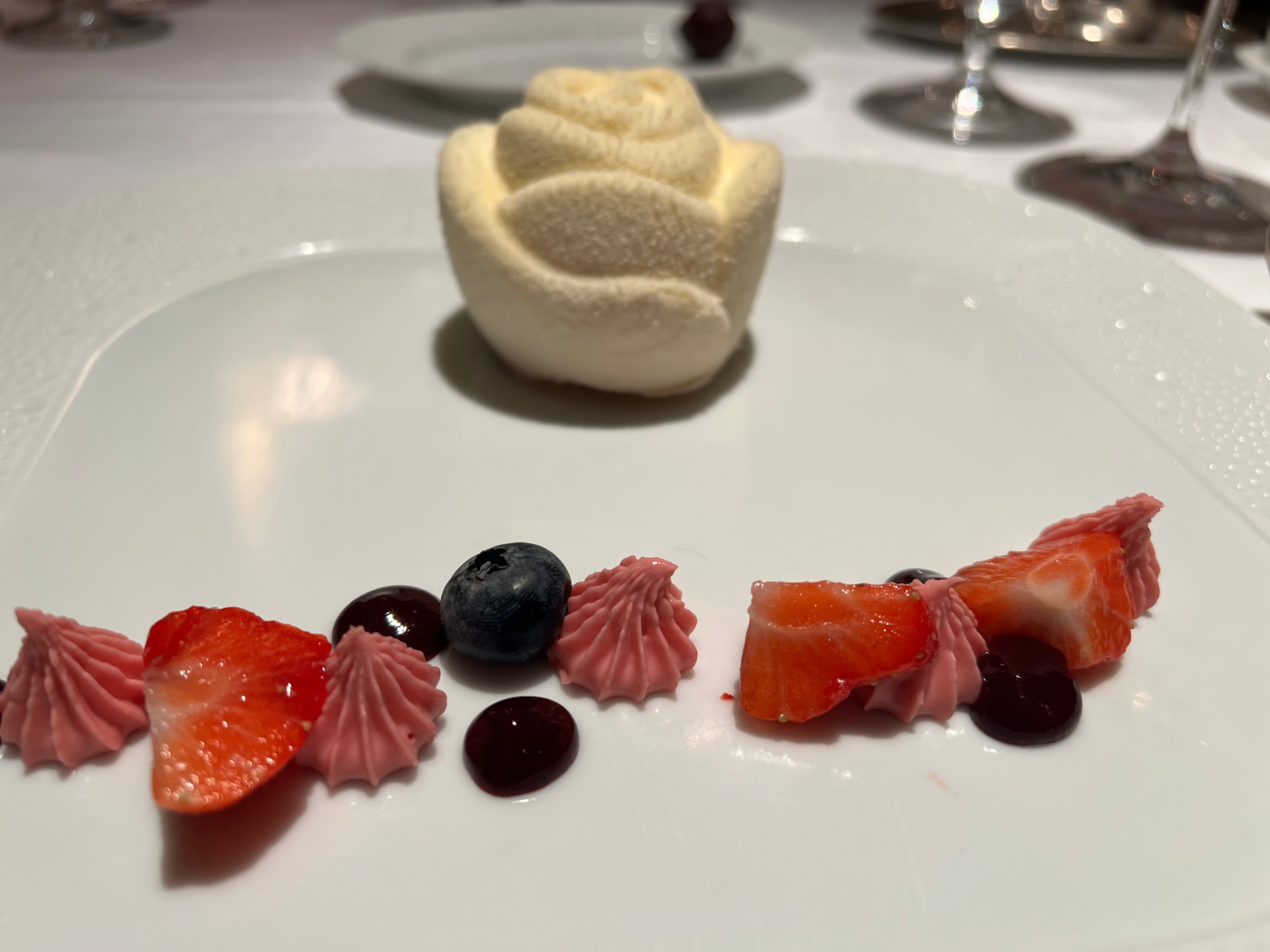

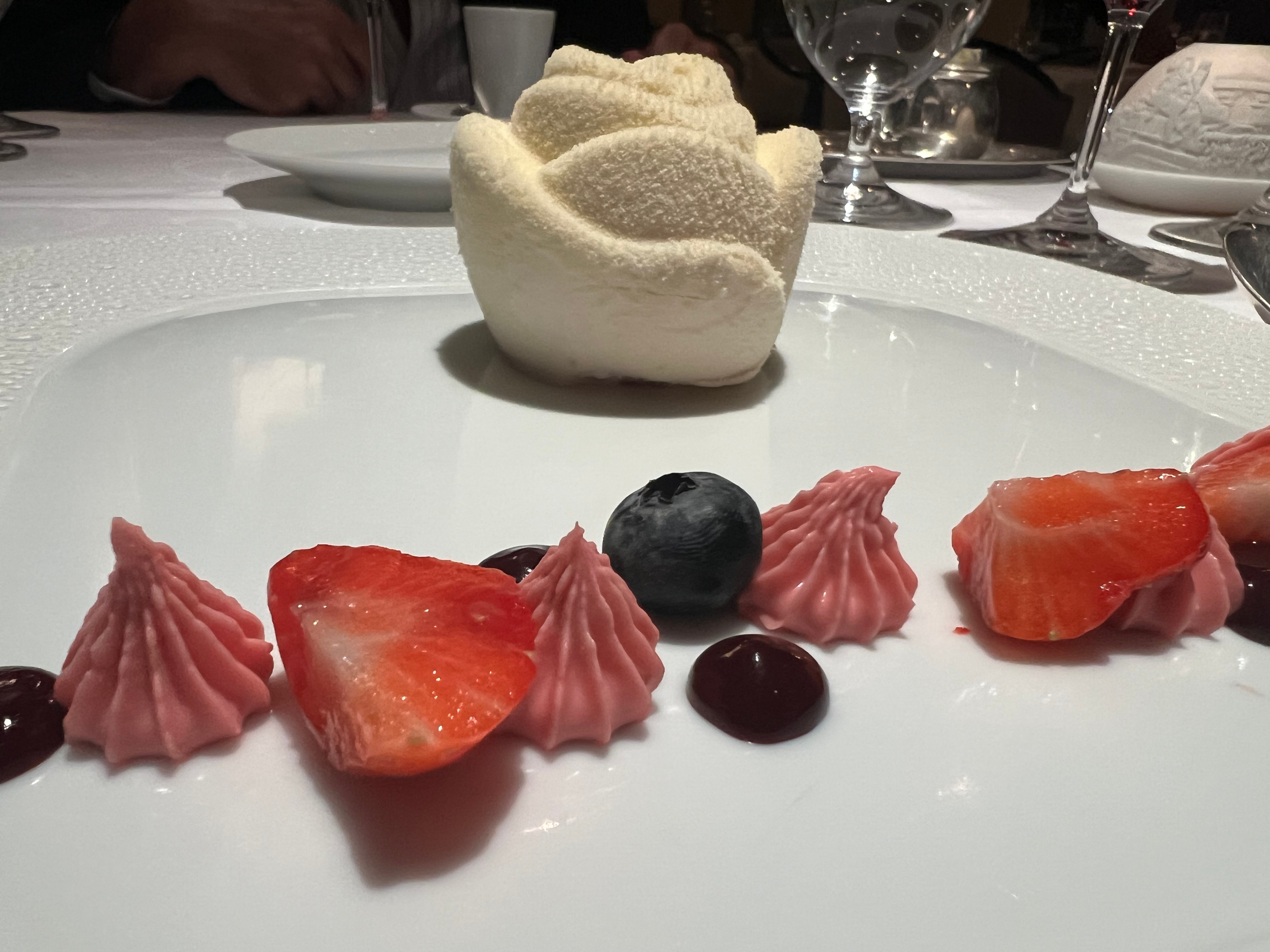


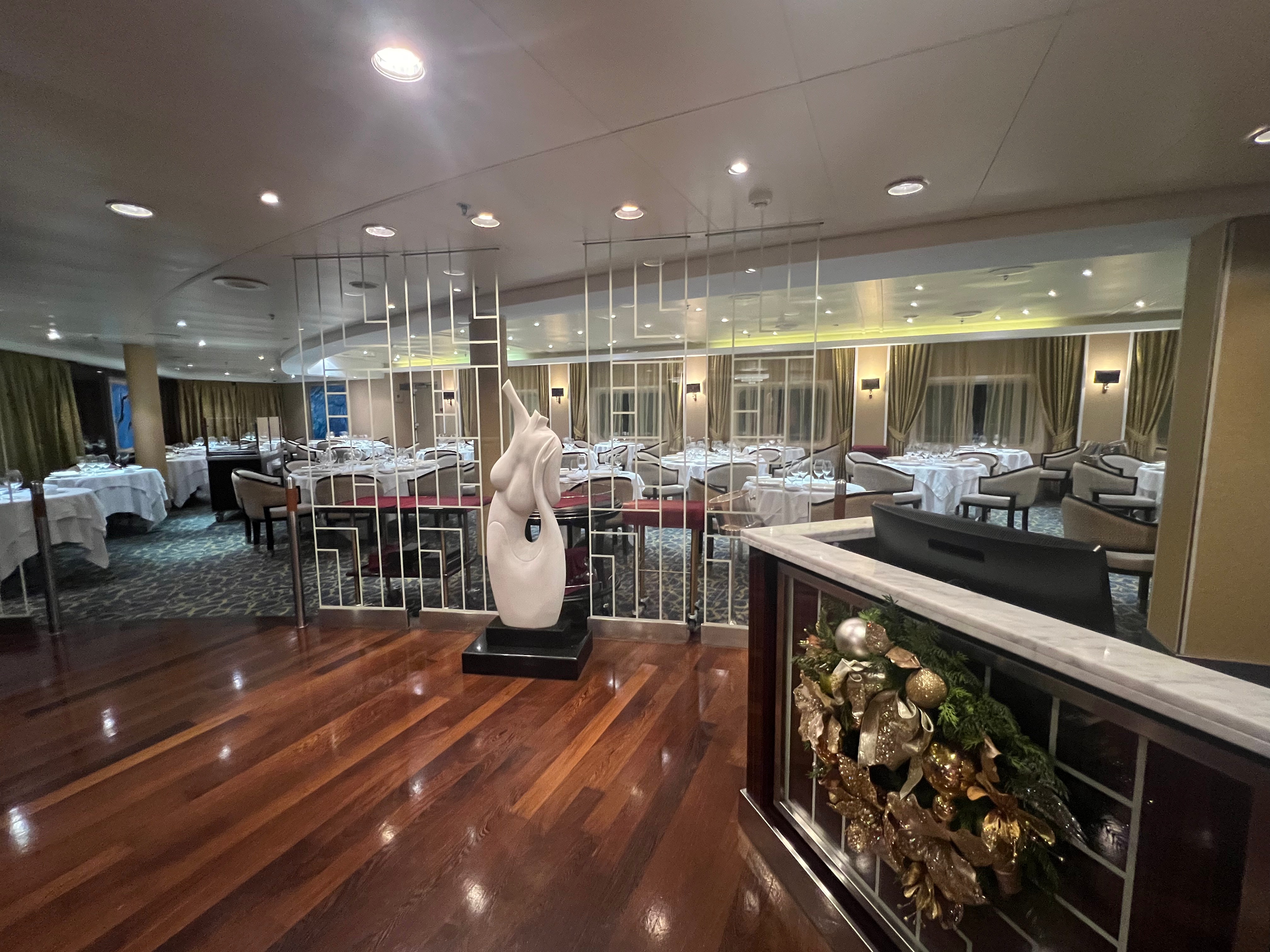

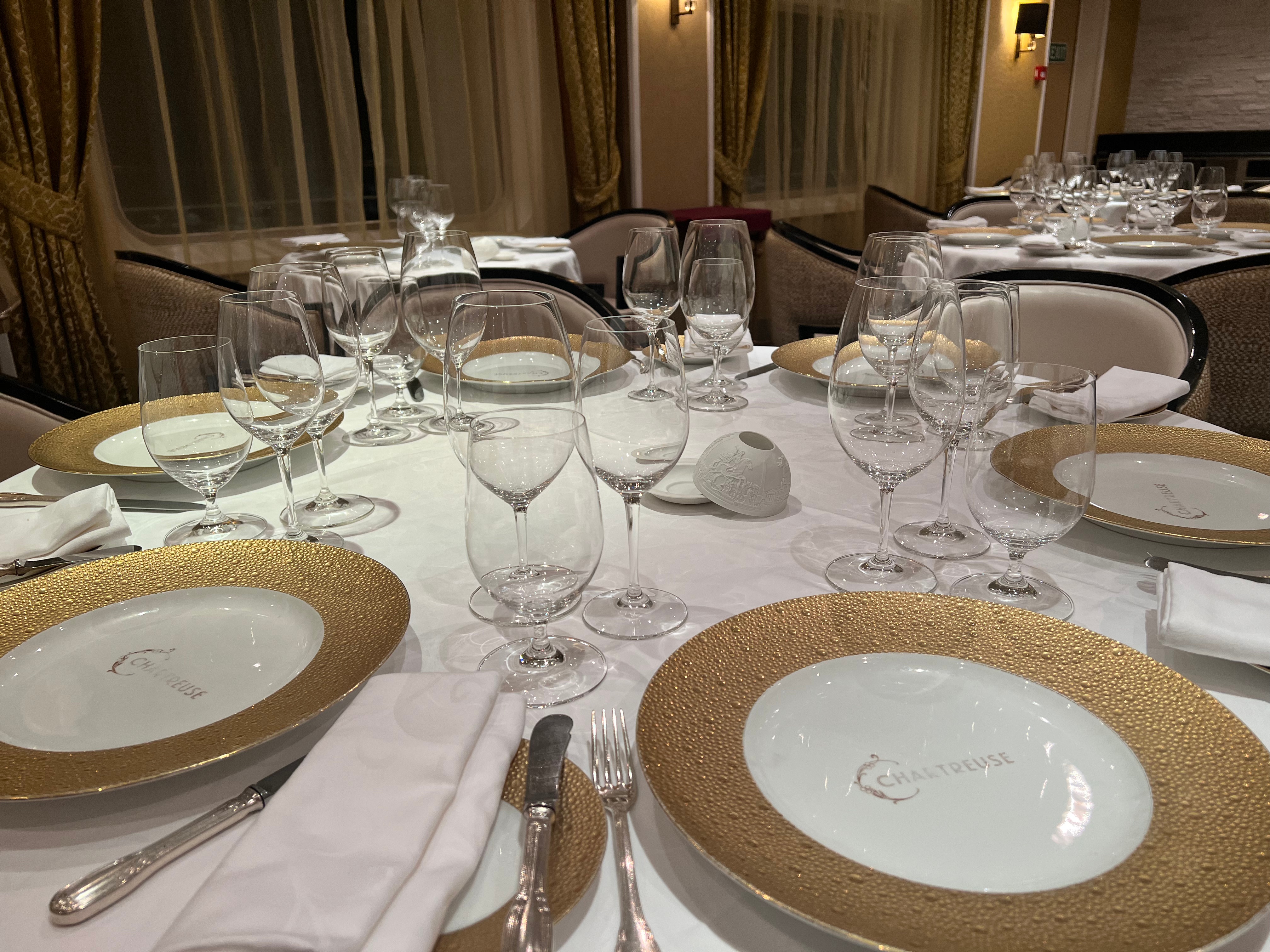

Click here to see a dinner in Le Chartreuse: https://youtu.be/fU6_-vASkrM?si=Jp89hgz-kSPBrCKP
La Veranda & Sette Mari: Familiar Territory
La Veranda, located on Deck 11, serves as Seven Seas Voyager’s buffet venue for breakfast and lunch, with occasional themed dinners. The space itself is bright and modern, finished with marble surfaces, white tablecloths, and sweeping panoramic windows—an elegant setting that immediately raises expectations.
Breakfast is generous in scope but uneven in execution. Made-to-order omelettes and hot dishes were perfectly acceptable, but the cured fish, charcuterie, and fresh fruit lacked freshness and finesse. Cappuccino service was particularly frustrating, often arriving when the meal was already over—hardly ideal for a leisurely luxury breakfast.
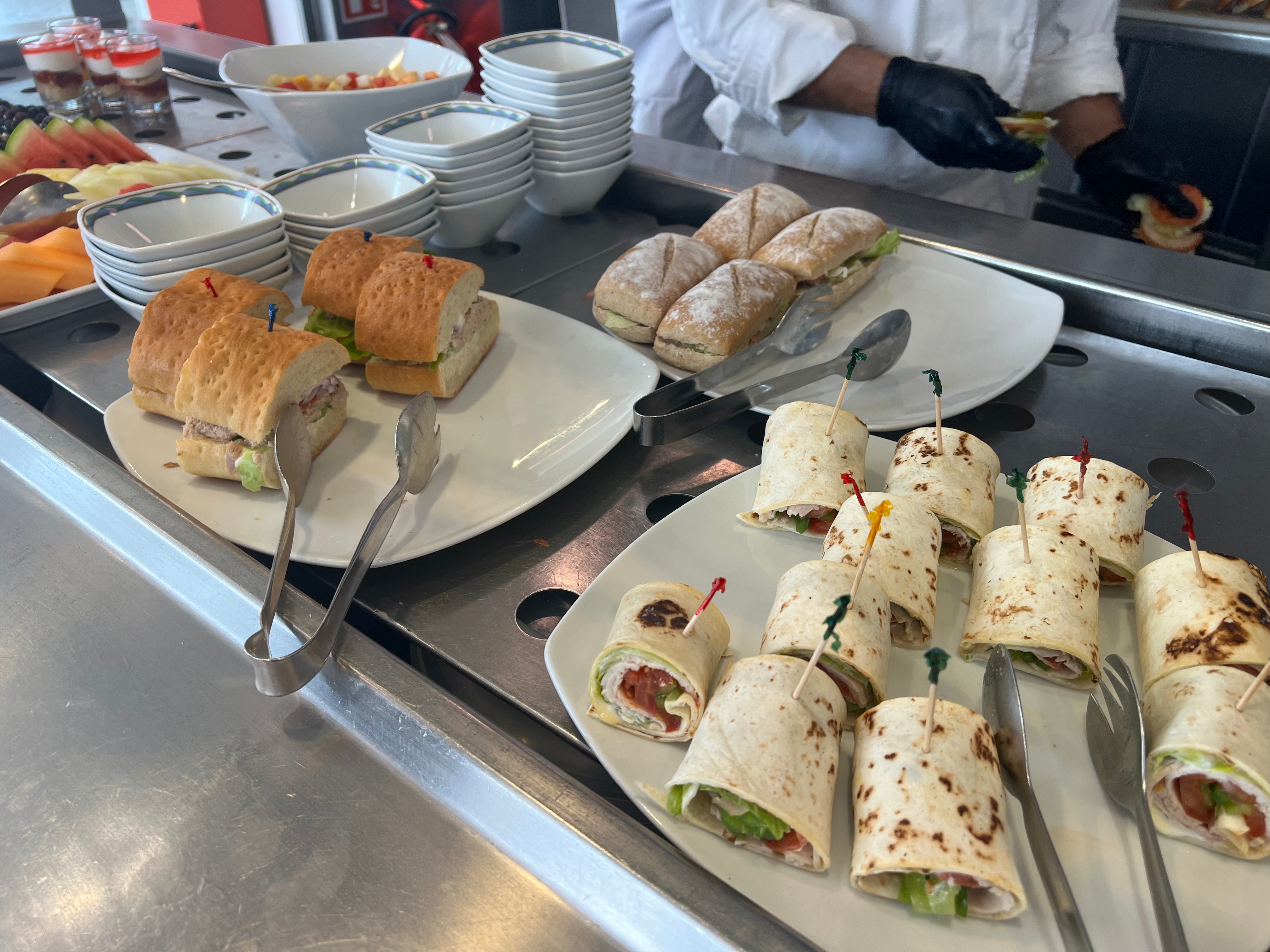
Lunch follows a familiar buffet formula: salads, soups, hot dishes, carved meats, and desserts. A few items, such as smoked duck breast, stood out positively, but overall the offering felt surprisingly ordinary. Remove the white linens and polished cutlery, and the experience could easily be mistaken for that of a mainstream cruise line charging a fraction of Regent’s fares.
In the evening, La Veranda rebrands as Sette Mari, an Italian-themed table-service restaurant. After reviewing the menu and observing dishes at nearby tables, I chose not to dine there. The presentation and offerings recalled a mediocre neighbourhood Italian restaurant—run, perhaps, by a well-meaning but non-Italian chef—making it the least tempting dining option onboard.




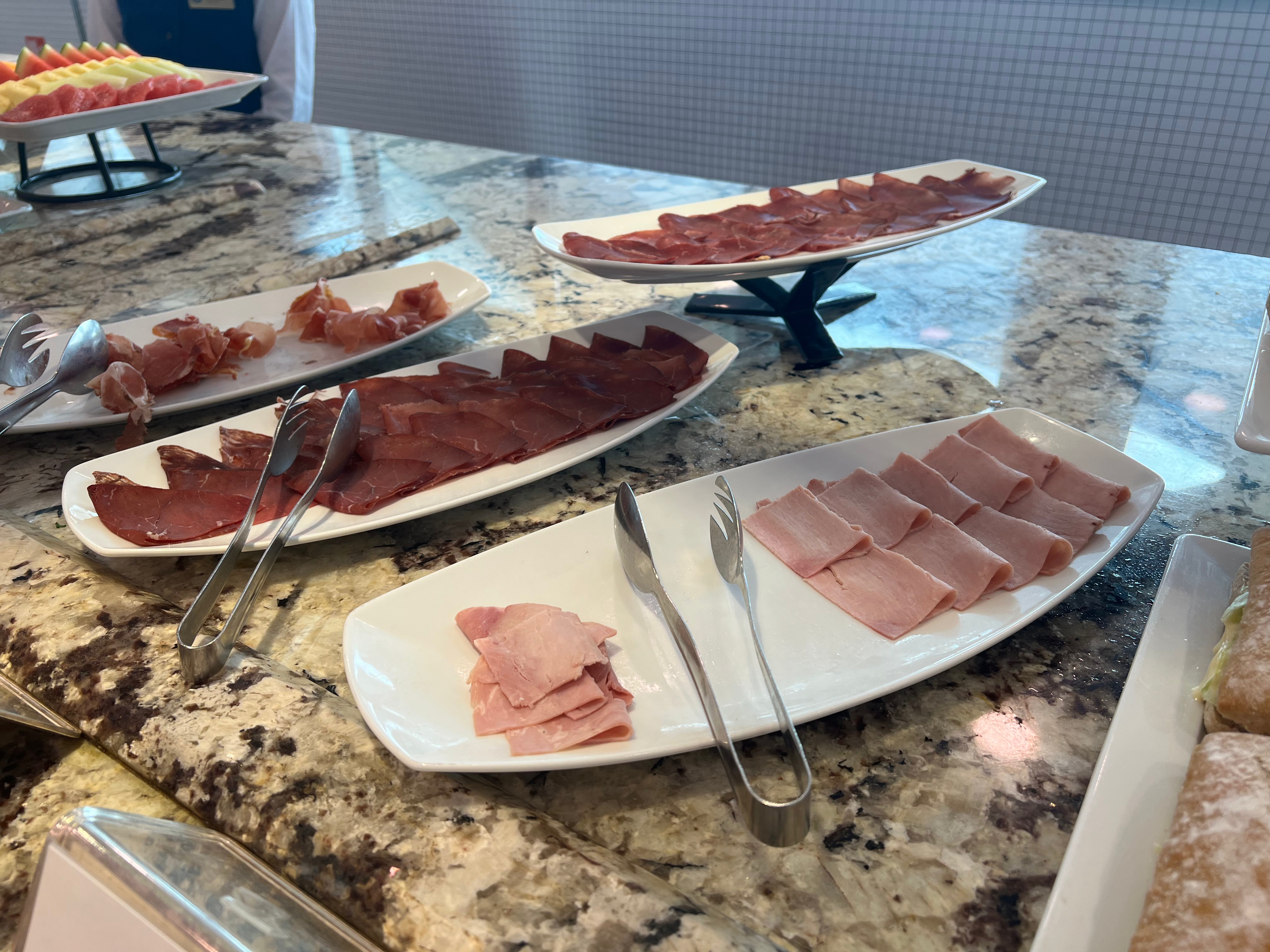





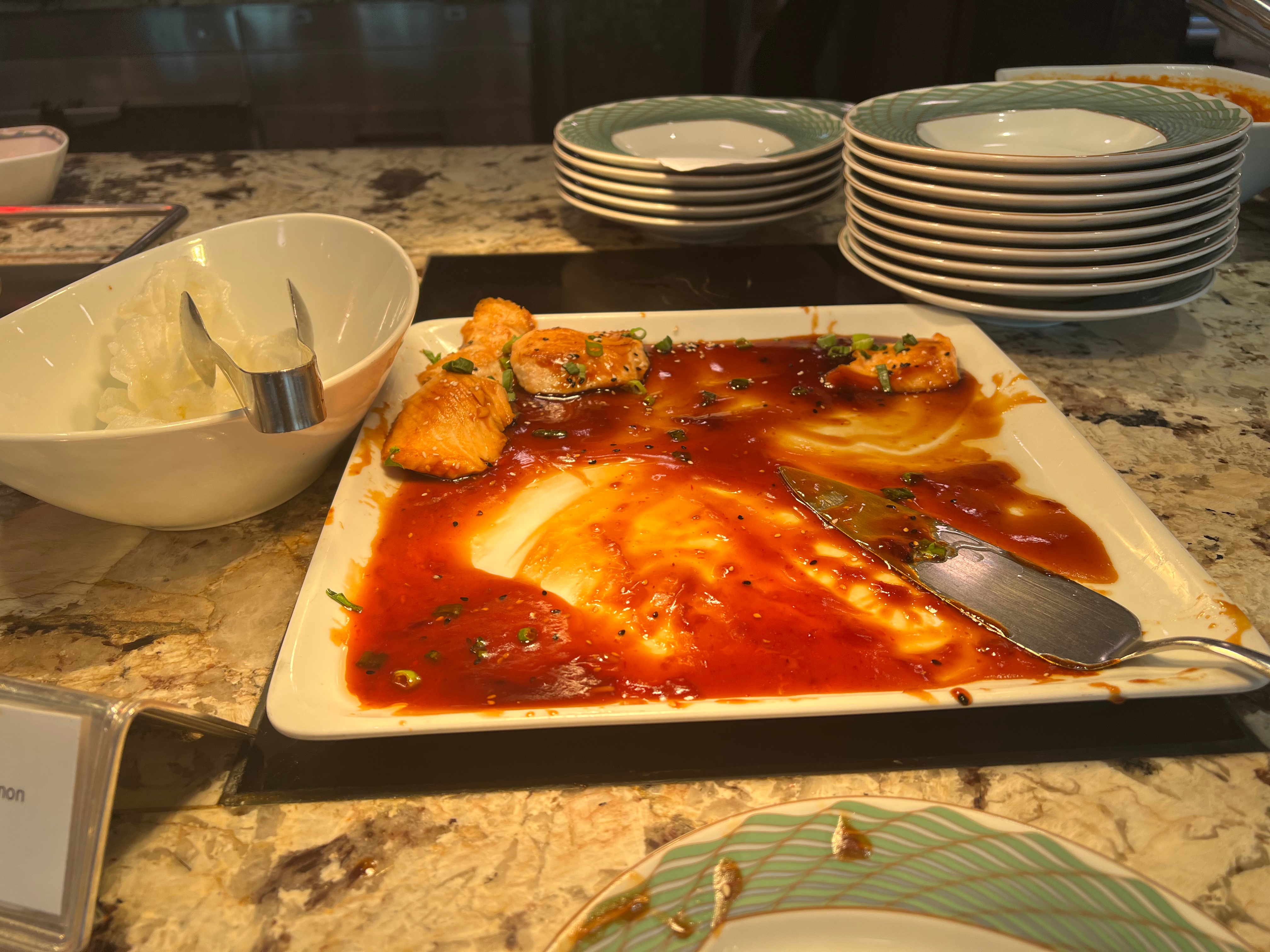


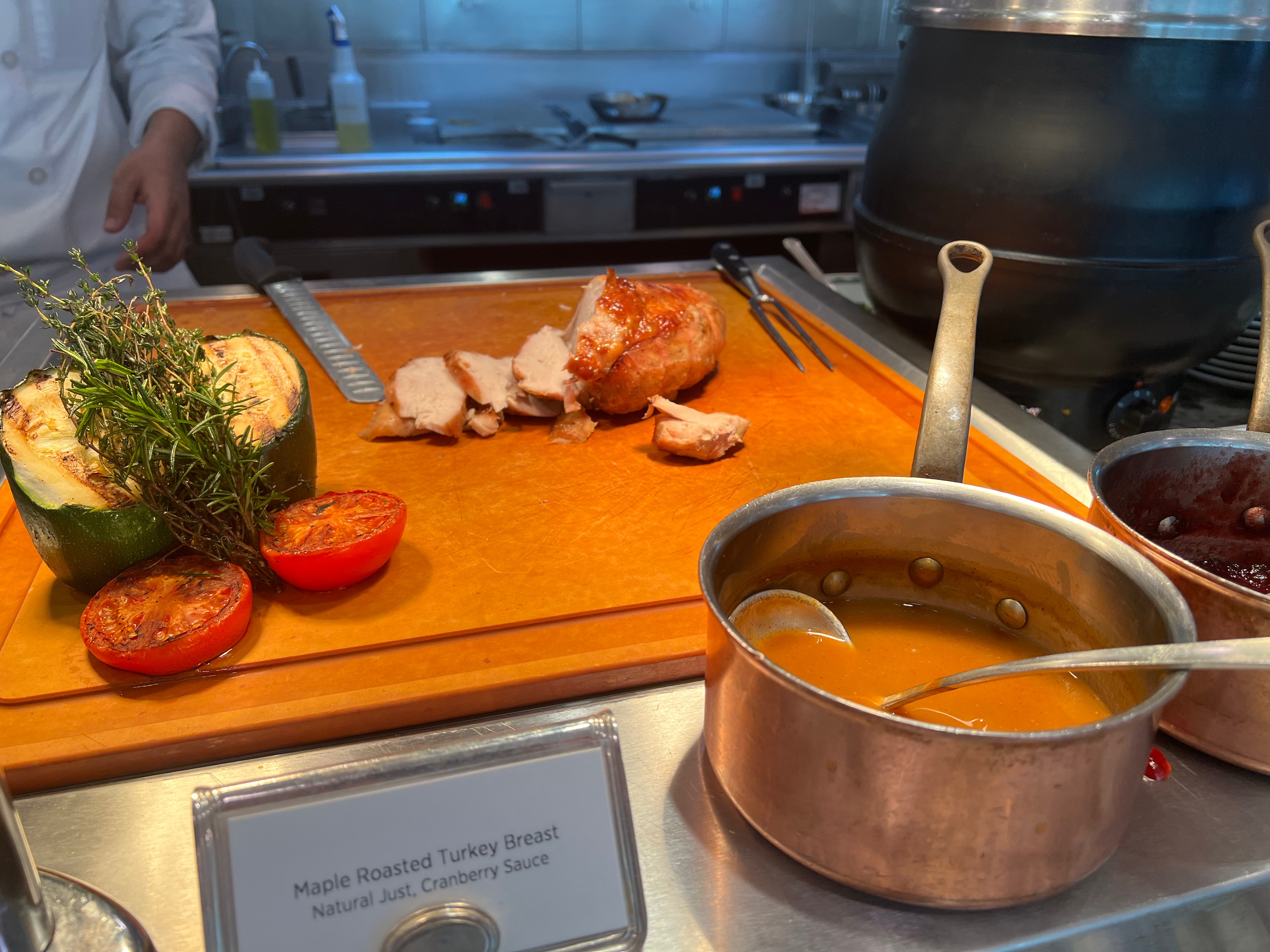


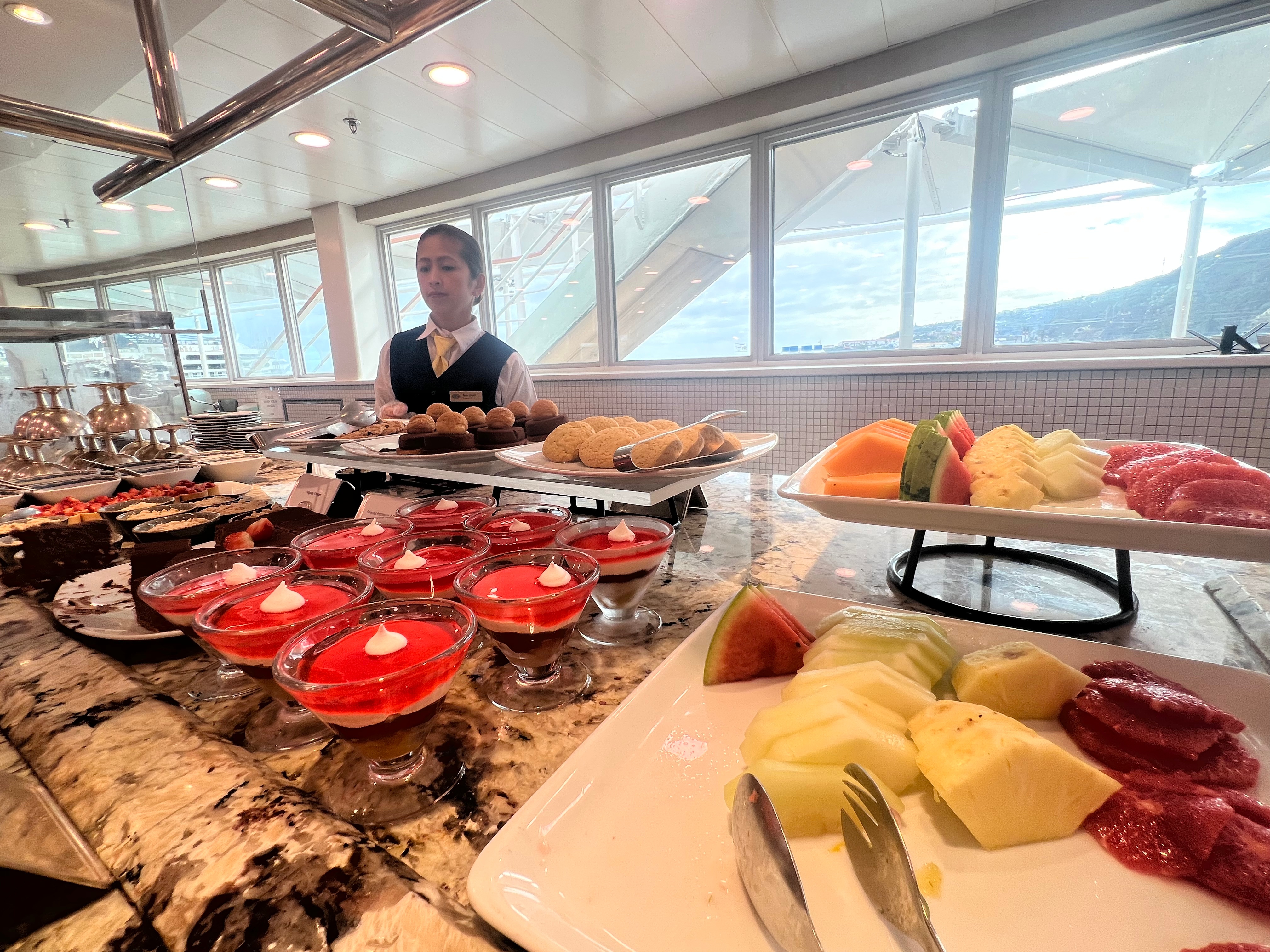







Click here to see the restaurants on board Seven Seas VOYAGER: https://youtu.be/TUbuvaXbhx8?si=23GR65U03DmkJNKQ
Pool Grill & The Bigger Culinary Picture
The Pool Grill on Deck 11 is refreshingly honest. Burgers, hot dogs, lighter bites, and ice cream are served without pretence or ambition—and that’s precisely why it works. Expectations are modest and, importantly, they’re met. This is comfort food by the pool, competently executed and entirely fit for purpose.
Ironically, this straightforward venue highlights the wider issue with Regent’s gastronomic offering. The weakest link isn’t service—it’s the food itself. Across the ship, ingredients often felt mediocre, flavours repetitive, and plating stubbornly basic. Many dishes shared the same familiar “all-day dining” taste profile, regardless of venue or cuisine. The promise of an epicurean journey quickly gave way to culinary déjà vu.
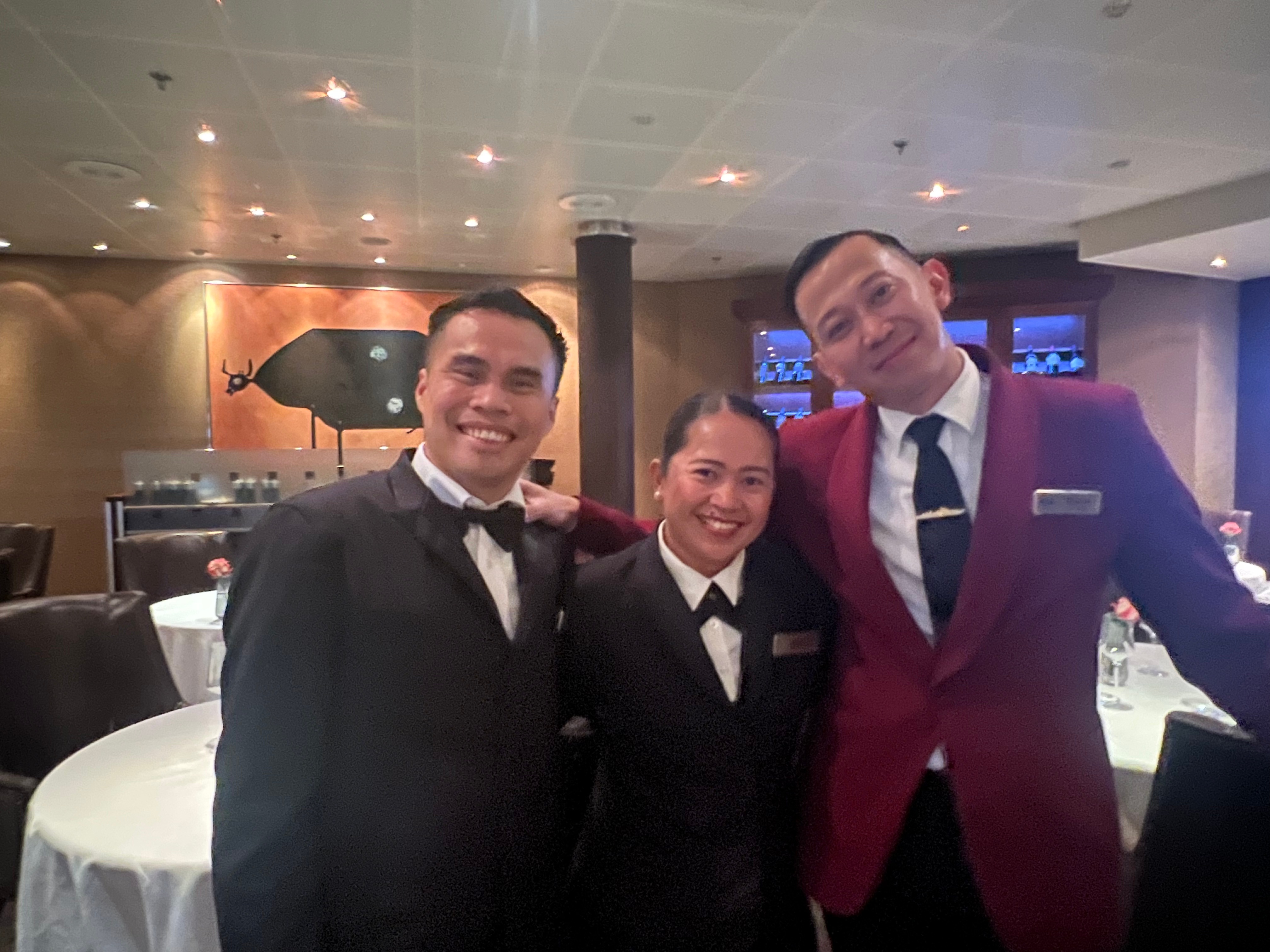
What consistently impressed was the service. Maître d’s, sommeliers, waiters, and assistant waiters delivered warmth, professionalism, and genuine care, working tirelessly to elevate meals beyond what was actually on the plate. They deserve far more credit than the kitchen allows them.
Despite a few bright spots—most notably Chartreuse—the overall gastronomic experience falls well short of Regent’s lofty promises. My final Net Promoter Score for dining onboard Seven Seas Voyager is a generous 5 out of 10.
The unexpected upside? After ten days at sea, I actually lost weight. A silver lining, perhaps—but certainly not the one Regent had in mind.
Crew: Where Regent Truly Delivers
If there is one area where Seven Seas Voyager genuinely lives up to Regent’s glossy marketing promises, it is the crew. On a luxury cruise, personalised, intuitive service is the ultimate benchmark—and here, Regent comes impressively close to perfection. At times, I was almost convinced that Nobody Does It Better™ than Regent Seven Seas Cruises®.
The housekeeping team alone deserves exceptional praise. Head Butler Sumita, our butler Kelsley, and suite attendants Irish and Snooky worked relentlessly to deliver excellence at every turn. Even when faced with maintenance hiccups, logistical challenges, or the unavoidable limitations of an ageing ship, their professionalism and attention to detail transformed potential frustrations into seamless, almost invisible solutions. This is luxury service at its most effective: calm, proactive, and genuinely caring.
The Food & Beverage team was equally impressive. From General Manager Vlady and F&B Director Marius to Bar Manager Bella, the maitre d’s, sommeliers, bartenders, and baristas, the team performed daily miracles. They managed to balance the reality of cost-cutting and corner-trimming—elements that occasionally diluted Regent’s luxury image—without ever allowing guests to feel short-changed. The warmth, consistency, and effort shown by the front-line team often elevated meals and drinks well beyond what was actually being served.
That said, not every department operated at the same level. Shore Excursion staff, restaurant reservation teams, and concierge services still have room to grow. True luxury thrives on personalisation, exclusivity, consistency, and the ability to treat feedback as a gift rather than a challenge. These teams haven’t quite reached the exceptional standard set elsewhere onboard.
One final, humorous footnote: an invitation to a “dinner with an officer” that turned out to be hosted by the Assistant Second Purser and Deputy Shore Excursions Manager felt slightly underwhelming. I couldn’t help but hear Onslow from Keeping Up Appearances: “Blimey! You win a competition, you get a luxury cruise, and then they expect you to eat with the crew!”
Overall, the crew worked wonders, repeatedly transforming imperfect circumstances into memorable moments. My Net Promoter Score for the onboard team is an enthusiastic 9 out of 10—and it’s largely thanks to them that the voyage felt luxurious at all.
Click here to see a BIG THANK YOU to Voyager’s Crew: https://youtu.be/6yS58VAzQfc?si=G_Xpyonh_ZRxcrD8
Disembarkation: Ending on a High Note
The logistics of leaving Seven Seas Voyager were nothing short of excellent—and arguably one of the most polished aspects of the entire cruise. Midway through the voyage, a clear and detailed letter arrived in my cabin outlining all available disembarkation options. Two days before arrival, further information followed, ensuring there were no last-minute surprises. Simply following Regent’s step-by-step procedures made the entire process feel effortless.
One small but genuinely meaningful detail stood out: the deadline for placing luggage outside the cabin door was set at 10:00 p.m. This may sound minor, but it’s a refreshing change from many cruise lines that demand bags far earlier, effectively forcing guests to spend their final evening in travel clothes. Even more impressive, all onboard services continued as normal until 9:00 a.m. Guests could enjoy a leisurely breakfast at Compass Rose or La Veranda—or even order room service—without feeling rushed.
With a final disembarkation time of 9:00 a.m., the experience was calm, efficient, and stress-free. In over 150 cruises, this was a first—and a truly thoughtful way to end the journey on a positive note.
Click here to see Disembarking Seven Seas Voyager: https://youtu.be/cT5xHL0gFjw?si=6YwhdwldNHR8iyZS
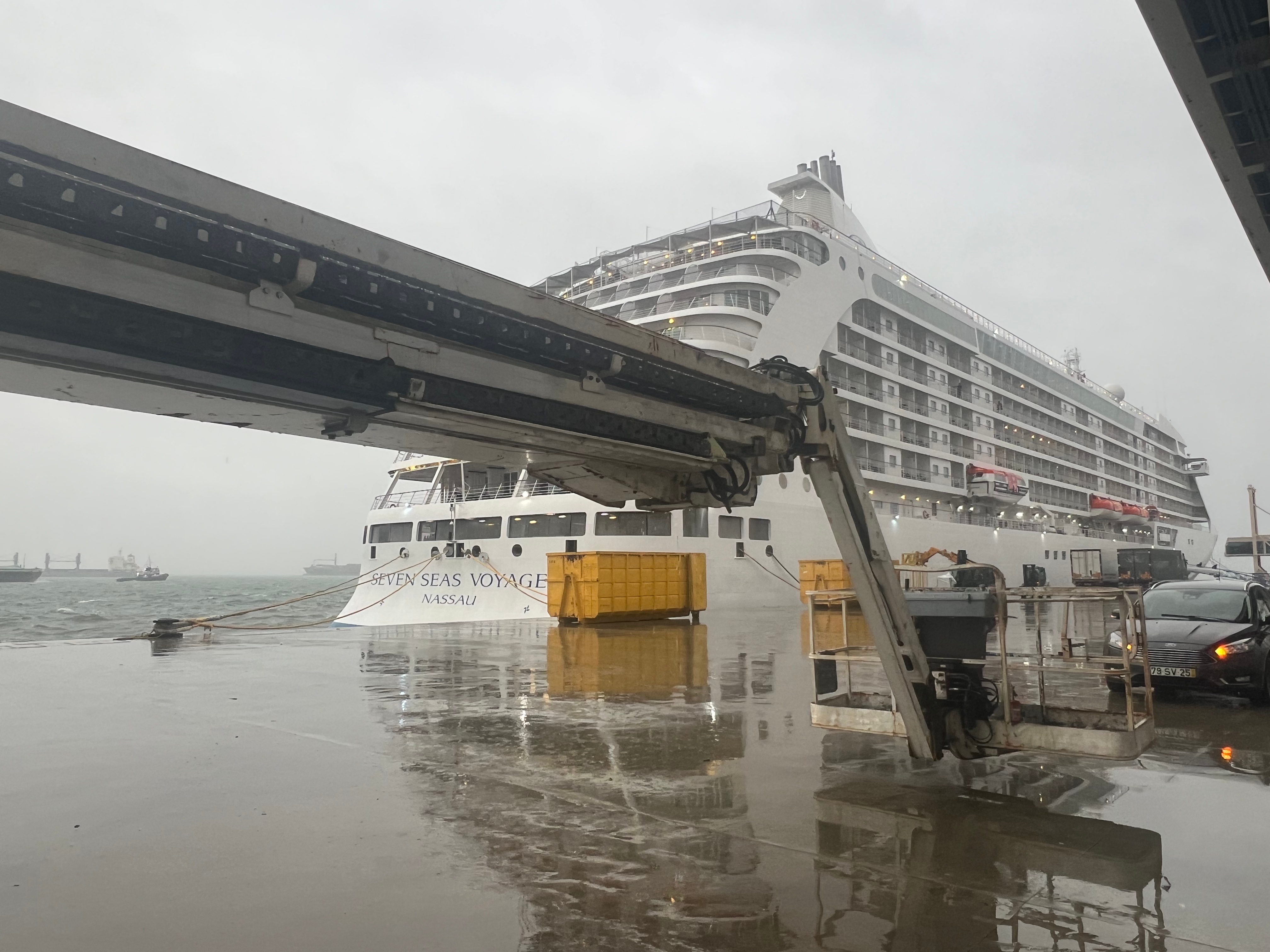
Of course, neither Regent nor the crew of Seven Seas Voyager can be blamed for the chaos that awaited us at Lisbon cruise terminal. Navigating its maze-like exit routes, squeezing through an overcrowded luggage hall, negotiating with porters operating on a distinctly “tips-first” philosophy, and then attempting to locate a taxi or pre-booked transfer turned the final stretch into an unnecessarily frustrating ordeal.
This experience sat awkwardly alongside Lisbon Cruise Terminal’s impressive list of accolades, including the 2025 World Luxury Travel Award for Best Port in Southern Europe and the 2022 World Cruise Award for Best Cruise Terminal in Europe. After that morning, one can’t help but wonder whether the voting process was as unpredictable as Eurovision itself.
That said, Seven Seas Voyager handled disembarkation with impressive efficiency and genuine guest focus. The ship delivered its side of the experience flawlessly, even if the port did not. For that reason, my Net Promoter Score for disembarkation remains a confident 8 out of 10.



Fellow Passengers: When Luxury Loses Its Balance
One of the pleasures I usually take from cruising—especially at the luxury end of the market—is people-watching. A good cruise typically delivers a healthy mix of ages, cultures, travel styles, and worldviews, creating an atmosphere that feels stimulating rather than staged. Personally, I far prefer an international crowd to a product engineered almost exclusively for one market. AIDA’s unapologetically German vibe or P&O’s very British sensibility may work for some, but diversity, when well managed, is where cruising truly comes alive.
On this particular sailing aboard Seven Seas Voyager, however, Regent Seven Seas Cruises made a strategic decision that noticeably tipped that balance—and not in a way that served either first-time guests or loyal Regent aficionados particularly well.
According to an onboard management source (anonymous, understandably), this itinerary did not sell as strongly as anticipated. And much like an aircraft, a cruise ship with empty cabins is a financial nightmare. The solution? Commercially logical, operationally efficient—and experientially risky. Regent reportedly combined aggressive “special offers” with its bidding upgrade system, moving full-fare guests up the category ladder and releasing a substantial number of lower-grade cabins back into inventory.
Those cabins were then sold in volume in Far East markets, particularly China and Hong Kong, at significantly reduced prices. This is hardly an original strategy. The Big Four—Carnival, Royal Caribbean, Norwegian Cruise Line, and MSC—have been doing this for years via regional offices and travel agents offering irresistible last-minute packages. The goal is simple: maximise occupancy and boost SpH (Spend per Head), that sacred metric measuring onboard revenue per guest.
From a spreadsheet perspective, it’s brilliant. From a guest-experience perspective—especially on a brand that sells itself as “unparalleled luxury”—the results were rather more complicated.
On Seven Seas Voyager, roughly a quarter of the passengers reportedly originated from the Far East market. Several long-time Regent loyalists onboard quietly observed that the atmosphere felt noticeably different from what they had come to expect. Importantly, the concerns voiced were not about nationality, but about unmediated cultural differences that Regent seemed either unprepared—or unwilling—to manage.
The flashpoints were predictable. Buffets and public spaces became the main arenas of friction. Western passengers noted frequent line-cutting, a relaxed interpretation of queuing systems, and large family or tour groups effectively colonising sections of public areas. Tables were “reserved” by absence, loungers by proxy towels, and places in line for drinks, tenders, or excursions were often held for people who had yet to arrive—sometimes philosophically, rather than physically.
Now, a little anthropological context helps. Many of these behaviours are rooted not in bad manners but in deeply ingrained cultural norms. In regions shaped by high population density, urgency and assertiveness in shared spaces are practical survival skills. Historical experiences of scarcity can translate into taking more food at buffets—not because it’s free, but because it might not be there later. Communal dining, louder conversation, flexible queuing, and group-based movement are entirely normal—and polite—elsewhere in the world.
Understanding this, however, doesn’t magically restore the tranquil, frictionless atmosphere promised by a luxury cruise brochure.
Luxury, after all, is not just about Champagne brands, marble bathrooms, or included shore excursions. It’s about flow. About a shared, largely unspoken agreement on how space is used, how time is respected, and how other people are navigated. On a relatively small ship like Seven Seas Voyager, mixing very different passenger profiles without sufficient mediation, guidance, or adaptation inevitably creates tension.
Other cruise lines have already accepted this reality. Viking, MSC, and Norwegian Cruise Line operate ships—or entire fleets—tailored to specific markets, aligning onboard culture with guest expectations and dramatically reducing friction. Regent, by contrast, chose to blend markedly different travel cultures on one ship without adjusting service style, communication, or behavioural expectations accordingly.
The result? A ship that still looked luxurious, still functioned smoothly, but no longer felt luxurious in the way many guests had anticipated.
Compounding the issue was Regent’s recently relaxed dress code, which further softened the traditional luxury ambiance. Add to that another intriguing insight from onboard management: cruise budgets are subtly adjusted based on passenger profiles. Suddenly, the slightly thinner wine lists, the conservative culinary choices, and the occasional sense of “quiet economising” began to make more sense.
To be absolutely clear, this experience had nothing to do with racism or xenophobia. It was about brand promise versus delivery. When a cruise line sells serenity, refinement, and effortless elegance, it must actively curate not only the hardware and service—but also the onboard social ecosystem.
On this voyage, that curation was missing. The balance tipped. And when luxury loses its balance, even excellent service and beautiful surroundings can’t fully compensate.
Which brings me, diplomatically and with a raised eyebrow, to my final verdict: my Net Promoter Score for this voyage settled at a very measured 5 out of 10. Perfectly average. Much like Eurovision voting—memorable, occasionally baffling, and never quite what you expected.
Final Thoughts: When the Gloss Fades
Seven Seas Voyager is not a bad ship. In fact, that’s precisely the problem. At Regent’s price point, “not bad” simply isn’t good enough.
There are many things Voyager does right. Accommodation—especially in the higher categories—is spacious, comfortable, and thoughtfully designed. The ship’s layout is elegant and calming, never feeling crowded or chaotic in purely physical terms. And then there’s the crew. Almost without exception, they deliver service with warmth, professionalism, and genuine pride. If Regent Seven Seas Cruises still commands loyalty, it is largely because its people carry the brand on their shoulders—and on this voyage, they carried it heroically.
But luxury is not defined by isolated high points. It is defined by consistency, coherence, and—most importantly—the distance between promise and delivery. And this is where Seven Seas Voyager quietly, but persistently, comes unstuck.
Regent markets an unparalleled, effortless, epicurean experience. What I encountered instead felt carefully packaged rather than genuinely refined. The fundamentals are strong, but they are repeatedly undermined by cost-saving decisions, dated hardware, diluted gastronomy, uninspired entertainment, and an increasingly visible gap between glossy marketing language and onboard reality. Too often, exceptional crew members were left compensating for strategic compromises that guests at this price level should never notice—let alone analyse.
The most telling weakness, however, was not physical or culinary. It was atmospheric.
Luxury is a feeling before it is a feature. It lives in flow, calm, shared etiquette, and the sense that everything around you has been deliberately curated. By aggressively filling the ship without adequately managing cultural differences, dress standards, or guest movement, Regent diluted the very ambience it sells so confidently. Serenity became situational. Exclusivity felt theoretical. And the unspoken social contract that defines luxury travel quietly frayed at the edges.
Add to this a relaxed dress code that leans suspiciously close to “anything goes,” and the result is a product that looks luxurious in photos but often feels oddly casual in practice. Champagne in hand, flip-flops in sight—an aesthetic contradiction Regent seems happy to ignore.
To quantify this experience, I applied a Net Promoter Score (NPS) analysis across ten key cruise elements. The scores were:
6, 8, 8, 7, 7, 5, 5, 9, 8, 5
That breaks down as follows:
- Promoters (9–10): 1 → 10%
- Passives (7–8): 4 → 40%
- Detractors (0–6): 5 → 50%
Net Promoter Score:
10% – 50% = –40
An NPS of –40 is not a polite nudge. It is a loud alarm bell.
This isn’t the score of a disastrous cruise. It is the score of a luxury product that fails to justify its positioning, pricing, and promise. In Net Promoter terms, disappointment outweighed delight, and hesitation far exceeded enthusiasm.
The single promoter in this mix likely reflects moments where Regent still shines: standout crew members, impressively smooth logistics, and flashes of the elegance the brand built its reputation on. But those moments were isolated rather than consistent. The passive segment tells an equally important story—guests who weren’t angry, but weren’t impressed either. In luxury travel, indifference is almost as damaging as dissatisfaction.
What drags the score firmly into negative territory is the volume of detractors. These are not guests grumbling about trivial details; they are travellers reacting to a repeated disconnect between expectation and reality. When marketing promises “unparalleled luxury” and the onboard experience delivers something merely acceptable—or uneven—the sense of value collapses quickly.
A –40 NPS suggests a brand trading heavily on reputation while quietly eroding trust. Loyalty risks becoming nostalgia rather than advocacy.
Seven Seas Voyager still has real potential within her elegant lines. If feedback is treated not as criticism but as the quiet compass it should be in hospitality, the planned 2026 refurbishment could yet realign the course. Until then, Regent remains a brand that promises the world—while handing its guests a map where beauty exists, brilliance appears occasionally, but the route is uneven and too often unclear.
So… would I recommend Regent?
This is the question everyone asks, and the answer—perhaps unsurprisingly—is complicated, but it leans closer to no.
Not because it was a bad cruise. It wasn’t. In many respects, it was pleasant and comfortable. But from a value-for-money perspective, the gap between what Regent promises and what it delivers is simply too wide to ignore. The brand’s polished marketing speaks of ultra-luxury at sea; the onboard reality tells a far more restrained, sometimes cautious story.
High prices create high expectations. Here, too many of those expectations remained unmet. Gastronomy rarely excited. Entertainment seldom engaged. Management appeared distant from feedback. And the culture of true luxury—effortless, intuitive, quietly confident—felt diluted.
What Regent delivered was a nice cruise. Perfectly acceptable. One that could be found elsewhere at a significantly lower price point. And when a brand positions itself at the very top of the market while offering an experience that feels mid-tier in execution, disappointment becomes almost inevitable.
Would I sail with Regent again? Possibly—if pricing reflects the reality I now understand. But if I’m seeking a truly contemporary, elevated luxury experience without constantly questioning value, my compass points elsewhere.
For now, Explora Journeys, Silversea, and Viking sit firmly at the top of my list—brands that understand that luxury is not about saying it louder, but about delivering it quietly, consistently, and without excuses.




For more videos from my 10 days cruise on board REGENT Seven Seas VOYAGER click here: https://youtube.com/playlist?list=PLgsfX2vAy6Yijhe6bnDdgcPAG0MhufQ6g&si=RaevpCYa7CIcwAUL
 Leonard Miron
I read your article on your assessment of your first Regent cruise on Voyager and I am truly sorry that your experience did not meet your expectations. I have several general comments. First of all, you have to understand that you took your first Regent cruise on one of the oldest ships and one that is highly in need of refreshment and has many “old ship” qualities. I do not know if you booked it through a travel agent of not, but our travel agent would never book a first time cruiser on the Navigator, Voyager or Mariner. I am, therefore, afraid that you did not experience Regent at its best, although we have sailed the Voyager many, many, many times (we have sailed with Regent over 1300 nights and other cruise lines over 250) and love its own special charm. If you truly want Regent’s “unrivaled experience”, you need to book the Explorer, Splendor or Grandeur (and the Prestige in late 2026). I appreciate your rating system, but it gives equal weight to all of the categories. In my opinion, the Officers, Staff and Crew and the service, hospitality, and warmth bears a much higher weight than some of the other categories (personal preference). When we embark a ship, whether the process has been smooth or not (which clearly depends on the regulations of the different port authorities) or the excursions not meeting expectations (here, again, it depends on the quality of the land tour operators and the country you are visiting), we always know that we are home with our Regent family. We are treated like royalty (not just because of our status) and are brightened each and every day by the crew that we have come to know and love. In my opinion, Regent’s staff and crew deserve a 10+ and double the weight. If you try Regent again, I suggest one of the newer ships and a better itinerary to avoid the cultural problems that you have encountered (as we have, as well). Happy Cruising!!!
Thank you so much for your feedback (always a gift). I will take in the consideration your suggestions and, who knows, as happened before so many times, I will try Regent again and I will have a LE (as I done it before with other occasion). Thank you very much again.
Enjoyed your very insightful review! We were on our first Regent cruise last Spring. I did not feel that it was worth the very high price. We are trying Oceania next summer.
Thank you so much for your replay. We are thinking about Oceania next year too.
Thank you for your detailed and reflective experience on Regent’s Voyager. We sailed the Mariner this year on it’s 2025WC. Having cruised with Regent before, we didn’t feel this year’s cruise lived up to the same standards experienced on our previous cruises. While reading your impressions, I was shaking my head in agreement with most of your pros and cons.
Our first experience with Regent was its 2018WC on Navigator. Yes, Navigator is the oldest lady in the fleet, but she was comfortable and had an understated luxury about her. This cruise was, in our opinion, very high-end in every aspect. (We don’t believe that the age of the ship is commensurate with the quality of a cruise.) Personally, I enjoy great food that is wonderfully prepared and elegantly presented. Regent did not disappoint. The special events for world cruisers were lavish and the included shore excursions that were top of the line. Their entertainment, for us, seemed to be the only area that was lacking.
Our next Regent cruise was a 2 ½ month arctic adventure cruise. While enjoyable, there seemed to have been a lot of cost cutting in all areas in comparison to 2018.
As stated, above, we felt our most recent 2025 WC was more mid-grade than luxury and were disappointed in our experience all around. Even the special events for the world cruisers were rather ho-hum and not worth the time and effort to attend.
We have loved the service and the crew on Regent. It is doubtfull, though, that we would sail with them in the future unless their quality improves or their rates decrease to be imore in line with the reality of what they offer.
Thank you so much for reading my post and for your input. Great points of view. Of course maybe when the memories will settle I will try Regent again…maybe lucky second time. Merry Christmas and a 2026 full of fabulous travels.